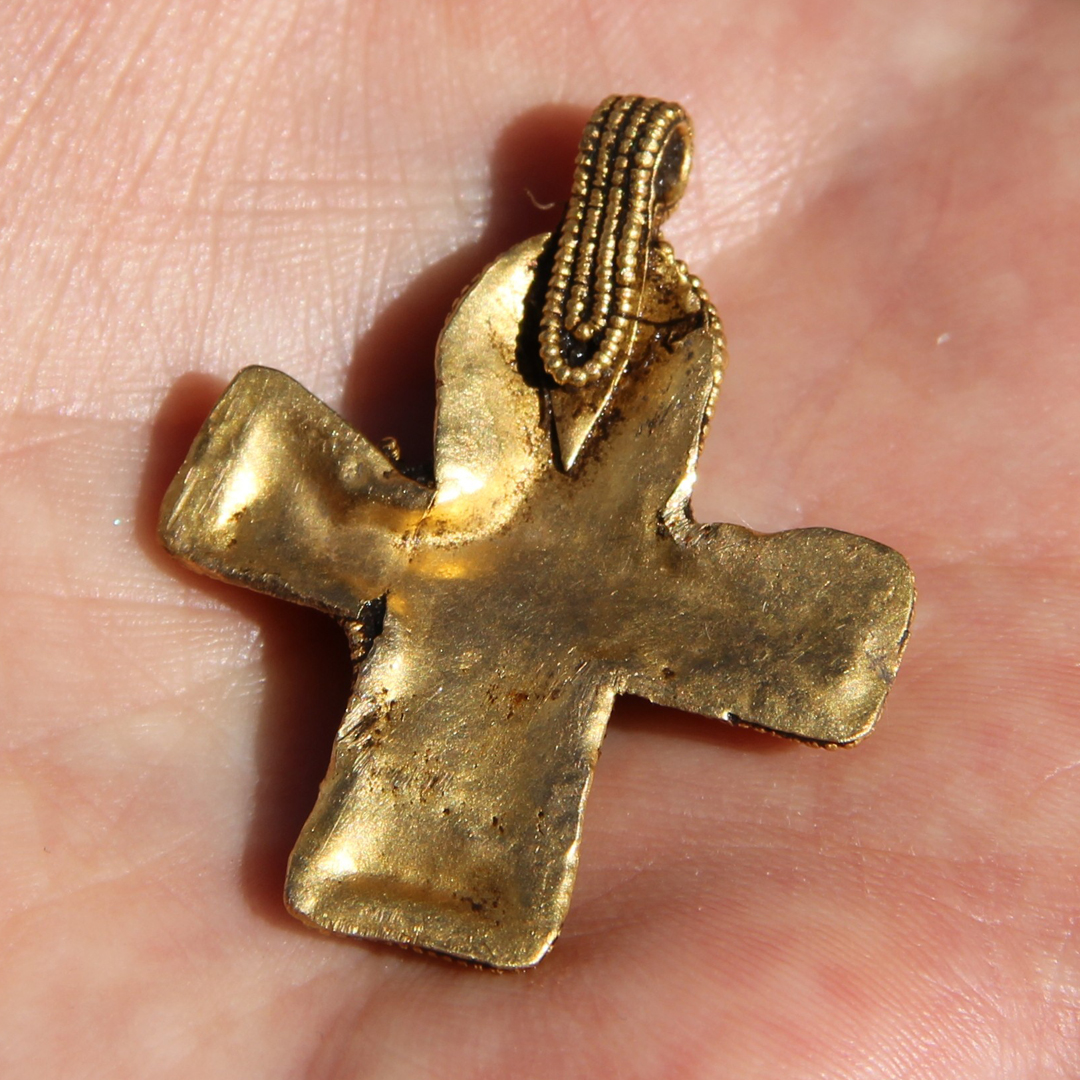


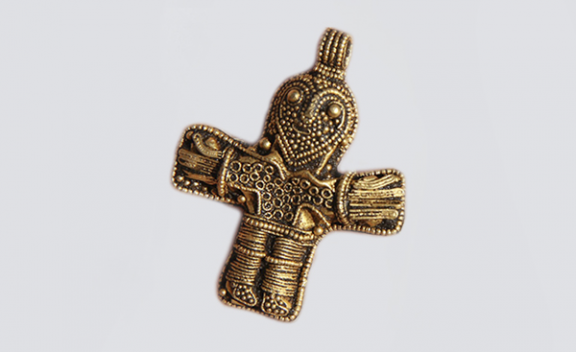
The discovery of a Viking crucifixion pendant in Denmark is a remarkable find that sheds light on the early Christian influences in the Viking Age. This small gold pendant, shaped like a figure with outstretched arms reminiscent of Christ on the cross, is indeed a significant artifact. Here are some key points about this discovery:
Age and Significance: The crucifixion pendant is believed to date back to the first half of the 10th century, making it the oldest known crucifixion in Denmark. It provides valuable evidence of the presence of early Christianity in the region during the Viking Age.
Comparison to Jelling Stones: The pendant predates the famous runic stones of Jelling, which have long been considered the earliest depictions of Jesus on the cross in Denmark. The Jelling Stones are associated with King Harald Bluetooth and his efforts to convert the Danes to Christianity. Until now, these stones were believed to belong to the year 965 AD.
Discovery Details: The pendant was discovered by an amateur metal detectorist named Dennis Fabrizius Holm in a field near the church village of Aunslev on the Danish island of Funen, just two weeks before Easter. It's considered fortunate that such a delicate and small artifact has survived for over 1,100 years.
Description of the Pendant: The pendant is about 1.6 inches high and weighs approximately 0.45 ounces. While the back is flat, the front is adorned with finely crafted gold threads and small filigree pellets. It features a small lug at the top for attaching a chain.
Similarities to a Swedish Find: The pendant is said to resemble a gilded silver cross discovered in 1879 in Birka, near Stockholm, Sweden. However, the Aunslev cross is unique in that it presents a full figure rather than just a cross.
Possible Viking Woman's Accessory: Given its small size and design, it is believed that the pendant might have been worn by a Viking woman. The interpretation of whether it indicates Christian beliefs or is simply part of Viking pagan style is still under discussion.
Unique and Artistic Similarities: Archaeologists note that the crucifixions found in both Sweden and Denmark are remarkably similar in style and craftsmanship, suggesting they might have been created by a common group of artisans or influenced by one another's work.
This discovery adds to our understanding of the complex cultural and religious interactions in the Viking Age, where elements of both Norse paganism and Christianity coexisted and influenced one another.