


The discovery made during a visit to a house in the village of Asthall, near Burford, Oxfordshire, in the summer of 2007 was quite remarkable: a trove of 210 gold coins dating from the reign of Henry VI to Henry VIII, spanning the years 1470-1547. This treasure has prompted speculation about its origin and purpose.
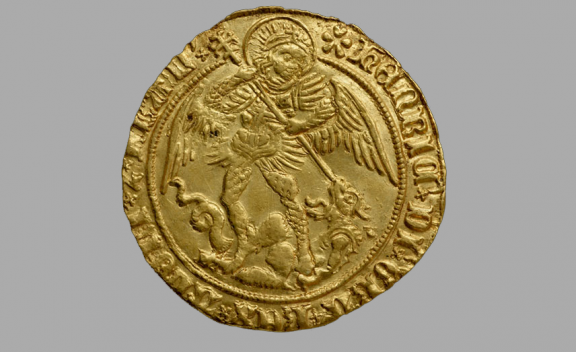
The coins in this hoard are known as angels, named after the depiction of the Archangel Michael on them. These coins were first minted in 1465, a period characterized by great worldly piety and a strong admiration for chivalry. Consequently, the military saint, Archangel Michael, became a fitting symbol for this new coinage.
The reigns of Henry VII and his son Henry VIII marked a transition from the Middle Ages to the Renaissance in various aspects of life, including religion, government, court culture, and art. The Asthall hoard's angels offer a glimpse into this transition, showcasing the evolution from Gothic to Renaissance styles of depiction.
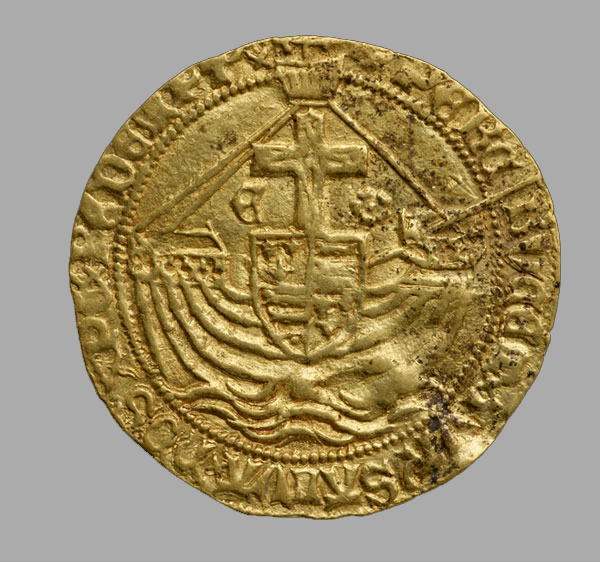
The religious theme continues on the reverse side of the coins, where the traditional ship, a motif used on gold nobles since 1344, is combined with a cross and inscriptions. On the angels, the inscription reads, "Per Crucem Tuam Salva Nos Christe Redemptor," which translates to "Through thy cross save us, Christ the Redeemer." On the half angels, the inscription reads, "O Crux Ave Spes Unica," meaning "Greetings! O Cross, our only hope." These inscriptions reflect the strong religious sentiments of the time and the significance of the cross in the lives of the people during the Renaissance period.
The exact origin and purpose of the Asthall hoard remain open to interpretation, with theories ranging from ecclesiastical wealth hidden during the dissolution of the monasteries to belongings of a wealthy wool merchant. Regardless of its specific origin, the hoard provides valuable insights into the historical and cultural context of its era.