

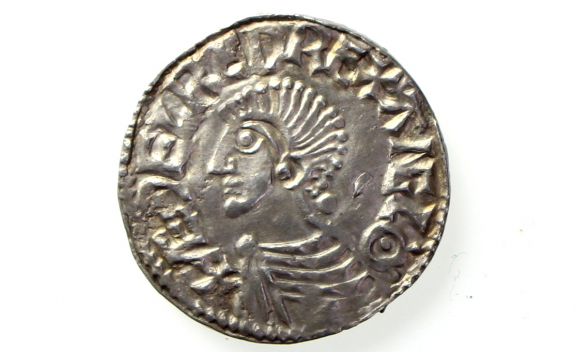
The discovery of a collection of muddy coins in a Devon paddock by two enthusiastic amateur metal detectorists had a significant impact on our understanding of the Roman Empire's reach in southwestern Britain.
Previously, it was believed that the influence of ancient Rome did not extend beyond Exeter. However, this find prompted a major archaeological excavation, revealing not only more coins but also a section of a Roman road and the remains of ships that had once transported wine, olive oil, and garum (a fish sauce) from France and the Mediterranean.
The far southwest of Britain had traditionally been seen as a region that retained its independence. Still, the discovery in Ipplepen, near Newton Abbot, 20 miles southwest of Exeter, challenged this notion and suggested that Roman influence was indeed significant here.
It is reasonable to assume that the Roman road did not terminate at Ipplepen but likely continued toward the modern town of Totnes and potentially even further south and west.
Danielle Wootton, Devon's finds liaison officer, became intrigued when metal detectorists Jim Wills and Dennis Hewings informed her about the Roman coins they had found in the Ipplepen paddocks. As more coins were discovered, totaling 150 in number, it became evident that Wills and Hewings had stumbled upon something of great importance.
Geophysical research revealed circular ditches associated with Iron Age roundhouses and a Roman road. A collaborative effort involving the University of Exeter, the Portable Antiquities Scheme (run by the British Museum), Devon County Council, and Cotswold Archaeology initiated a meticulous excavation process to uncover the full extent of the discoveries.
The conclusion drawn was that the road was most likely constructed by the Roman army in the 1950s A.D. and underwent improvements and reconstruction over the following 300 years. Equally fascinating as the road itself were the pottery artifacts that continued to be unearthed almost daily.
These artifacts included typical shards from everyday pots and bowls used for cooking. However, there were also items of "Saman ware," refined kitchen bowls of French origin. Among them was a fragment depicting a figure, possibly Hercules with a club. Additionally, handles from amphorae used for storing wine, oil, and sauce were found.
This evidence suggests the possibility of a Romano-British settlement where native Britons engaged in trade with the Romans, as indicated by the coins, and adopted elements of Roman culture and cuisine. The presence of such vessels suggests that the local population was influenced by the Romans, embracing Romanized ways of eating and drinking, including Mediterranean foods like wine and olives.