

Sark has made a notable contribution to the world of True Mysteries through the enigmatic Sark hoard, a treasure steeped in intrigue. The discovery of this unique hoard took place in the spring of 1718 when five individuals were excavating a hedge trench, directed by the mill owner Henry de Carteret, on the outskirts of a field at the highest point on the island.
Within this trench, they stumbled upon a clay pot that held thirteen round and oblong gilt silver discs, as well as eighteen silver coins. This extraordinary find was promptly reported to the seneschal, who declared it a treasure trove, thereby asserting its ownership by Lord John Carteret, who resided quite far from Sark in Bedfordshire. It remains uncertain whether Lord John indeed received the treasure, but it eventually found its way into the possession of Henige Finch, 5th Earl of Winchelsea (1657-1726). Notably, the liege lord's niece was married to the Earl, which might explain the transfer of ownership.
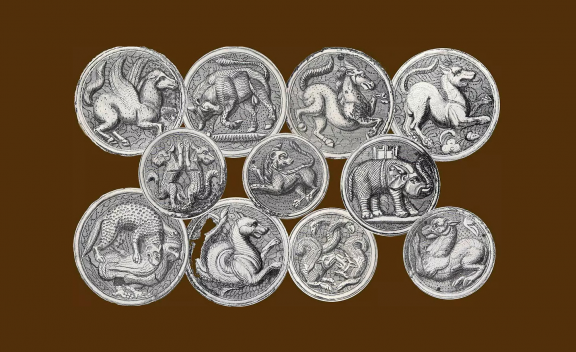
The Sark hoard, although partly damaged, is one of the most peculiar and significant treasures ever discovered in the British Isles. The coins found within it, originating from both Roman and Gallic sources, would have been an impressive find in their own right. However, what truly sets this treasure apart are the gilded silver discs known as "faleras" and the largest and most peculiar item in the hoard, the "curved mount."
The term "faleras" refers to a type of ancient jewelry, typically circular embossed metal plates made of gold or silver. These plates were often used to adorn the heads and flanks of horses or elephants. Originating with the Etruscans, they later became a distinctive symbol of consular rank in the Roman Republic, serving as the insignia of the equestrian order. Roman soldiers were also awarded these faleras in recognition of their military service.
The most notable feature of the Sark hoard is the largest pair of phaleras, adorned with depictions of five and six mythological creatures, respectively. Four of these creatures possess dog heads, donkey ears, and lion bodies, with small wings emerging from the uppermost part of the lions' front paws. Other creatures include hippocampi (a hybrid of horse and fish) with paws instead of hooves, winged griffins, and bulls. Smaller phaleras depict individual animals such as dogs, lions, pegasus, a unicorn, a hippocampus, a bull, an elephant, a small lion, and a cat biting a rooster. These remarkable pieces are believed to have originated from the same workshop or school, likely in first-century Thrace, which encompassed the region of southern Bulgaria, northeastern Greece, and European Turkey. Such faleras are incredibly rare, with only a limited number of similar examples found in museums across Europe.
Equally extraordinary is the curved mount from the Sark hoard, featuring two large dolphins and three small fish. This artifact stands as a unique and unparalleled piece with no known comparable object. Its original use remains a subject of speculation and debate among experts.
In summary, the Sark hoard is a captivating and perplexing collection of ancient artifacts that continues to fascinate historians and archaeologists, offering a glimpse into the mysteries of the past.