




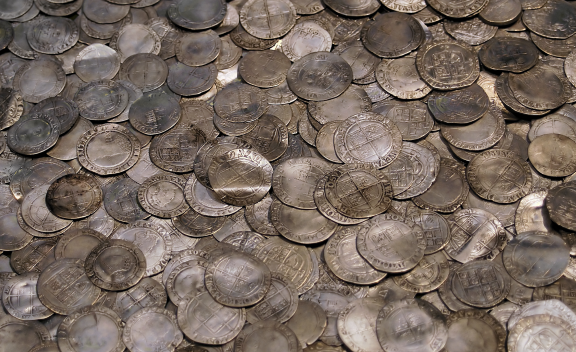
The Molnby hoard is a collection of 163 silver coins dating back to the Viking era, discovered in Molnby, a locality in the municipality of Wallentuna, Sweden, in October 2016. Most of these coins originate from the region around Samarkand in Central Asia and can be traced back to the 10th century. This hoard represents one of the largest Viking-era discoveries in the Uppland province.
Archaeologist Elin Sall made the discovery of these silver coins in a Bronze Age burial site, which was under investigation due to plans for constructing a rail depot for the Roslagsbanan narrow gauge railroad in the area. Approximately a month after the coins were found, archaeologists published their findings. Given that the coins began deteriorating upon exposure to oxygen, they were promptly handed over to specialists for preservation. Once treated, the intention is to display them at the Royal Mint in Stockholm. This silver deposit ranks among the most significant Viking Age hoards uncovered in Uppland.
The treasure consists of 163 silver coins, with 113 of them being cut and 50 remaining untouched. Some of these coins have holes in them, suggesting they could have been used as jewelry. Although these coins had established monetary values in their place of origin, there was no monetary system in Scandinavia during that period. Consequently, the coins were highly prized solely for their metal value and were frequently fashioned into jewelry. The total weight of the hoard is 285 grams (10.1 ounces). These coins bear inscriptions in Arabic and were mostly minted around Samarkand, which is located in present-day Uzbekistan and Iran. Some of the coins are imitations of Arab coins crafted in what is now Russia, along the Volga River. The most recent coin is dated to 935 or 936 A.D., suggesting that the treasure was likely buried in the middle of the 10th century.
According to archaeological estimates, the value of the treasure was roughly equivalent to ten cows or one and a half horses, indicating that the owner of the hoard may have been a relatively prosperous farmer. The reason why the treasure was buried in a Bronze Age grave site remains unclear. Old burials continued to be respected and venerated long after their origins had been forgotten. They were occasionally employed as markers for land ownership boundaries. Although Viking-era hoards are traditionally believed to have been buried in times of danger or warfare, there is no evidence of violence associated with the Molnby hoard. It is possible that the silver treasure was interred for use in the afterlife, a practice known from Icelandic sagas.