

Völund is a mythical smith-god from the Scandinavian and Germanic traditions, and his dramatic and violent story of revenge is recounted in the poem "Völundarkviða," found in the Poetic Edda. He is closely related to Weyland (also spelled Weyland, Veland, and Watland), a blacksmith god in Anglo-Saxon religion, likely brought to the region by Saxon settlers from Britain. The precise connection between the Nordic and Anglo-Saxon versions of this deity, whether through direct influence or syncretism, remains unclear.
Norse mythology is renowned for its rich tapestry of colorful narratives, memorable characters, heroic sacrifices, and epic battles. Throughout the history of northern Europe, these stories have held significant meaning and purpose for both the Scandinavian and Nordic Germanic peoples. While Norse mythology, like many aspects of human history, does contain elements of violence, the glorification of war, and even human sacrifice, modern-day Scandinavia has become a leader in promoting peace and disarmament on the global stage.
Völund is a figure within the Norse mythological tradition, which encompasses a complex system of beliefs, myths, and cosmology shared by Nordic and Germanic peoples. This tradition, particularly well-preserved in Icelandic sources, developed from the early manifestations of religious and cultural practices around 1000 B.C. to its eventual Christianization, occurring predominantly between 900 and 1200 A.D. The tales within this mythological corpus often emphasize physical prowess and military strength as key cultural values.
In this framework, Norse cosmology recognizes three distinct groups of deities: the Aesir, the Vanir, and the Jotun. While there were conflicts and divisions between the Aesir and the Vanir initially, they later reconciled and ruled together after a prolonged war. These two groups differ primarily in their domains, with the Aesir representing war and conquest, and the Vanir symbolizing exploration, fertility, and wealth. The Jotuns, in contrast, are generally seen as an evil (though wise) race of giants, serving as the primary adversaries of the Aesir and Vanir.
Völund is a fascinating and somewhat enigmatic character in Norse mythology. In the Poetic Edda, he is depicted as a figure who, on one hand, seeks bloody revenge against his tormentor and behaves rather immorally. On the other hand, both mythical and archaeological evidence hints at elements suggesting a divine origin. Regardless, Völund remains one of the most ambiguous and intriguing characters in Scandinavian myth.
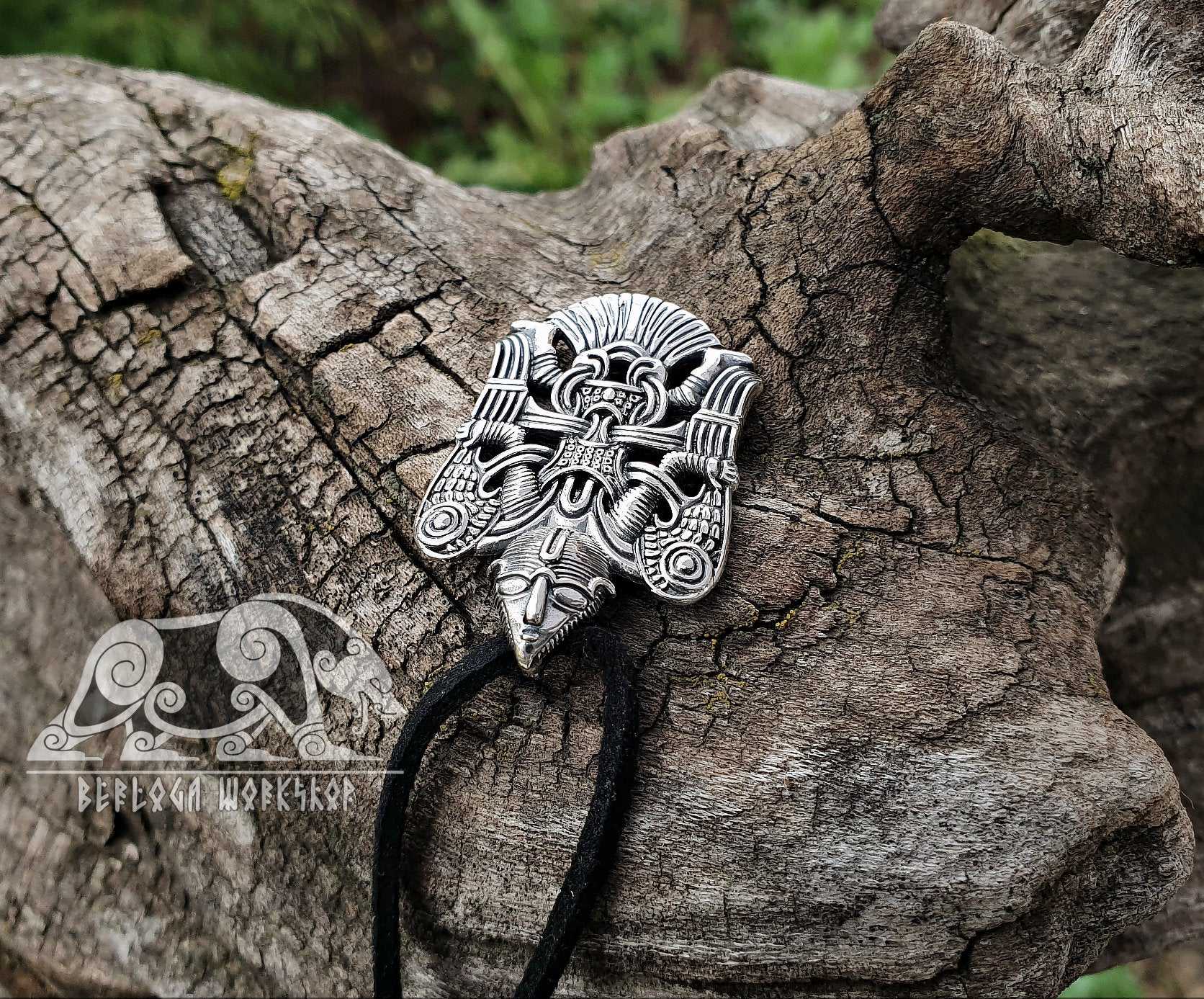
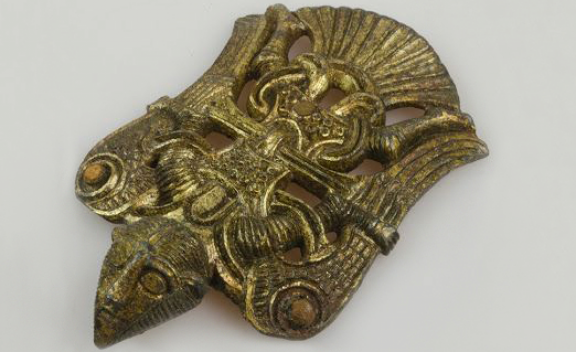
The bronze figurine you mentioned was discovered near the south wall of a hall, likely part of a larger object, possibly adorning a wooden box. There is a possibility that this figurine represents Völund, the master smith with magical abilities. In one of the Eddic poems from the 9th century, Völund is captured but manages to escape with self-made wings, adding to the mystique surrounding his character.
.