



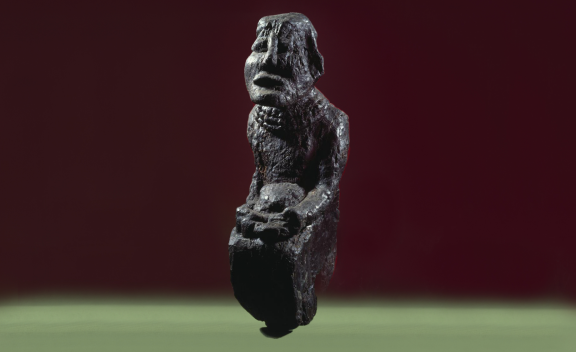
In 1880, a wooden sculpture measuring 42 cm in height was discovered in Rood Eskildstrup, located in Central Zealand. This sculpture was found standing upright in a swampy area. The sculpture portrays a seated man with a distinctive facial expression, complete with hair and a beard. His hands are positioned on his lap, where there is an object resembling a pillow. The man may be adorned in a robe, and around his neck, there is a necklace made up of numerous closely-profiled rings. This style of composite neck rings is reminiscent of Swedish society and is typically associated with gold neck rings dating back to the 5th century AD. In Hannenov on Falster, a similar articulated collar consisting of only one ring has been found. The wooden figure from Rood Eskildstrup is the most recent among the wooden figures discovered in Iron Age marshes and wetlands. It likely signifies the conclusion of a sacrificial tradition that originated at the end of the Bronze Age.
01.06.2021