





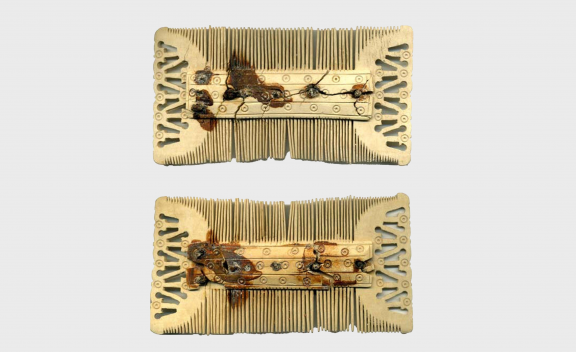
This is an intricately adorned comb from the Roman era, specifically from the 4th or early 5th century AD. It was discovered within an inlaid bone box that had been carefully placed in the grave of a young woman. The primary part of the comb features decorative rings and dots, while the end plates are intricately carved with figures embellished with additional rings and dots. Archaeologists believe that combs like this were initially crafted in a plain, undecorated form and were later adorned to meet specific requests. Common motifs for such combs included owls, dolphins, and horses. In this case, it's evident to an informed observer that this is a horse comb, as the decorations on the end plates resemble pairs of horse heads facing each other.
Individuals interred in this part of Winchester's eastern Roman cemetery seldom received grave goods, but when such items were discovered, they tended to be of exceptional quality, indicating the elevated social status of this particular population group. The burial practices observed here bear some resemblance to those seen in Christian cemeteries of the late Roman period in the Mediterranean and Near East, shedding light on the cultural connections of the time.