




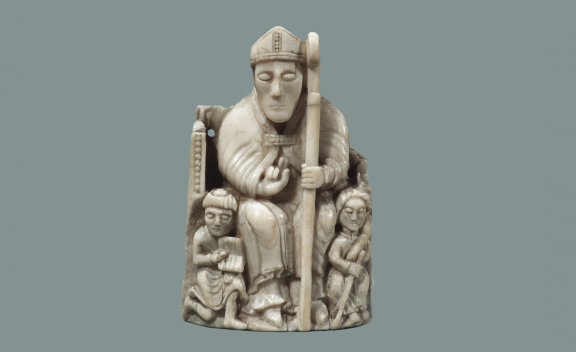
Between the years 1150 and 1200, a notable shift occurred on the European chessboard with the introduction of the bishop piece. This new piece replaced the elephant from the Islamic chess tradition. This transition, which may initially appear curious, reflects the historical context of the time. In the medieval period, bishops often had a dual role, not only as ecclesiastical figures but also as individuals who actively participated in military affairs. While this particular chess set does not depict the military role of bishops, it does offer insight into their ceremonial entourage.
Within this chess set, the smaller figures are believed to represent individuals who served the bishop in various ceremonial capacities. Among them, there is an official referred to as the "reader," who holds the bishop's book. This figure's appearance is reminiscent of a monk, with a distinctive tonsured hairstyle, where the hair is shaved in a circular pattern at the top of the head. Another individual in the set is likely the "precentor," responsible for leading the choir. This person is portrayed holding a staff and appears to be clasping his ear. Together, these pieces provide a glimpse into the multifaceted roles and ceremonies associated with medieval bishops during this period.