



The Svefnthorn, which means "sleep thorn" in Old Norse and is pronounced as "SVEFN-thorn," is a symbol that appears in various Norse sagas and in folkloric magical practices that were documented long after the Viking Age.
Its visual representation, when mentioned or depicted, varies significantly from one source to another. Unlike many ancient Norse symbols, it doesn't seem to have had a single definitive shape. Moreover, there are notable differences in how the Svefnthorn was applied to someone and the specific effects it induced once applied.
However, all references to the Svefnthorn in literature share a common purpose: it was used to induce a deep sleep in an adversary from which they would not awaken for an extended period.
Let's examine the mentions of the Svefnthorn in Old Norse and later Icelandic literature:
1. In "The Saga of the Volsungs," the god Odin utilized a Svefnthorn to put the valkyrie Brynhildr (Brunhild) into a slumber that could only be broken by someone brave enough to cross the formidable circle of fire Odin had ignited around her. Sigurd, the hero, was courageous and skilled enough to pass through the flames and awaken her.
2. In "The Saga of King Hrolf Kraki," Queen Olof used a Svefnthorn to render King Helgi unconscious temporarily, allowing her to play a prank on him and his men. The effects of the thorn seemed to wear off on their own after a few hours.
3. In "Gongu-Hrolf's Saga," Vilhjalmr inserted a Svefnthorn into Hrolf's head during the night, and he did not wake up until well into the following day when a horse rolled him around, causing the thorn to fall out. In this instance, the thorn appeared to be a physical object lodged in Hrolf's head rather than simply a spell.
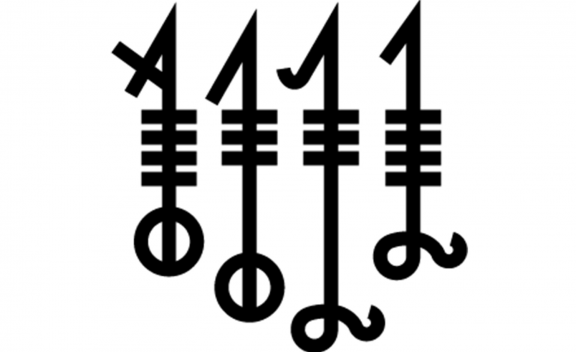
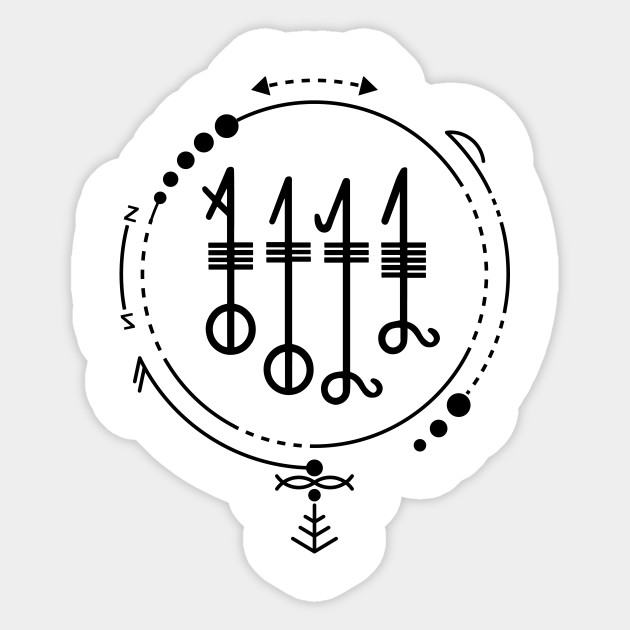
4. The ninth spell from the Huld Manuscript, an early modern book of Icelandic spells, mentions the Svefnthorn and instructs, "This symbol should be carved on oak and placed beneath the head of the person who is meant to sleep so that they cannot awaken until it is removed." The symbol, resembling a row of four harpoons (as depicted at the beginning of this article), is illustrated below these instructions.
Another relatively old spell from Iceland reads:
Sleep thorn: Take the heart sac [pericardium] of a dog; pour pickling broth into it. Then dry it for thirteen days long, in a place where the sun does not shine on it, and when the one to whom you wish to do this is asleep, hang this in the house over him completely without his knowing it.
The specific effects that the spell will bring about aren’t mentioned. How long will the sleeper remain asleep? Will he be able to awaken on his own or only at some appointed time?
In most of these cases, the visual representation of the Svefnthorn isn’t mentioned. When it is, it’s sometimes the “four harpoons” symbol from the above picture, and sometimes it’s a vertical line with a diamond shape at the bottom. This latter symbol could be an Isaz rune with an Ingwaz rune below it. Other Norse/Germanic symbols such as the Helm of Awe also seem to be comprised of runes. But the significance of this particular runic combination in connection with the Svefnthorn, if any, is unknown, and I’m not going to hazard a guess on this one.
So it’s not clear what the Svefnthorn’s visual form was or how one would go about applying it to a person. The sources contain contradictory information on this point, as they do on the point of whether the spell would wear off on its own or whether it could only be broken by some particular action being performed. In all likelihood, this is simply due to variations in all of these things across time and space. After all, ancient Germanic religion consisted of a set of common underlying ideas that were never codified or systematized, but varied greatly in their manifestations and applications. They weren’t as concerned with rationalization as we are today. But it is clear that the Svefnthorn was perceived to be a powerful magical tool that could put someone into a long and deep sleep from which he or she would have great difficulty awakening.