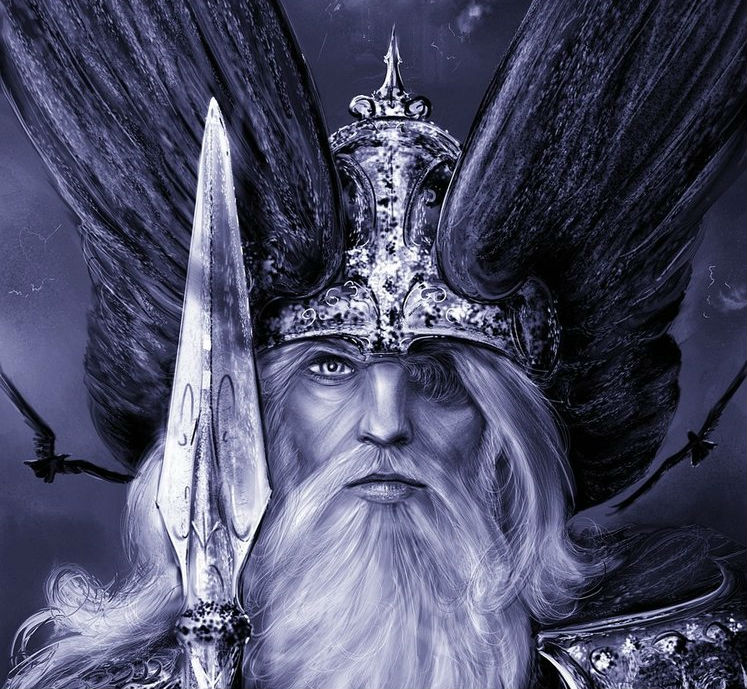


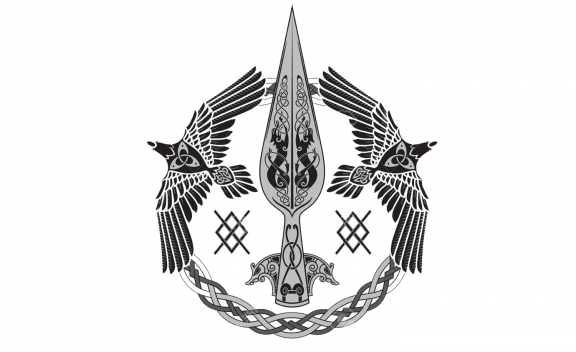
Gungnir, pronounced "GUNG-neer," is the formidable spear that belongs to the god Odin in Norse mythology.
Throughout recorded Norse myths, Gungnir is consistently and prominently associated with Odin as his primary weapon. Both poetry and visual artwork demonstrate the enduring significance of this connection. This association dates back at least to the ninth century when the poet Bragi Boddason referred to Odin as "Gungnis váfaðr" ("Gungnir's shaker"). Visual representations in pre-Christian Scandinavian art often depict Odin wielding a spear, making it one of his most common and recognizable attributes. Such depictions can be found on Viking Age runestones and even in Bronze Age rock carvings that depict a spear god, likely Odin, although it's challenging to confirm due to the early date and the absence of distinctive features.
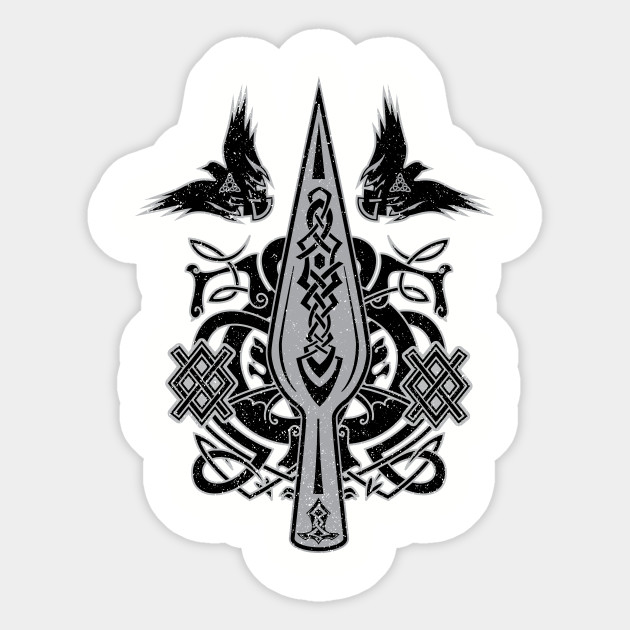
As you’d expect for the weapon of a god, Gungnir is no ordinary spear. It was created by the dwarves, the most skilled smiths in the cosmos, as is related in the tale of how the gods’ greatest treasures were made. Gungnir is said to have runes carved on its point, which presumably increase its aim and deadliness through magic. Archaeology confirms that the Norse and other Germanic peoples did in fact carve runes into some of their spears; perhaps this was done in imitation of the mythical model of Gungnir.
Other aspects of Gungnir definitely did serve as mythical models for human actions. This is especially true with regard to the spear’s role in human sacrifices offered to Odin.
In the war between the two tribes of gods, Odin led the Aesir gods into battle against the Vanir. He began the battle by hurling his spear over the enemy host and crying, “Óðinn á yðr alla!” (“Odin owns all of you!”). The historical Norse repeated this paradigmatic gesture, giving the opposing army as a gift to Odin in hopes that the god would return the favor by granting them victory.
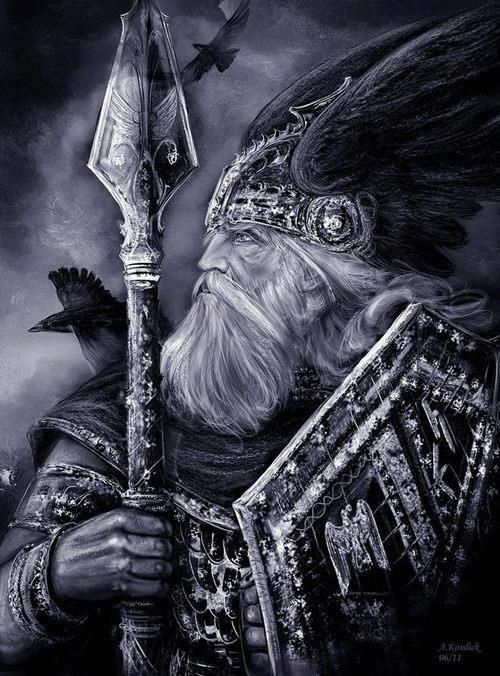
Likewise, when Odin sacrificed himself to himself in order to discover the runes, he simultaneously stabbed himself with Gungnir and hanged himself. It’s fitting, therefore, that when the Norse sacrificed someone to Odin, whether a single individual or a large group of people, they typically did so by means of a spear, either by itself or in combination with hanging.
In the Viking Age, Odin was the chief of the gods, a role which in earlier times he had shared with the god Tyr. Just as Tyr’s sword seems to have been a symbol of the power and authority of lordship (we can infer this from the number of Indo-European parallels), so Odin’s spear probably was as well. Gungnir, the finest spear in the cosmos, would have served as a compelling image of the ferocious might, both magical and military, of the grim ruler of the gods.