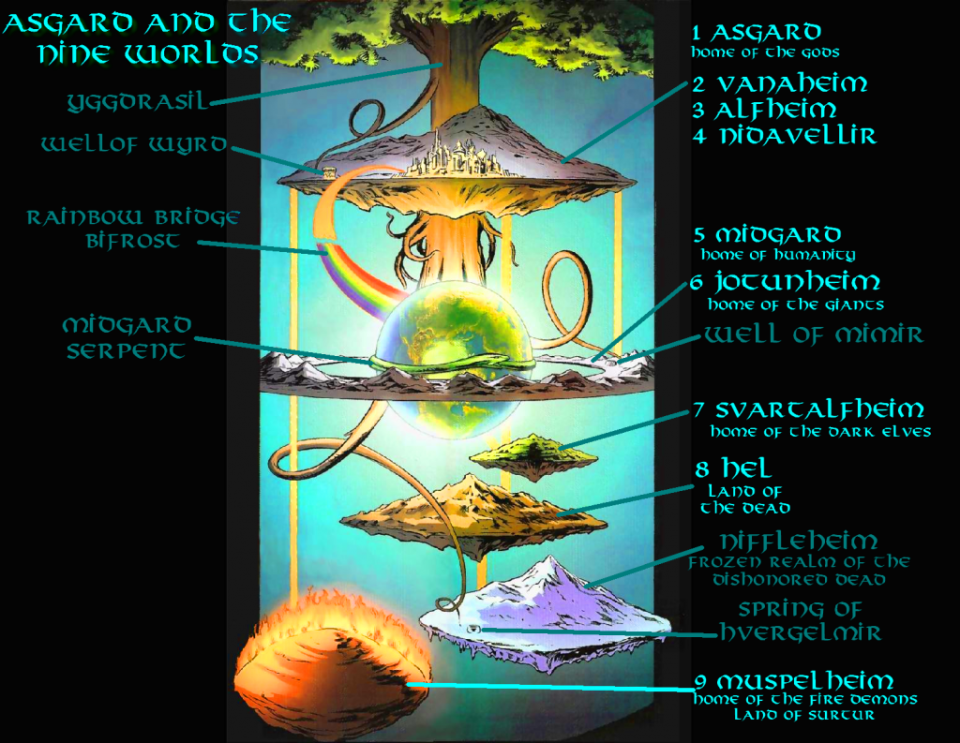


The Nine Worlds, known as "Níu Heimar" in Old Norse, are the realms inhabited by various types of beings in the pre-Christian Norse and Germanic belief system. These realms are said to exist within the branches and roots of the cosmic world tree Yggdrasil. However, the exact placement and arrangement of these worlds around Yggdrasil are not described in the available sources, and any modern depictions of their arrangement are speculative and unverifiable.
The concept of "nine worlds" is briefly mentioned in one poem in the Poetic Edda, but there is no source that provides a definitive list of the nine worlds. Based on the beings and realms described in Norse mythology, as well as references to their homelands in various literary sources, scholars have attempted to compile a tentative reconstruction of the Nine Worlds:
1. Midgard: The world of humanity, where humans reside.
2. Asgard: The realm of the Aesir, one of the two principal tribes of gods and goddesses in Norse mythology.
3. Vanaheim: The realm of the Vanir, the other tribe of gods and goddesses in Norse mythology. There was a period of conflict between the Aesir and Vanir, followed by a peace treaty and exchange of hostages.
4. Jotunheim: The realm of the giants or Jotnar, powerful and often antagonistic beings in Norse mythology.
5. Niflheim: A primordial realm of ice and cold, often associated with the creation of the world.
6. Muspelheim: Another primordial realm, but one of fire and heat. It is inhabited by fire giants and is the source of destructive forces.
7. Alfheim: The realm of the elves, who are typically considered light and ethereal beings in Norse mythology.
8. Nidavellir or Svartalfheim: This realm is sometimes associated with the dwarves, skilled craftsmen known for their forging abilities. The name Nidavellir is mentioned in some sources, while Svartalfheim is another term used to refer to the dwarf world.
9. Hel: The realm of the goddess Hel, who rules over the dead and is the daughter of Loki. Hel is often described as a half-living, half-dead world.
It's important to note that Norse mythology and cosmology are complex and may vary in different sources and interpretations. The concept of the Nine Worlds provides a framework for understanding the Norse cosmos and the diverse beings that inhabit it.
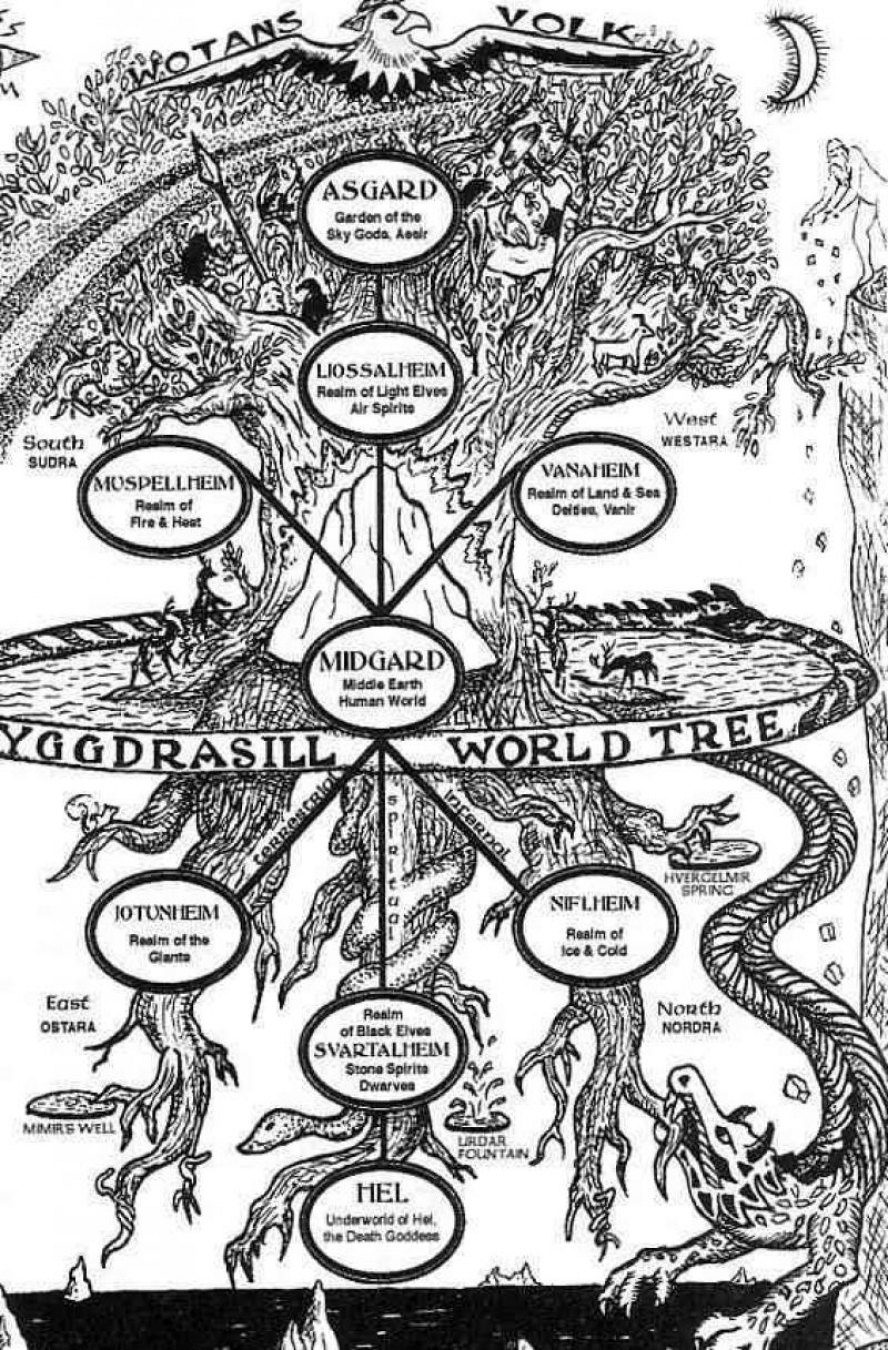
With the exception of Midgard, these are all primarily invisible worlds, although they can at times become manifested in particular aspects of the visible world. For example, Jotunheim overlaps with the physical wilderness, Hel with the grave (the literal “underworld” beneath the ground), and Asgard with the sky.
While we don’t know what exactly the spiritual or magical significance of the number 9 was, it’s clear that this number had such a significance for the pre-Christian Germanic peoples. Philologist Rudolf Simek offers the following summary:
…[N]ine is the mythical number of the Germanic tribes. Documentation for the significance of the number nine is found in both myth and cult. In Odin’s self-sacrifice he hung for nine nights on the windy tree (Hávamál), there are nine worlds to Niflhel (Vafþrúðnismál 43), Heimdallr was born to nine mothers (Hyndluljóð 35), Freyr had to wait for nine nights for his marriage to Gerd (Skírnismál 41), and eight nights (= nine days?) was the time of betrothal given also in the Þrymskviða. Literary embellishments in the Eddas similarly use the number nine: Skaði and Njörðr lived alternately for nine days in Nóatún and in Þrymheimr; every ninth night eight equally heavy rings drip from the ring Draupnir; Menglöð has nine maidens to serve her (Fjólsvinnsmál 35ff.), and Ægir had as many daughters. Thor can take nine steps at the Ragnarök after his battle with the Midgard serpent before he falls down dead. Sacrificial feasts lasting nine days are mentioned for both Uppsala and Lejre and at these supposedly nine victims were sacrificed each day.