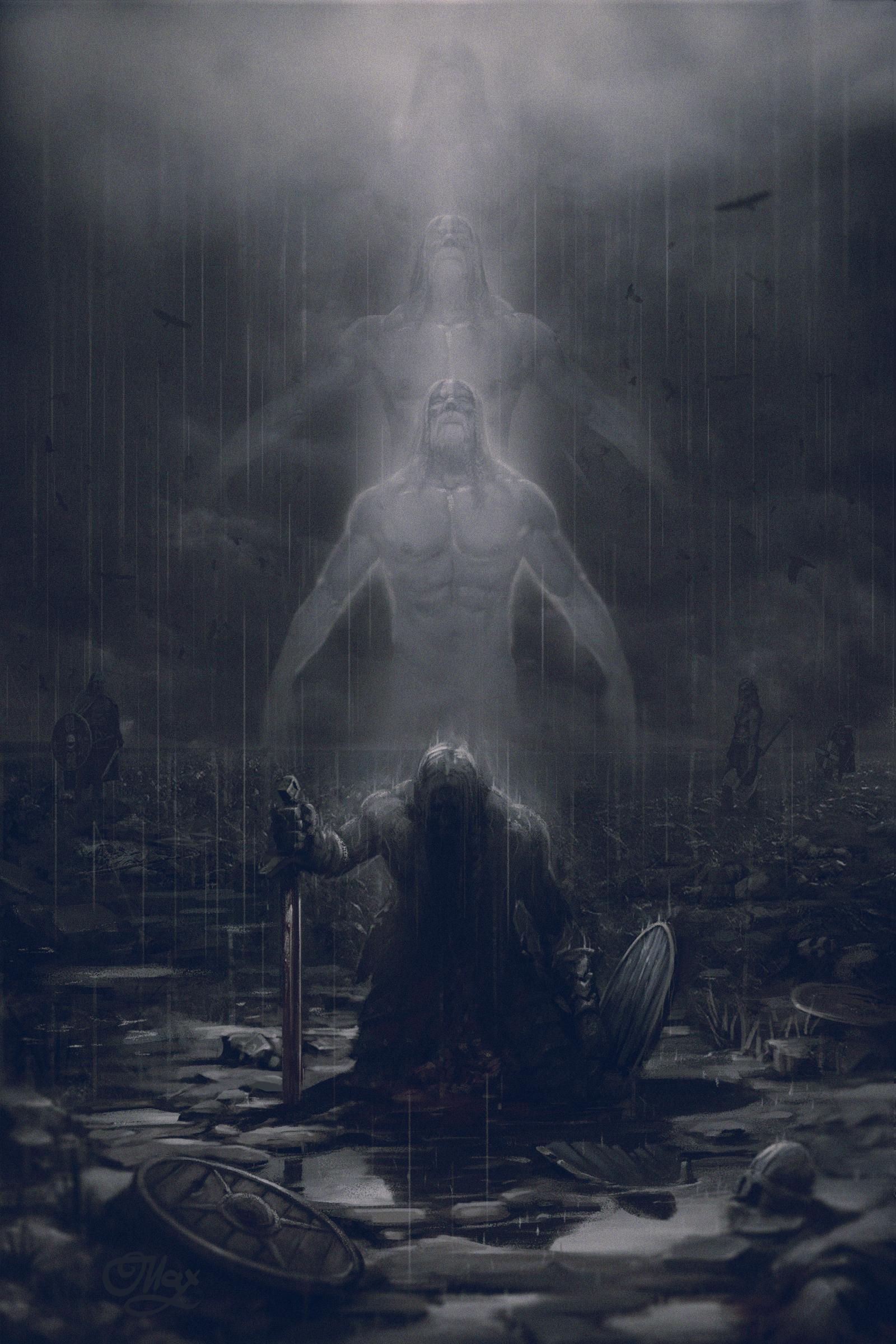


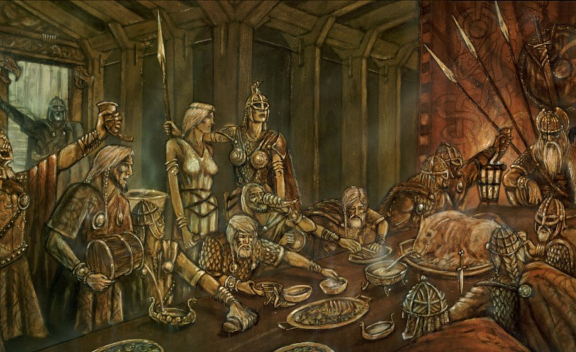
Valhalla, pronounced as "val-HALL-uh," derives from the Old Norse "Valhöll," meaning "the hall of the fallen." It is the divine hall where the god Odin houses the souls of the brave and heroic dead, those whom he deems worthy of dwelling with him.
As described in the Old Norse poem "Grímnismál" or "The Song of the Hooded One," Valhalla's roof is crafted from golden shields, with spears serving as its rafters. The hall boasts numerous feasting tables surrounded by seats made from breastplates. Its gates are guarded by wolves, and eagles soar above it.
The inhabitants of Valhalla, known as the "einherjar," lead a life that would be the envy of any Viking warrior. Throughout the day, they engage in combat, performing countless valorous deeds. However, each evening, their wounds miraculously heal, and they are restored to perfect health. Their sustenance includes the meat of Saehrimnir, a magical boar that resurrects every time it is slaughtered and butchered. Their drink comes from the udder of the goat Heidrun, providing them with an endless supply of exceptional food and mead. These warriors are served by the beautiful Valkyries.
However, the einherjar's charmed existence is not eternal. They are in Valhalla at the will of Odin, who gathers them for the selfish purpose of having them aid him in his destined battle against the wolf Fenrir during Ragnarok. This final battle is one in which Odin and the einherjar are fated to die.
Regarding how one gains entrance to Valhalla, the only direct source is Snorri Sturluson's "Prose Edda," a work from the thirteenth century, long after Norse paganism had given way to Christianity. Snorri states that those who die in battle are taken to Valhalla, while those who die of sickness or old age go to Hel, the underworld.
However, Snorri's account contradicts itself in the tale of the death of Baldur, who was violently killed but was borne to Hel. Other sources do not make such a clear distinction, and some even offer counterexamples. Snorri's distinction between Hel and Valhalla appears to be his own invention, an attempt to systematize the complex Norse belief system. In reality, entrance to Valhalla seems to depend on Odin and the Valkyries' choice rather than a specific standard, but it is reasonable to assume that Odin would select elite warriors and heroic figures to serve him in his final battle. Those residing in Valhalla in Norse sources usually fit this description, including renowned warriors and individuals in other roles like poets and rulers.
Where Was Valhalla Located?
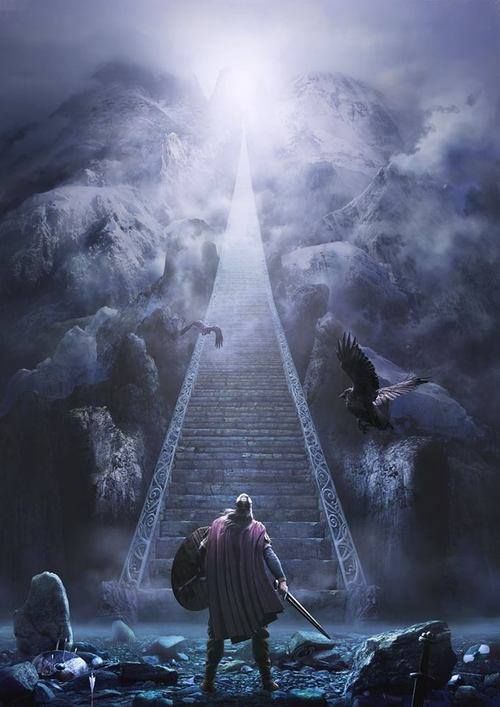
The most famous description of Valhalla in Old Norse literature, that of Grímnismál, portrays it as being located in Asgard, the gods’ celestial fortress.
However, other lines of evidence suggest that it was at least sometimes seen as being located underground, like the more general underworld.
As we’ve noted above, the continual battle that takes place in Valhalla is one of the place’s defining features. The medieval Danish historian Saxo Grammaticus describes the hero Hadding discovering just such a place in the underworld. Furthermore, the very name Valhöll, “the hall of the fallen,” clearly seems related to the name Valhallr, “the rock of the fallen,” a title given to certain rocks and hills where the dead were thought to dwell in southern Sweden, one of the greatest historical centers of the worship of Odin.
So, then, where was Valhalla located? It depends on which source you consult.
Evidently, the Vikings perceived no absolutely firm difference between Valhalla and the other halls of the dead. For more on this point, and for a discussion of Norse beliefs about the afterlife more generally, see Death and the Afterlife.