


The Norse figure known as Loki, often considered a pseudo-god, had three incredibly ugly and powerful offspring with the giantess Angrboda, whose name means "She Who Predicts Anguish." The first of these offspring was the serpent Jormungand, the second was the death-goddess Hel, and the third was the wolf Fenrir.
The gods harbored grave concerns about the fate of these three beings, and their worries were well-founded. Eventually, Jormungand would be responsible for the death of the god Thor during Ragnarok, the apocalyptic event that would lead to the end of the cosmos. Hel played a significant role in these cataclysmic events by refusing to release the radiant god Baldur from the underworld. Additionally, during Ragnarok, Fenrir would devour Odin, the leader of the gods.
To keep these monstrous creatures under control, the gods took specific actions. They cast Jormungand into the ocean, where it encircled Midgard, the world of humans. Hel was relegated to the underworld. As for Fenrir, he inspired such fear that the gods chose to raise him themselves in their fortress, Asgard. Only Tyr, the unwavering defender of law and honor, had the courage to approach Fenrir and feed him.
Fenrir, however, grew at an alarming rate, and the gods realized that his presence in Asgard could only be temporary. Understanding the immense devastation he could wreak if set free, the gods attempted to bind him using various chains. They convinced Fenrir to cooperate by telling him that these restraints were tests of his strength, and they enthusiastically applauded each time he broke free from a new chain they presented.
Finally, the gods dispatched a messenger to Svartalfheim, the realm of the dwarves, who were renowned for their exceptional craftsmanship. The dwarves, being the most skilled artisans in the entire cosmos, forged a chain of unparalleled strength. They created Gleipnir, a chain made from the sound of a cat's footsteps, the beard of a woman, the roots of mountains, the breath of a fish, and the spittle of a bird – in essence, these were things that did not exist, making it impossible to struggle against.
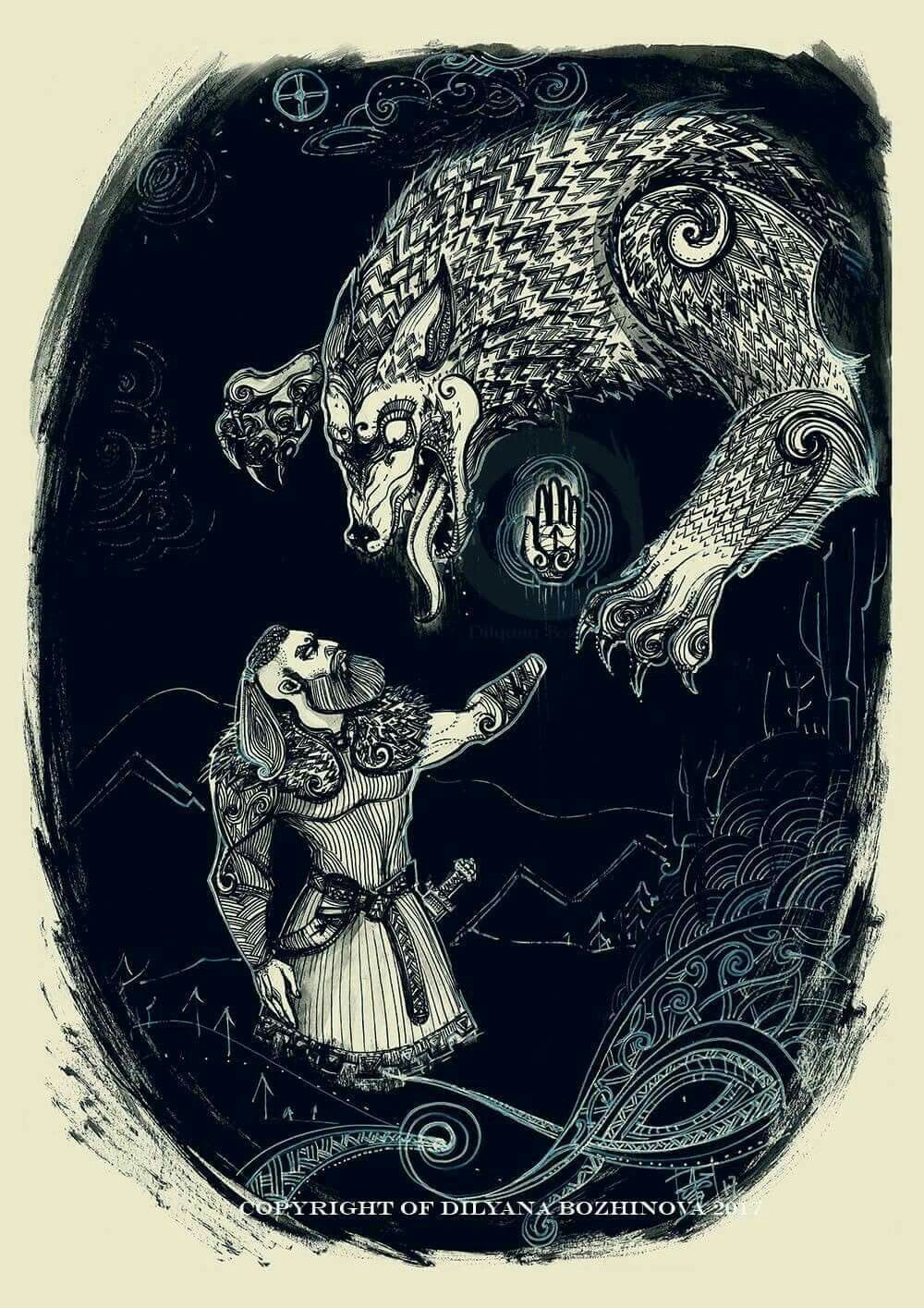
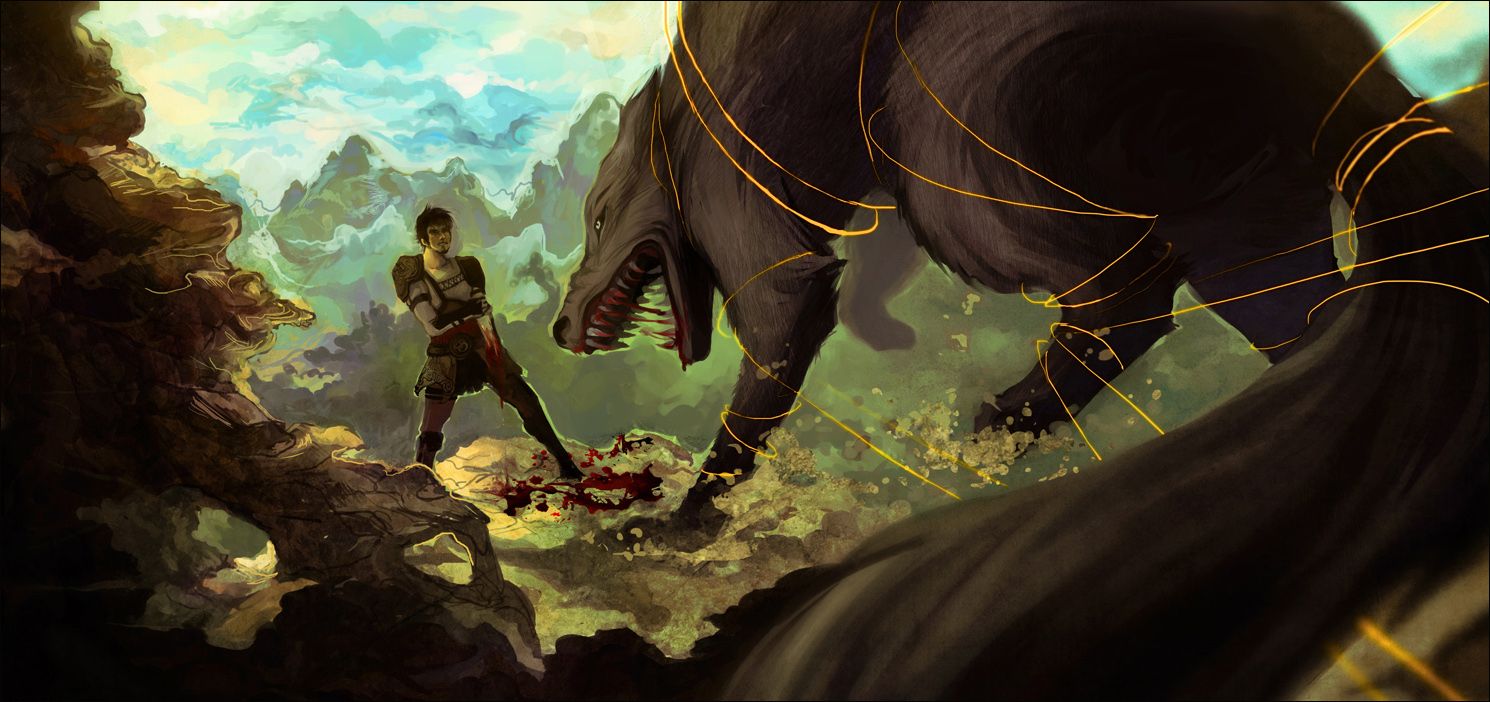
When the gods presented Fenrir with the curiously light and supple Gleipnir, the wolf suspected trickery and refused to be bound with it unless one of the gods would lay his or her hand in his jaws as a pledge of good faith. None of the gods agreed, knowing that this would mean the loss of a hand and the breaking of an oath. At last, the brave Tyr, for the good of all life, volunteered to fulfill the wolf’s demand. And, sure enough, when Fenrir discovered that he was unable to escape from Gleipnir, he chomped off and swallowed Tyr’s hand.
The fettered beast was then transported to some suitably lonely and desolate place. The chain was tied to a boulder and a sword was placed in the wolf’s jaws to hold them open. As he howled wildly and ceaselessly, a foamy river called “Expectation” (Old Norse Ván) flowed from his drooling mouth. And there, in that sordid state, he remained – until Ragnarok.
Tyr’s Character and Role
Of all of the surviving Norse myths, this tale is the only one that prominently features Tyr. Without it, we wouldn’t understand Tyr’s character or role nearly as well as we can with the help of this myth.
Many people who have only a passing knowledge of Norse mythology think of Tyr as a war god. That he certainly was, but virtually all of the Norse gods and goddesses had something or another to do with war. Tyr, like all of the other Norse war gods, was far more than only a war god.
This myth powerfully illustrates Tyr’s role as the divine legal expert and upholder of the law. In the words of the celebrated scholar of comparative religion Georges Dumézil, when Tyr sacrifices his hand, “he not only procures the salvation of the gods but also regularizes it: he renders legal that which, without him, would have been pure fraud.” The gods had sworn an oath to Fenrir, and the guarantee of their intention to follow through with their pledge was Tyr’s hand (or arm – the percentage of the limb bitten off by Fenrir is irrelevant). When the gods didn’t follow through with their oath, Fenrir was entitled to Tyr’s hand as compensation. By allowing the wolf to claim his limb, Tyr fulfilled the gods’ end of the bargain, grisly and tragic though it was for him.