



Jarnsaxa, a lesser-known figure in Norse mythology, is indeed an intriguing character. Her background and roles in the mythos offer a fascinating glimpse into the complexities of the Norse pantheon.
Her name, derived from the Swedish words for iron, axe, and scissors (jarn, yxa, and saxa), already hints at her connection to strength and weaponry. In the Poetic Edda, one of the oldest sources of Norse culture, she is described as one of The Nine Mothers of Heimdall, known as the Wave-Maidens. These nine mothers are responsible for operating the mill that controls the wind and waves, showcasing their elemental power. After Heimdall departs to seek his fortune, Jarnsaxa's presence in the Eddas becomes less prominent.
However, she resurfaces as Thor's lover, emphasizing her role as a giantess from the Jotun race, similar to Loki. Notably, she is also the mother of Thor's sons, Magni and Modi, whose names reflect physical strength and a desire for combat, respectively. It is prophesied that these sons will inherit Mjölnir, Thor's hammer, during Ragnarok, the Old Norse apocalypse. Interestingly, Thor's official wife is Sif, a fertility goddess associated with summer and the harvest, indicating her role in complementing Thor's aspect as a thunder god and rain-bringer.
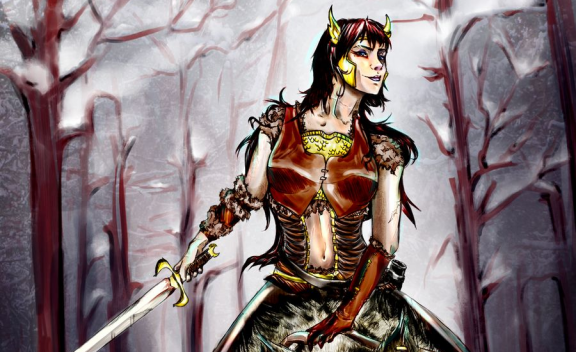
From this information, we can make several assumptions about Jarnsaxa's role and characteristics. While she has been described as Thor's mistress, lover, or even co-wife, she does not hold the traditional role conferred by monogamous marriage. Instead, she likely embodies Thor's warrior aspect. Jarnsaxa's children, representing the finest qualities of a warrior, likely inherited not only from Thor but also from their mother. In Old Norse culture, shield maidens played an accepted role, allowing women to fight alongside their community without the formal title of a Viking. This suggests that Jarnsaxa possessed fighting skills, in line with her name and her surroundings.
Given that the Aesir typically looked down on Jotuns as uncouth and wild, the fact that Jarnsaxa captured Thor's heart suggests she must have possessed both striking beauty and a captivating personality. Her role in Norse mythology showcases her as a powerful and enigmatic figure, embodying the warrior spirit and challenging traditional gender roles in this ancient culture.
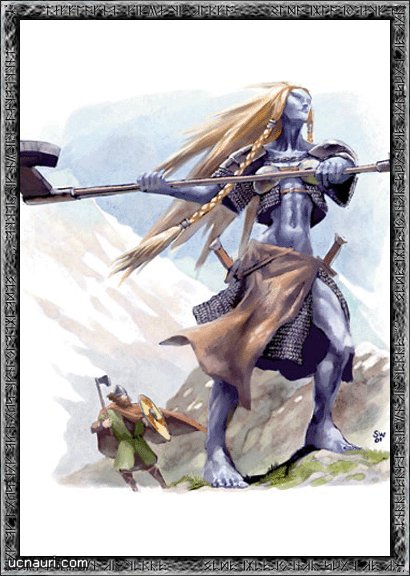
Loki and Thor share many adventures, generally stories in which Loki and/or his Jotun comrades are harmed. Since Loki and Jarnsaxa are both Jotuns, it’s safe to assume they share a bond. Loki will eventually helm the ship that sails against the Aesir in Ragnarok, and Jarnsaxa’s children will directly benefit from Thor’s defeat. Since she’s bearing Thor’s children without The Aesir’s blessing or status, and will benefit from the destruction of the Aesir, all that can come in the middle is a desire for revenge.
Returning to the original proposition, we can take a look at a sentient wind farm, and wonder how it got that way, and what it wants. The world of Old Norse culture lends itself to liminality, a flexibility of boundaries between the past and present, natural and supernatural worlds. This is a place with Northern Lights and white nights, and the states of dreaming and being awake can become blurred. How does Jarnsaxa fit into this scheme?
The Draugr is the Old Norse version of the walking dead. This is just one version of the ways in which souls can transcend the mortal experience. Sometimes, if a dead person is not properly buried, or has unfinished business, their body can live on after them, or, simply, their will. It can inhabit animals, attacking the living until it gets what it wants. In the Eyrbyggja Saga, the will of a dead woman inhabited a seal, attacking humans until its bedclothes were burned, as the departed woman had requested. This story is a precursor of the Irish and Scots folk creature, the Selkie.
More common are the souls of corpses washed up on shore.. In some cases, the woman is disguised as a quiet farm girl, who refuses to go to Mass, but instead turns into an Elf Queen and throws a secret party for all of her elvish friends. In other cases, the quiet farm girl reveals a murderous nature, slaughtering livestock and whoever might try to stop her. Christian ritual is often not enough to stop restlessness. In the Eyrbyggja Saga, Thorgunna receives a Christian burial, but returns to tell everyone how cold her resting place is, until they finally fulfill her request to burn her bedclothes. As scholar Kirsti Kanerva says, the ghost is there to shine a light on past wrong, and get things in order, not because of the presence or absence of any particular religion. “The ghosts and wonders manifest the mental and social disequilibrium inherent in these situations…indicating in a concrete way the shadows of the past, deeds that have caused the balance of the minds of men and the order of their society to be shaken by the dead through fear, lunacy, illness, and death.” Like the ghosts in Macbeth and Hamlet, the undead in Old Norse culture are there to push the living to truth and justice.
So, how does a re-animated Jarnsaxa, fueled by revenge, fit into contemporary imagination?
She wants revenge on the Aesir. Like a corporation, this network of gods controls everything, from the seasons and weather to choices about food, shelter and sex. They set rules, and demand loyalty and homage. They can punish or reward, according to their whims. They can use and destroy the natural world however they please, and re-create it in their own image. An ancient giantess, turning a mill which feeds the wind and ways has its mirror opposite in a graceful silvery wind turbine, towering over land and sea to harness the wind’s energy. What comes around, goes around, literally.