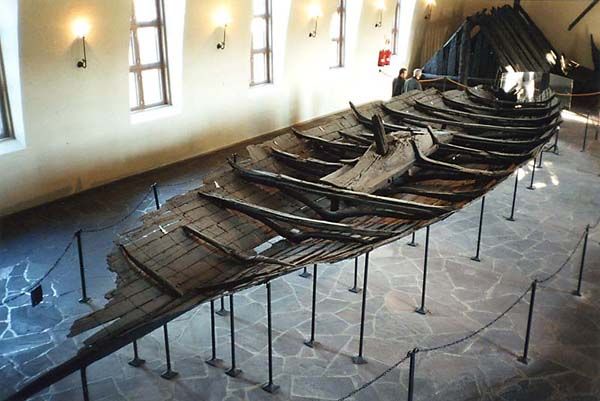


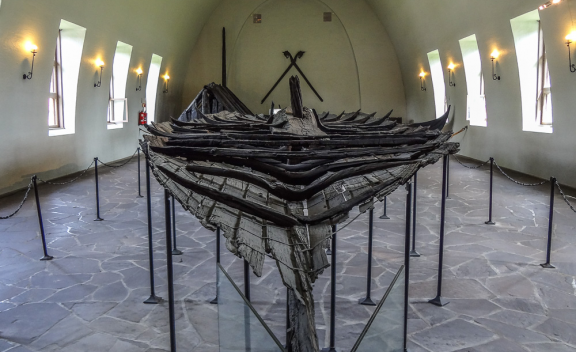
The Tune ship is an archaeological discovery of a Viking ship burial dating back to the Viking Age (800-1050 AD) in Norway. It was found in 1867 at the Båthaugen burial mound in Rolveso (now Fredrikstad) in the Wiken province, and the excavation and exhibition were conducted by archaeologists and historians, notably Oluf Rig (1833-1899).
Only fragments of the Viking ship have been preserved. Based on dendrochronological analysis, it was determined to have been built around 890 AD and used around 900 AD to inter a potentially noble Viking. Unfortunately, due to ancient tomb looting, no skeletal remains were found, and only a few burial items commonly associated with Viking nobility were discovered. In similar Viking ship burials such as the Ladby ship and the Gokstad ship, horses, dogs, weapons, jewelry, and utensils have been reconstructed or verified.
The open wooden boat measured approximately 22 meters in length and 4.35 meters in width, with a keel length of about 14 meters. It was smaller in size compared to the longships and karvi ships, which were primarily used for occasional voyages. The ship had a log and clinker hull with sturdy ribs, and it featured a massive flatbed deck with wide sides and crossbars. During fast coastal journeys, the crew employed eleven or twelve pairs of oars. Due to its low freeboard, the ship was not particularly suitable for ocean navigation. Apart from the mast's base, no evidence of rigging or former sails has been preserved.
The remains of the Tune ship are now exhibited at the Viking Ship Museum in Byugdey, Oslo, alongside the Gokstad and Oseberg ships.