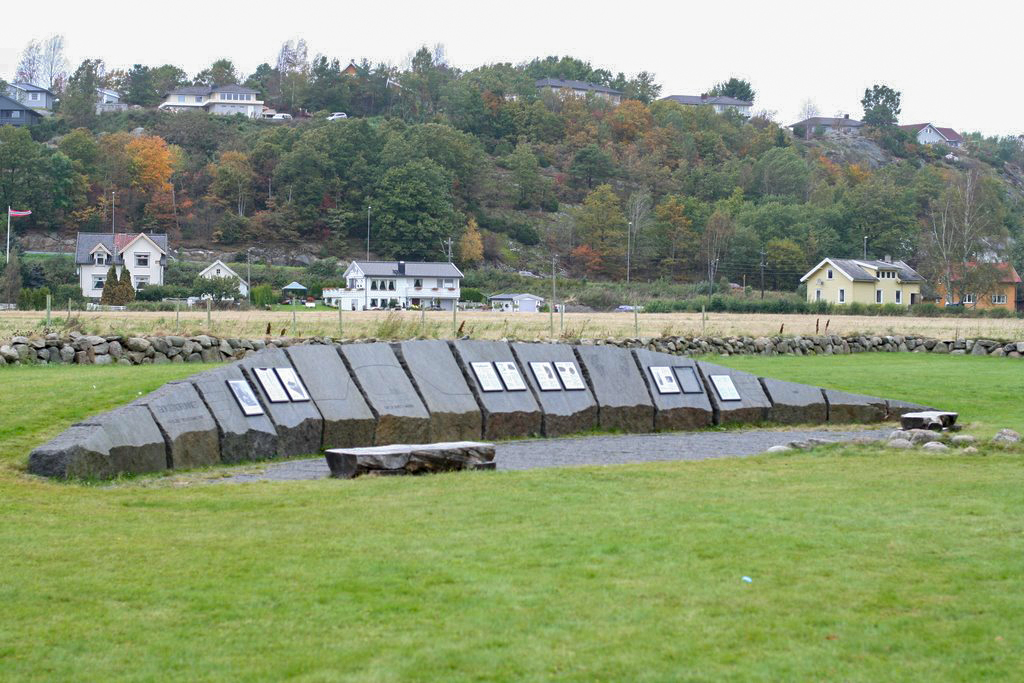


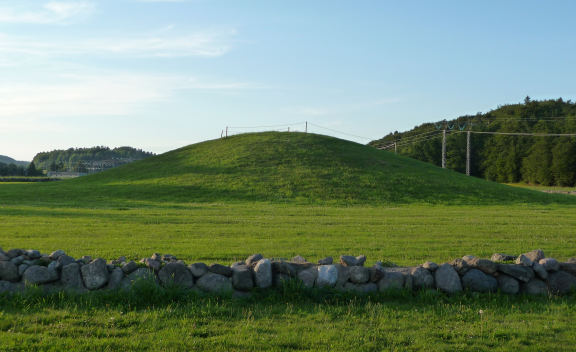
The Gokstad Mound, located on the Gokstad farm in Sandefjord, Westfold County, Norway, is a large burial mound also known as the Royal Mound or Kongshaugen. It was at this site that the Gokstad ship, dating back to the 9th century, was discovered.
In 1880, the mound was excavated by Nicolay Nicolaysen. The Gokstad ship, primarily constructed of oak, was built around 890 AD and placed in the mound approximately ten years later. It measures 23.8 meters (78 feet) in length and 5.2 meters (17 feet) in width. The ship featured 16 pairs of oars, and its maximum speed is estimated to have been twelve knots. Today, the Gokstad ship is housed in the Viking Ship Museum in Oslo.
Accompanying the ship in its burial was a small king, previously believed to be Olaf Geirstad-Alf, the half-brother of Halvdan Black. However, recent discoveries have brought about increased uncertainty, leaving the identity of the leader buried in the mound unknown.
Gokstadhaugen has been described as one of the most remarkable archaeological finds in Norway. In January 2014, the Norwegian government submitted a request to UNESCO to have Gokstadhaugen designated as a World Heritage Site.
In 1880, the mound had a diameter of 50 meters (164 feet) and a height of 5 meters (16.4 feet). During the Viking Age, the ocean's water level was significantly higher, nearly 4 meters (13 feet) above the present level. Consequently, it is believed that the ship was buried in close proximity to the sea.
Among the artifacts unearthed in the grave were a gaming board with horn counters, fishing hooks, harness fittings made of lead, iron, and gilded bronze, 64 shields, kitchen utensils, six beds, a sled, and three smaller boats. Additionally, the grave contained two peacocks, two goshawks, eight dogs, and twelve horses.
The burial chamber was adorned with layers of birch bark, and during archaeological investigations, archaeologists discovered remnants of silk intertwined with gold thread, which were found wedged between the logs in the roof. These remnants are believed to be remnants of an opulent woven tapestry that once embellished the interior walls.
Based on dendrochronological research, it has been established that the construction of the ship took place between 885 and 892 AD. The burial chamber itself dates back to the period of 895-903 AD.
The buried chieftain is estimated to have had a height between 181 and 183 cm (5 feet 9 inches - 6 feet 0 inches) and is believed to have met his demise around the age of 40 during a battle.
The ship was first discovered in 1879 and subsequently excavated by Nicolay Nicolaysen from April to June 1880. Following the excavation, the burial mound was sealed, and the chieftain's remains were returned to the burial site on June 16, 1928. These remains were placed within a sarcophagus, and the official unveiling of the restored mound took place on July 29, 1929, with the presence of King Håkon VII. However, in 2007, archaeologists removed the sarcophagus from the tomb, and it is currently housed at the University of Oslo (UiO).