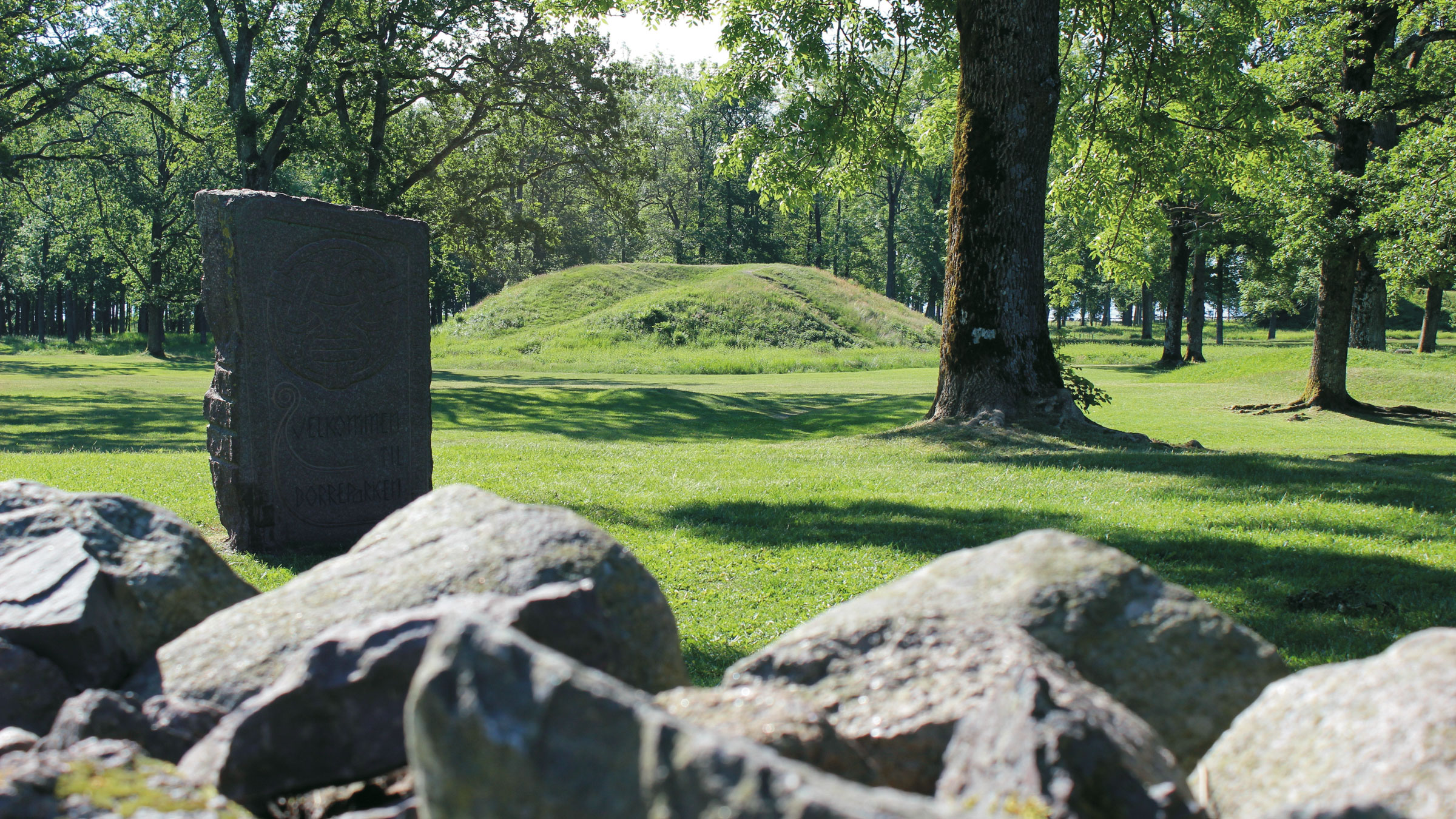


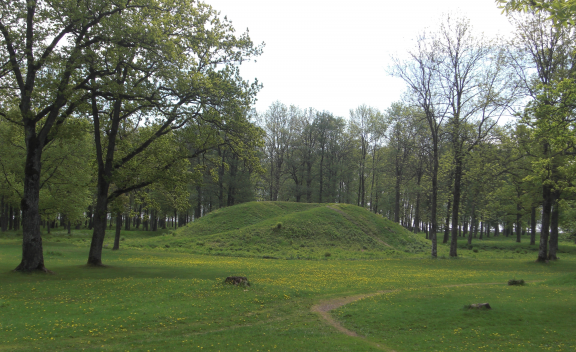
The Borre Mound Cemetery, situated within Borre National Park in Horten, Westfold og Telemark, Norway, holds the distinction of being the largest mound in Northern Europe.
Within Borre National Park lies the most extensive collection of royal graves in Scandinavia. It comprises seven large mounds and 21 smaller ones. Excavations carried out in the 1980s revealed that the oldest mounds date back to 600 AD, predating the Viking Age.
Encompassing 45 acres (182,000 m²), the park showcases an exceptional assortment of mounds, which is unparalleled in Scandinavia. Presently, visitors can observe seven large barrows and one stone pyramid. Unfortunately, at least two mounds and one stone pyramid have been lost over time. Additionally, there are 25 smaller stones, suggesting that the cemetery may have been more extensive. Some of the monuments exceed 45 meters in diameter and reach heights of up to 6 meters. Borrehaugene provides significant historical insights and serves as evidence of a local power center from the Merovingian period to the Viking Age.
The initial investigations of the cemetery took place between 1851 and 1852. Regrettably, local road builders utilized one of the burial mounds as a gravel pit, resulting in the destruction of a lavishly equipped Viking ship grave. Antiquarian Nikolai Nikolaisen examined the remaining remnants of the mound, which included weapons and equestrian equipment. During the excavations, an exceptionally well-preserved selection of handicrafts was discovered, with most of these artifacts now displayed at the Viking Ship Museum in Oslo.
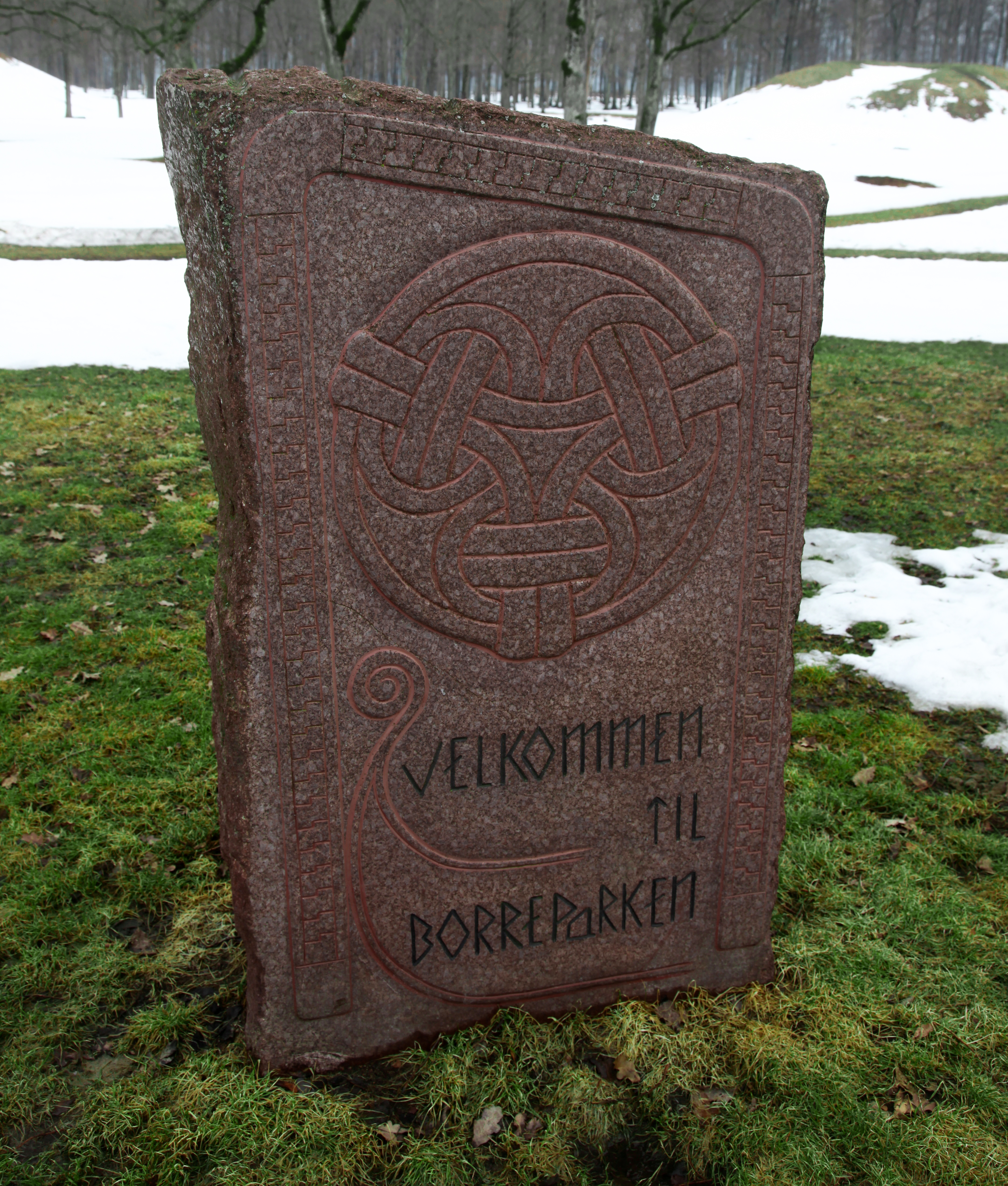
This distinctive artistic style, known as the Borre style, is renowned for its exquisite animal and knot ornaments, which were commonly used to embellish harnesses. In 1925, several small stone pyramids were explored, revealing them to be simple cremation graves. Further excavations were conducted by archaeologist Bjorn Muré between 1989 and 1991, encompassing both the national park and its surrounding areas.
In October 2007, Ground Penetrating Radar (GPR) measurements conducted by the Archaeological Survey Department of the Swedish Central National Heritage Board on behalf of the Westfold County Administration unveiled the hidden remains of two prehistoric halls, marking a significant architectural discovery in the vicinity of Borre.
In March 2013, a comprehensive GPR study carried out by the Institute for Archaeological Exploration and Virtual Archaeology of Ludwig Boltzmann (LBI ArchPro) in collaboration with the County of Westfold and the Norwegian Institute for Cultural Heritage Research (NIKU) led to the unveiling of another expansive hall.
In 2015, based on an analysis of geomorphological features, Erich Draganitz et al. proposed that the prehistoric harbor was likely situated in Borre.
In March 2019, archaeologists made a remarkable finding with the unearthing of a buried Viking Age ship. The available evidence suggests that it is a ship burial, a common practice for honoring distinguished individuals in that era.