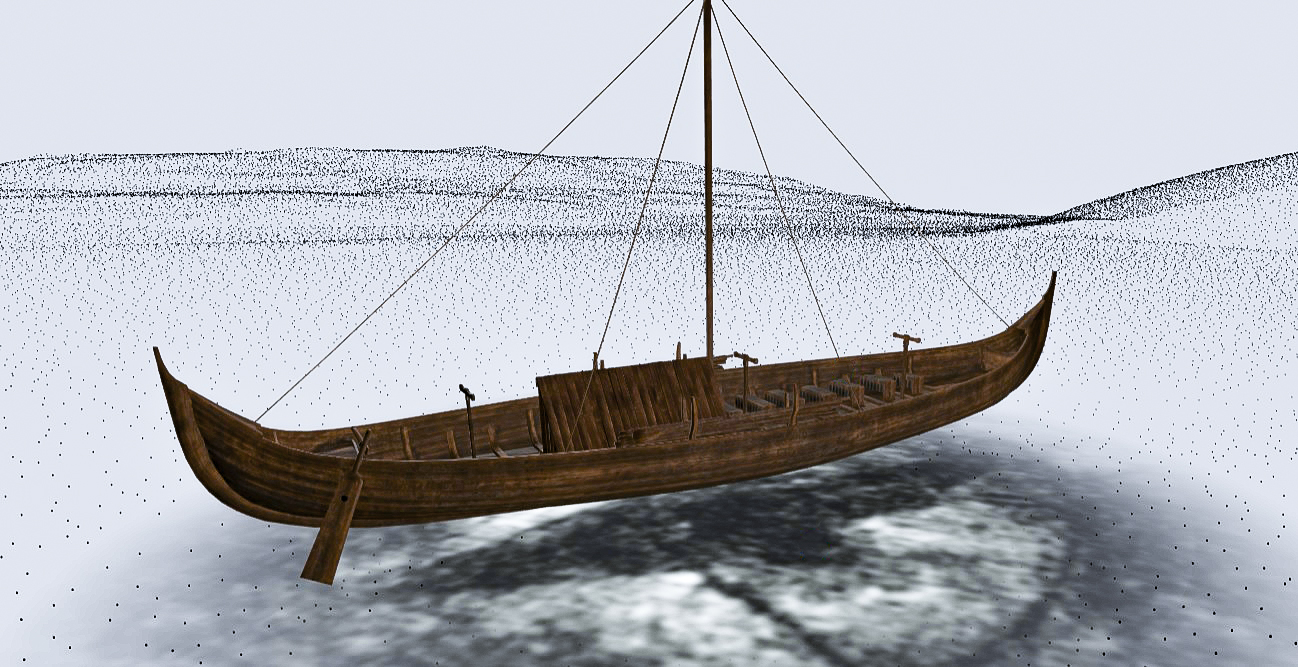




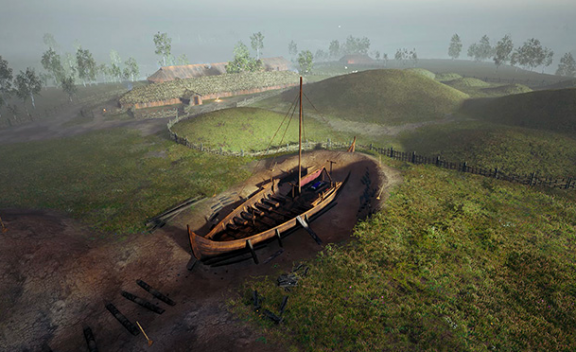
The area where the Gjelestad ship was discovered has yielded a wealth of archaeological findings spanning various periods, with evidence of human activity dating back to around 1500 BC.
The prominent Jellhaugen mound stands out in the landscape near Halden, close to the E6 highway. It has stood since its construction during the migration period (400-550). The mound is believed to have been built in the 6th century, approximately 300 years prior to the burial of the Gjelestad ship. Geophysical research, test excavations, and metal detection have provided archaeologists with valuable insights into the prehistoric activities that took place in Gjelestad.
It is evident that Gjelestad held significant importance. Since 2015, numerous discoveries of prehistoric objects have been made with the assistance of metal detectors. In 2017, the former Estfold County Council conducted surveys that revealed traces of four mounds destroyed by plowing, along with packing stones interpreted as graves. Additionally, several pits for poles and fireplaces were uncovered. GPR surveys conducted in 2018 and 2019 unveiled the ship burial and the remains of 15 mounds destroyed by plowing, as well as pits from the poles of at least five houses. Radiocarbon dating conducted in 2019 indicated that the oldest traces of human activity at the site date back to the Bronze Age (1800-500 BC), while most of the post pits belong to the migration period.
Following the migration period, it appears that settlement activity ceased, and the site took on a sacred character with a significant collection of burial mounds. Currently, the Gjelestad ship is the only known structure that can be dated to the Viking Age. However, parts of two similar buckles, the end handle of a ring buckle, a dirham (Arabic coin), and a weight have been discovered by metal detectors, providing further evidence of Viking activity.
When the Gjellestad ship was buried somewhere between the late 8th and early 10th centuries, it aligned itself with the established symbol of power within the landscape. Leaders associated themselves with the power of the environment by utilizing the same burial site. Similar to the ship burial in Borre and the presence of large mounds in the same burial ground, Gjelestad is also situated within an older landscape characterized by monumental mounds and large halls. There are strong indications that Gjellestad, like Gokstad, served as an important trading post just a few hundred meters from the ship's grave. On the Hjelmungen farm, located on the southern side of the E6, a significant number of weights and other artifacts associated with trade and production have been found. Furthermore, the concentration of discoveries is in close proximity to the Viking Age coastline. Overall, the Gjelestad complex has the potential to become one of the best-preserved Viking leader settlements in Norway.