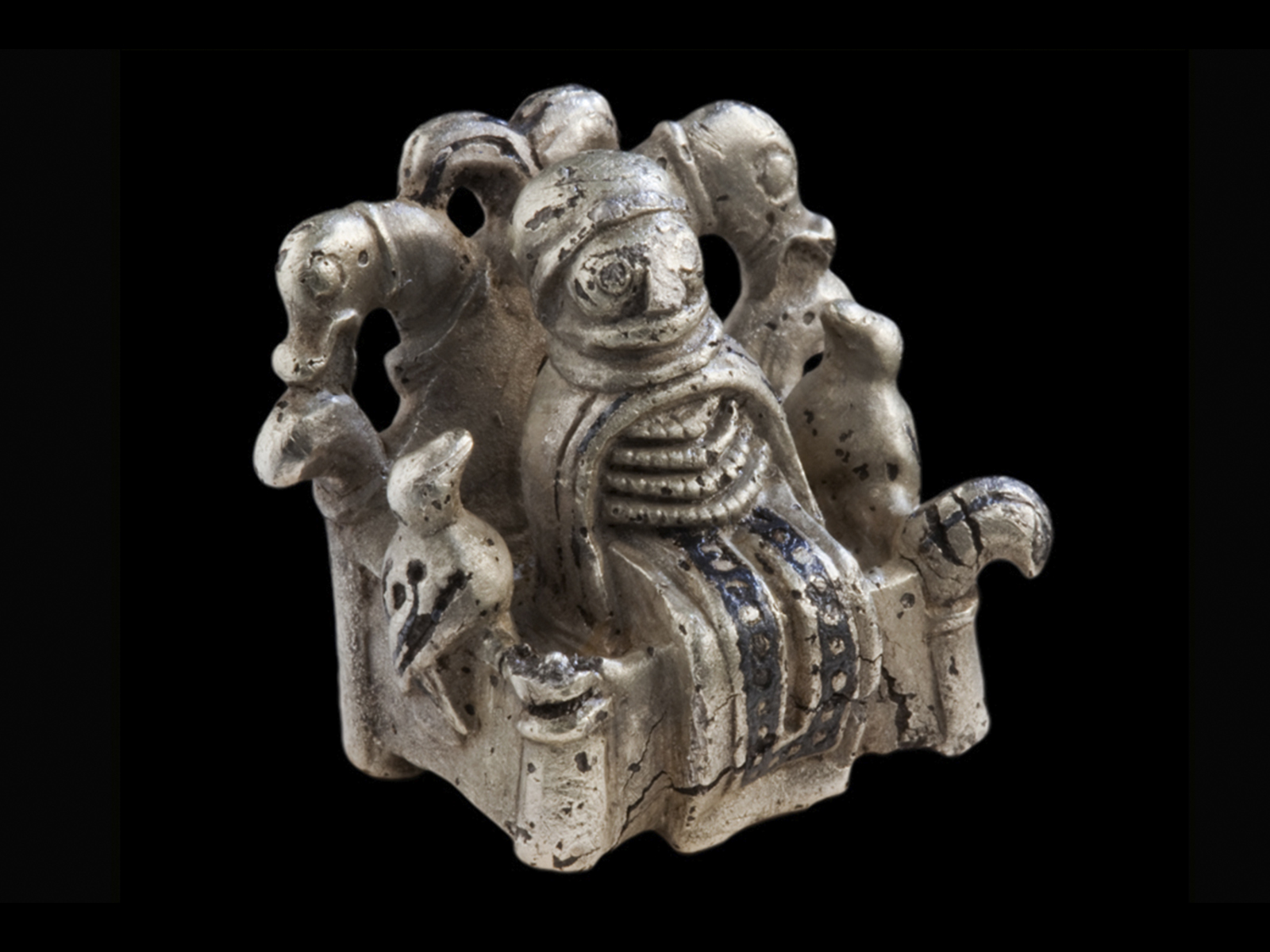


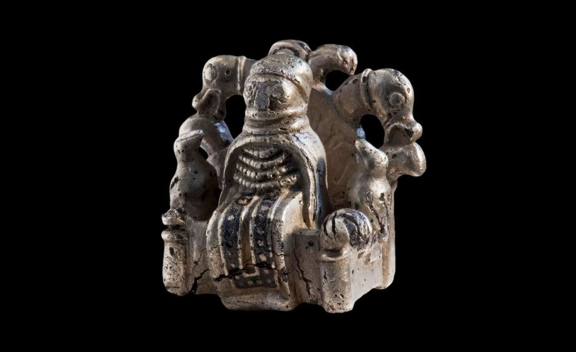
Odin of the Leira is a small cast silver figurine, dating back to around 900 AD, which portrays a man seated on a throne surrounded by two birds and two animal heads.
This figurine was discovered by local amateur archaeologist Tommy Olesen on September 2, 2009, during excavations at the Roskilde Museum in the village of Gammel Leira ("Old Leira"), near the modern city of Leira, Denmark. It was unveiled at the Roskilde Museum on November 13, 2009, and is now part of a permanent exhibition.
The cast silver statuette, dating to approximately 900 AD, measures 18 mm in height and weighs 9 grams. It depicts a man seated on a throne adorned with various items, including a floor-length dress, an apron, four bead necklaces, a neck ring, a cape, and a hat without a frame. Two birds are perched on the armrests, and the back of the throne features the heads of two animals. The figurine is inlaid with black niello (a black alloy) and has gold accents.
The identity of the depicted figure has been a subject of debate. The excavators initially interpreted it as the god Odin seated on the throne of Hlidskjalf, from which he could view all the worlds. The birds were seen as the ravens Huginn and Muninn, who gathered information for Odin, and the animal heads possibly symbolized Odin's two wolves, Geri and Freki. However, some experts, particularly those specializing in Viking Age clothing and gender representation, pointed out that the figure is dressed entirely in women's clothing. This led to the theory that the figurine might actually represent the goddess Frigg or Freyja. Comparisons were drawn between "Odin of the Leira" and a silver figure, often referred to as Freia, discovered in Aske, Sweden.