

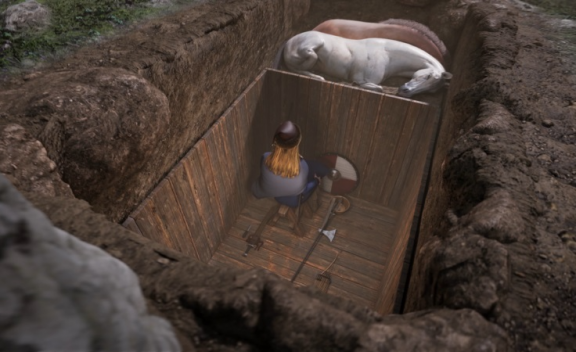
The discovery of the "Warrior Woman Viking" has been a significant revelation in the study of Viking history. Initially, the individual buried with the trappings of an elite warrior in a chamber grave in Birka, Sweden, in the tenth century, was assumed to be a male warrior when the grave was excavated in 1889 by archaeologist and ethnographer Jalmar Stolpe.
However, in 2017, osteological analysis and DNA studies confirmed that the remains indeed belonged to a woman. This revelation challenged the previous assumption and led to a reconsideration of her identity and status in Viking society. The study concluded that the artifacts buried with her suggested she was a high-ranking professional warrior. Nevertheless, some archaeologists and historians have contested this conclusion, arguing that the presence of these artifacts does not necessarily prove that she was a warrior in a patriarchal Viking culture.
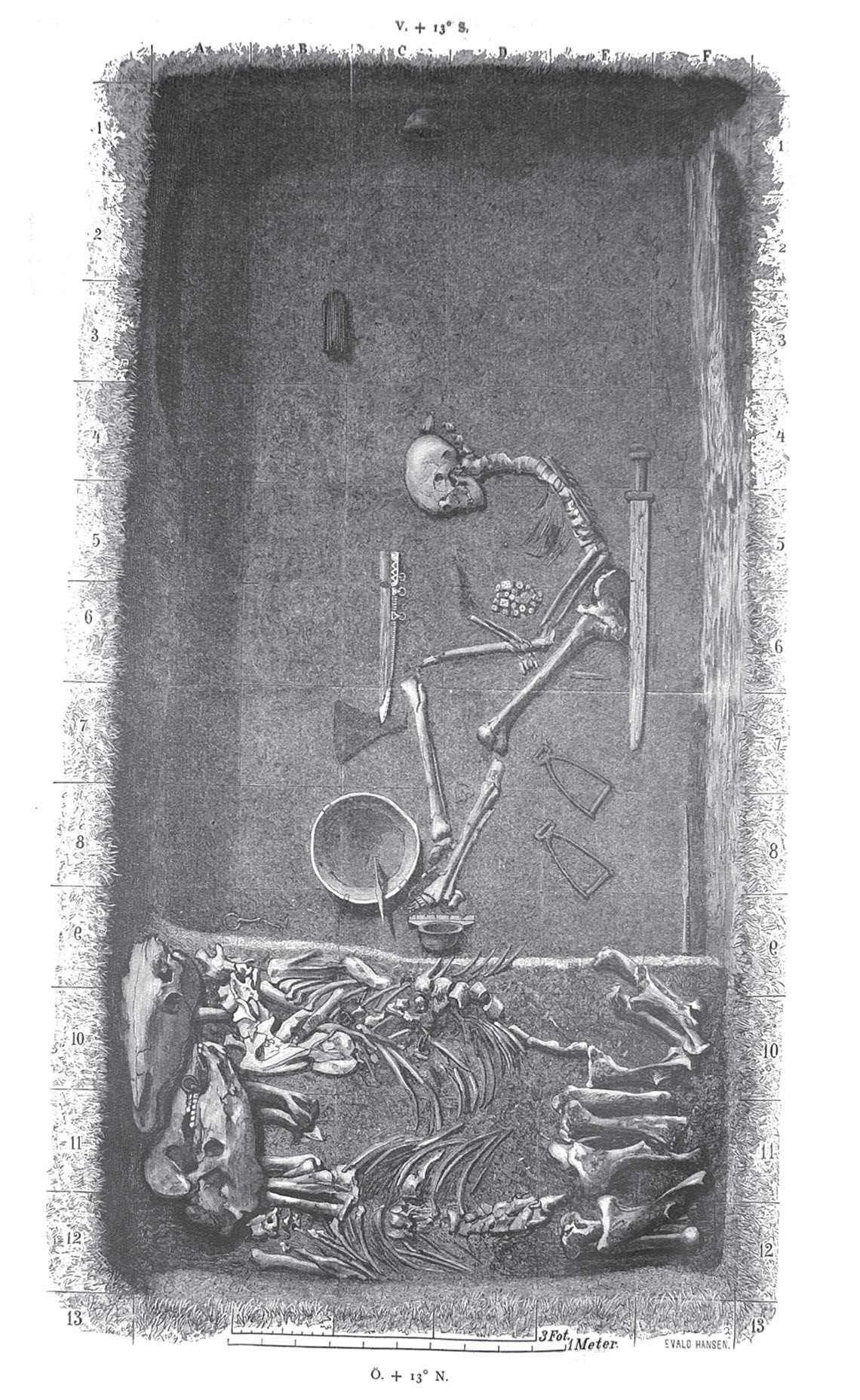
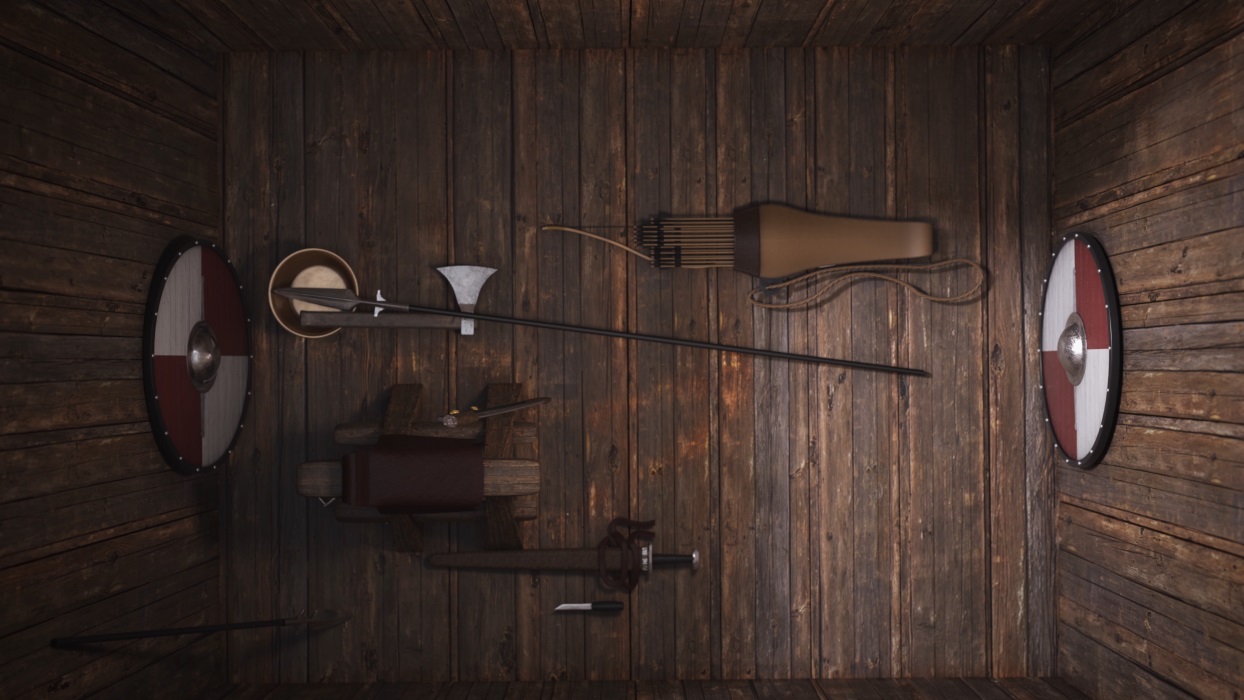
The debate surrounding the role of women in Viking society has been fueled by this discovery and subsequent research. The grave, known as Bj 581, was marked by a large stone boulder and contained a wooden chamber measuring 3.45 meters in length and 1.75 meters in width. The woman's body was found in a seated position, wearing silk clothing adorned with silver thread ornaments. The grave goods included a sword, axe, spear, armor-piercing arrows, a combat knife, two shields, and two horses (a mare and a stallion). For over a century, it was believed to be the burial site of a male "battle-hardened man."
In the 1970s, research began to cast doubt on the assumption that the skeleton belonged to a male. In 2014, osteological analysis of the pelvic bones and lower jaw by Anna Kjellström, a bioarchaeologist from Stockholm University, confirmed that the individual was indeed a woman. Some skepticism persisted among archaeologists, suggesting that the bones may have been mislabeled in the past or possibly mixed with those from nearby graves.
Further investigation, including DNA analysis, was conducted by Charlotte Hedenstierna-Jonson's team and published in September 2017. This study definitively confirmed that the skeleton belonged to a woman, as it lacked Y chromosomes and had two different X chromosomes. The findings have raised questions about the role of women in Viking society and have prompted a reevaluation of gender and identity among Viking warriors.
The same study also conducted an analysis of strontium isotopes on the skeleton to determine the geographical origin of the individual. This analysis revealed that the isotopic markers were similar to those of modern humans living in areas that were under Viking influence. This raised the question of whether this individual was originally from Birka or if she had settled there at some point.
The study's conclusion was highly controversial: "the individual in Tomb Bj 581 is the first confirmed female Viking warrior." In response to criticism of their initial research, the authors published a second article in Antiquity that provided additional information about their methodology and reaffirmed their conclusion.
The grave's contents were also analyzed, revealing the presence of a game set with a board and figures. These findings were interpreted as evidence of strategic thinking and suggested that the person buried in this grave had the capacity to lead troops into battle. The Guardian reported that "the pieces, perhaps from Hnefatafl, a precursor to chess, indicate that the female warrior from Tomb Bj 581 was a combat strategist." According to Anna Kjellström, "only a few warriors are buried with gaming pieces, and they signify strategic thinking. Other evidence also indicated her affiliation with the military caste. The Washington Post noted that "the warrior was, in fact, a woman. Not just any woman, but a Viking woman, a shieldmaiden, akin to the ancient Brienne of Tarth from Game of Thrones." Archaeologist David Zori pointed out that "numerous sagas about the Vikings, such as the 13th-century saga about the Volsungs, recount stories of 'shield maidens' fighting alongside male warriors."