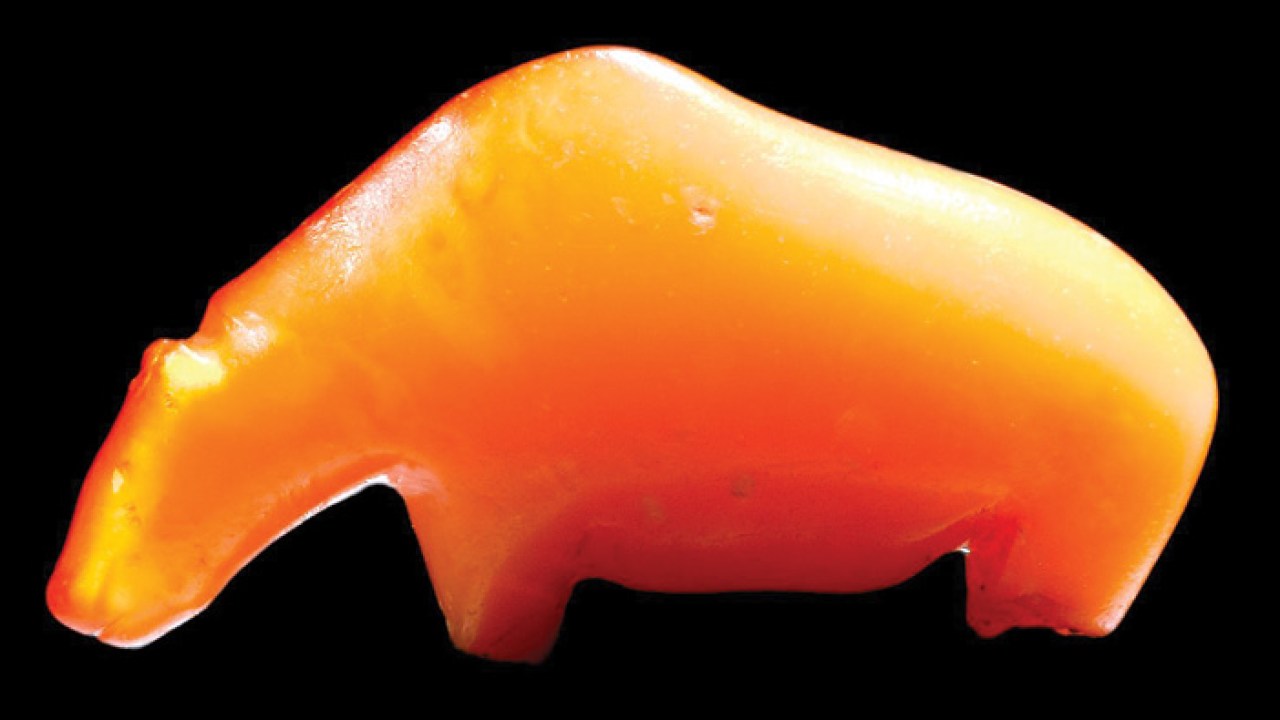


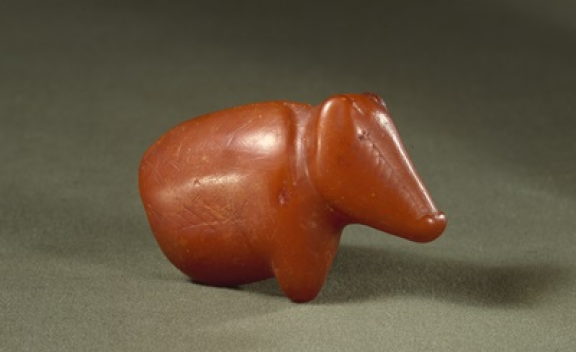
Denmark has yielded numerous artistic treasures from the Mesolithic period, including five amber bears, a bird, and a moose. These amber figurines are notable for their elegant and lifelike forms, suggesting that the people who crafted them had a keen understanding of the physical characteristics of real bears, birds, and moose. These remarkable Stone Age amber artifacts were typically discovered in swamps or on beaches, making their dating somewhat challenging. In some cases, Stone Age people adorned their objects with intricate designs or geometric patterns. To date decorated amber items, archaeologists often rely on associations with other objects known from the Mesolithic era, such as bones.
Among these amber treasures, one bear was found on the west coast of Fannö, while another was discovered on Lild Strand in northern Jutland. But how did these Mesolithic masterpieces end up on the beach and subsequently come to light?
During the Stone Age, the configuration of coastlines was different from what we see today. Over time, the shoreline has been influenced by changes in sea levels, as well as the land's gradual rebound following the last ice age. This ongoing land uplift continues today. To the north of a particular line on the map, the land has risen, while to the south of that line, the coast became submerged due to rising sea levels. Consequently, some Stone Age settlements that were originally located south of this "slope line" are now underwater or situated at the shoreline's edge. As a result, objects from these settlements could have been washed into the sea and eventually found on the beach.
Although the amber animal figurines are visually stunning and decorative, their exact purpose in the Mesolithic period remains a subject of speculation. Faint grooves on the necks of the amber bears suggest that they may have been worn as pendants or amulets, with the grooves indicating the friction caused by a string or cord. Bears have held significant cultural and spiritual significance for hunters in the northern hemisphere, possibly due to perceived human-like qualities or a sense of kinship between Stone Age hunters and bears. It's conceivable that the figurines of a bird and a moose served similar functions as protective amulets or symbols of connection with these animals in the spiritual or hunting realm.