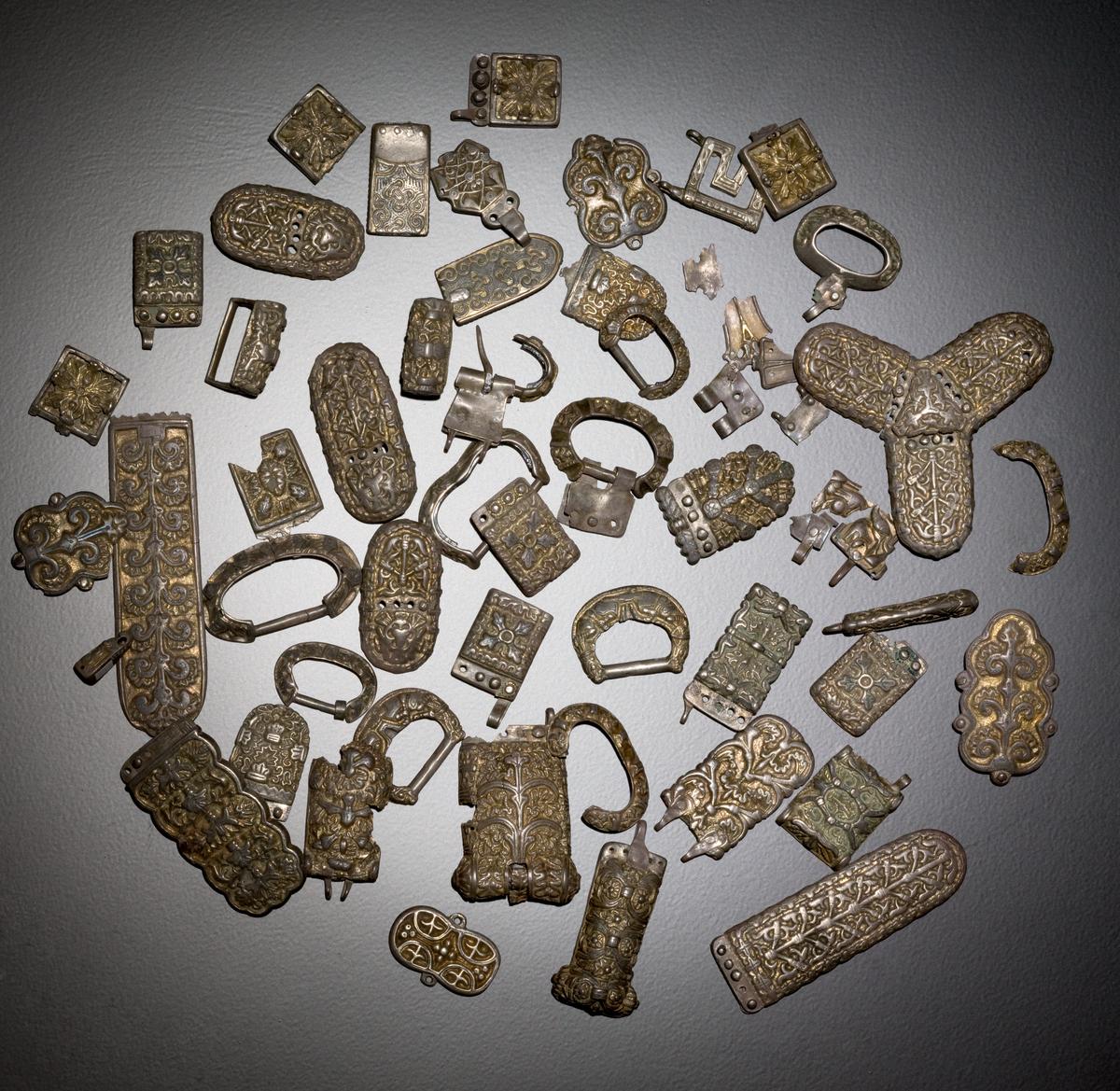


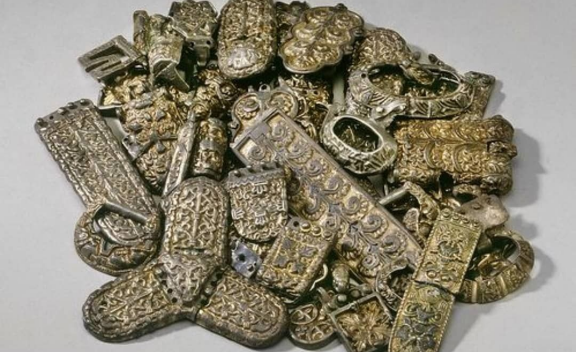
The 2002 discovery in Dusminda is a significant archaeological find containing around 50 silver objects, primarily comprising buckles, lanyards, and pendants, with a total weight of approximately 1.3 kilograms of silver. Many of these silver items were crafted in the Frankish kingdom during the period 820-870 AD, aligning with our era. However, some of the objects were made in Scandinavia between 850-950 AD, as indicated by their ornamentation.
The composition of the hoard and the dating of the individual pieces suggest that it was buried in the mid-900s or later. At some point in more recent history, the hoard appears to have been disturbed by a plow, resulting in the scattering of the objects over an area measuring approximately 10 by 15 meters.
During the Viking Age, it was relatively common to bury silver hoards as a means of safeguarding wealth. Numerous examples of such hoards have been discovered in Denmark. What makes the Dusminda find unusual is that it consists of high-quality silver weapons from the Frankish kingdom. Finding such a concentration of fine silver weapons is quite exceptional in Europe.
The exact identity of the individual who buried the treasure and their motivations remain a mystery. It could have been a wealthy individual seeking to protect their valuable possessions, or it might represent the metal inventory of a skilled silversmith or a traveling merchant. The true story behind the hoard and the circumstances of its burial may never be fully known, but it provides valuable insights into the material culture and economic activities of the time.