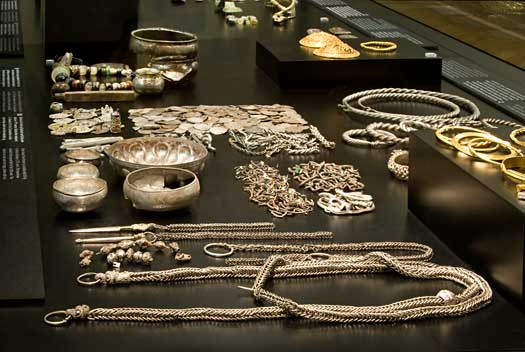


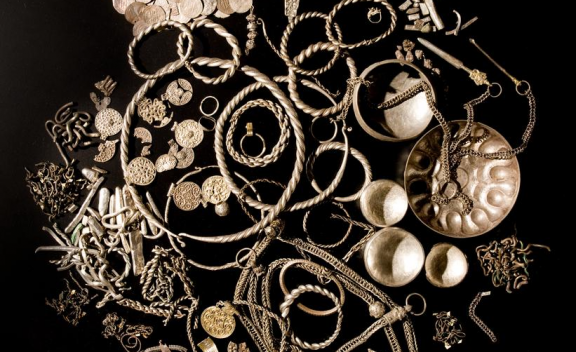
The silver hoard from Terslev in Zealand is a remarkable archaeological discovery that comprises 6.6 kilograms of silver, including a total of 1,751 coins. These coins primarily originate from the Arab world, specifically the Islamic Caliphates. Notably, the most recent coin in the hoard is dated to the year 944 AD. The hoard was buried during the second half of the 10th century.
In addition to the coins, the Terslev hoard includes various other items, such as neck and arm rings, toiletry chains, and costume jewelry. One noteworthy feature of the hoard is a drinking set that consists of four Scandinavian bowls and a large embossed bowl, which is believed to have possibly originated from Persia. This diversity of objects suggests a wide range of cultural influences and trade connections during the time the hoard was assembled.
Furthermore, a fragment with a Latin inscription is also part of the hoard. This inscription, which reads "...BATIS," likely comes from an altar plate known as a paten. The presence of this fragment with a Latin inscription suggests a connection to Christianity, adding another layer of complexity and historical significance to the Terslev hoard. Overall, the hoard provides valuable insights into the interconnectedness of cultures and trade networks during the late 10th century in the region.