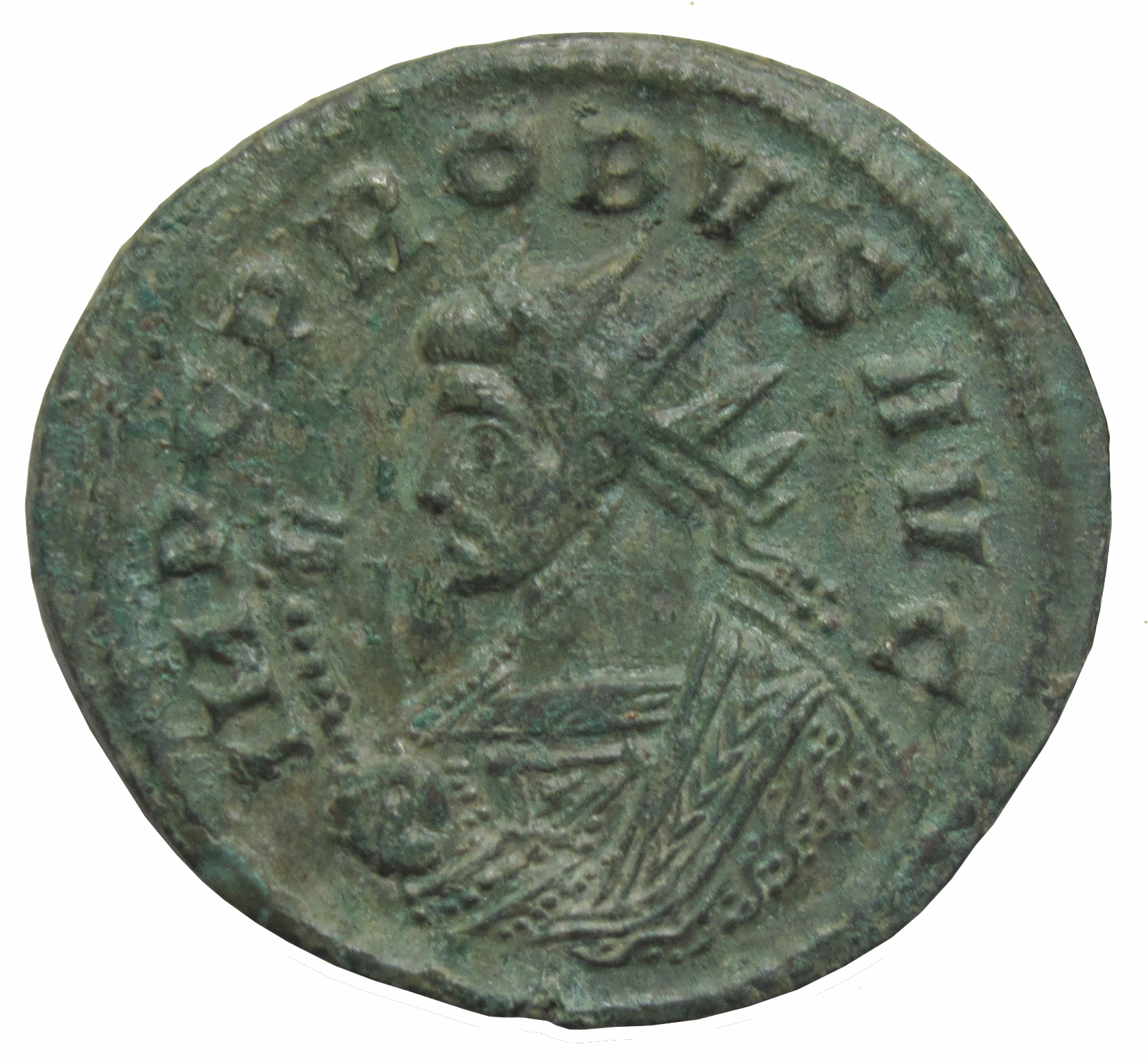



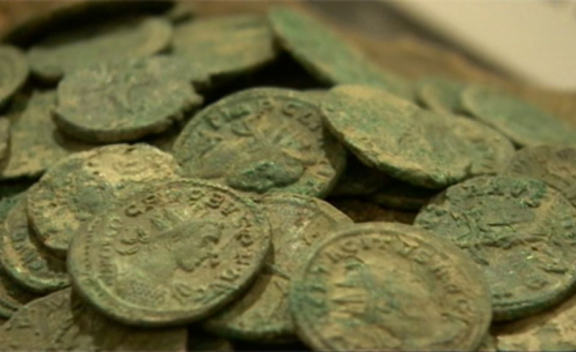
The Bredon Hill Hoard, also known as the Bredon Hill Roman Coin Hoard, is a remarkable discovery consisting of 3,784 Roman silver coins. It was found in June 2011 by two metal prospectors on the Bredon Hills in Worcestershire, England, approximately 400 meters north of Kemerton Campground, which features an Iron Age Hill Fort. The coins were found inside a clay pot that had been buried around the middle of the 4th century CE, within the confines of a Roman villa. Subsequent archaeological excavations confirmed the presence of this villa. This hoard spans the reigns of sixteen different emperors from the mid to late 3rd century and is the largest collection of Roman coins ever discovered in Worcestershire.
The discovery was made by metal detectors Jethro Carpenter and Mark Gilmore of Redditch on June 18, 2011. They had previously obtained permission from the landowner to use metal detectors in the area. Initially, they found a nail, but as their metal detector continued to register other metal objects, they decided to dig further. This led to the uncovering of several shards of earthenware and eventually the coins, buried about 50 cm below the surface. Upon realizing the significant number of coins, they carefully backfilled the hole and reported their discovery to Richard Henry, the Program of Portable Antiquities Finds Communications Officer for the Worcestershire and West Midlands regions, on June 20.
Archaeologists conducted a preliminary survey of the site on June 21, and a comprehensive excavation followed in early July over a two-week period. The excavation revealed that the hoard was situated within the remains of a villa, a rather unusual location as most Roman hoards are typically found in open areas, away from buildings. The archaeological examination uncovered three distinct layers at the site:
1. The lower level featured the stone foundation of a half-timbered villa with artifacts and coins dating from the second to the end of the third century.
2. The middle level contained post pits associated with a wooden building and pottery dating to the third or fourth century, along with two coins from the late third century.
3. The upper level consisted of rubble and pottery from the late 4th or early 5th century, and it was on this level that the hoard had been buried in a hole.
Interestingly, a single coin dating to approximately 355-361 CE was found in the soil surrounding the hoard pit, suggesting that the coins were buried around the middle of the 4th century, nearly a century later than the date of the latest coins within the pot.
Once the coins were removed and separated from the surrounding soil, they were carefully dried. On July 15, 2011, the 11 kg (approximately 24 pounds) of coins were sent to the British Museum in London for preservation and identification, shedding light on this remarkable find from Roman history.