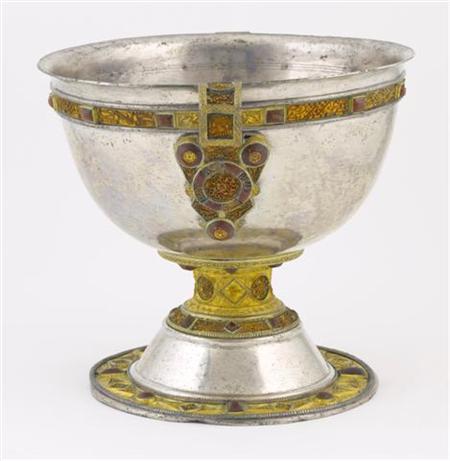


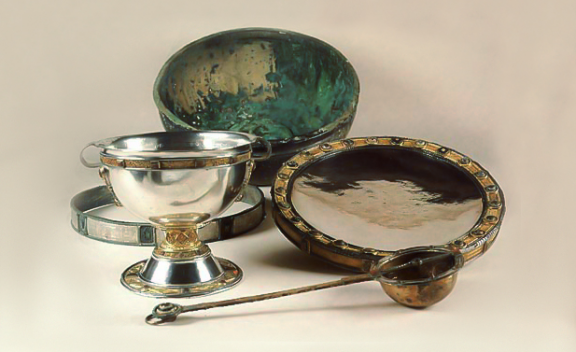
The Derrinaflan Bowl is a valuable medieval treasure located in the main National Museum of Ireland. Although it is often overshadowed by its more famous sister, the Ardagh Chalice, it is a remarkable piece of metalwork with an intriguing history.
The discovery of the Derrinaflan Hoard took place on Derrynaflan, an island of pasture surrounded by marshes near the town of Killenaule in County Tipperary, Ireland. The island has been the site of an abbey since early Christian times and was protected by the National Monuments Act, making it illegal to interfere with or damage the site. However, in 1980, Michael Webb and his son came to the site with metal detectors to pursue their hobby.
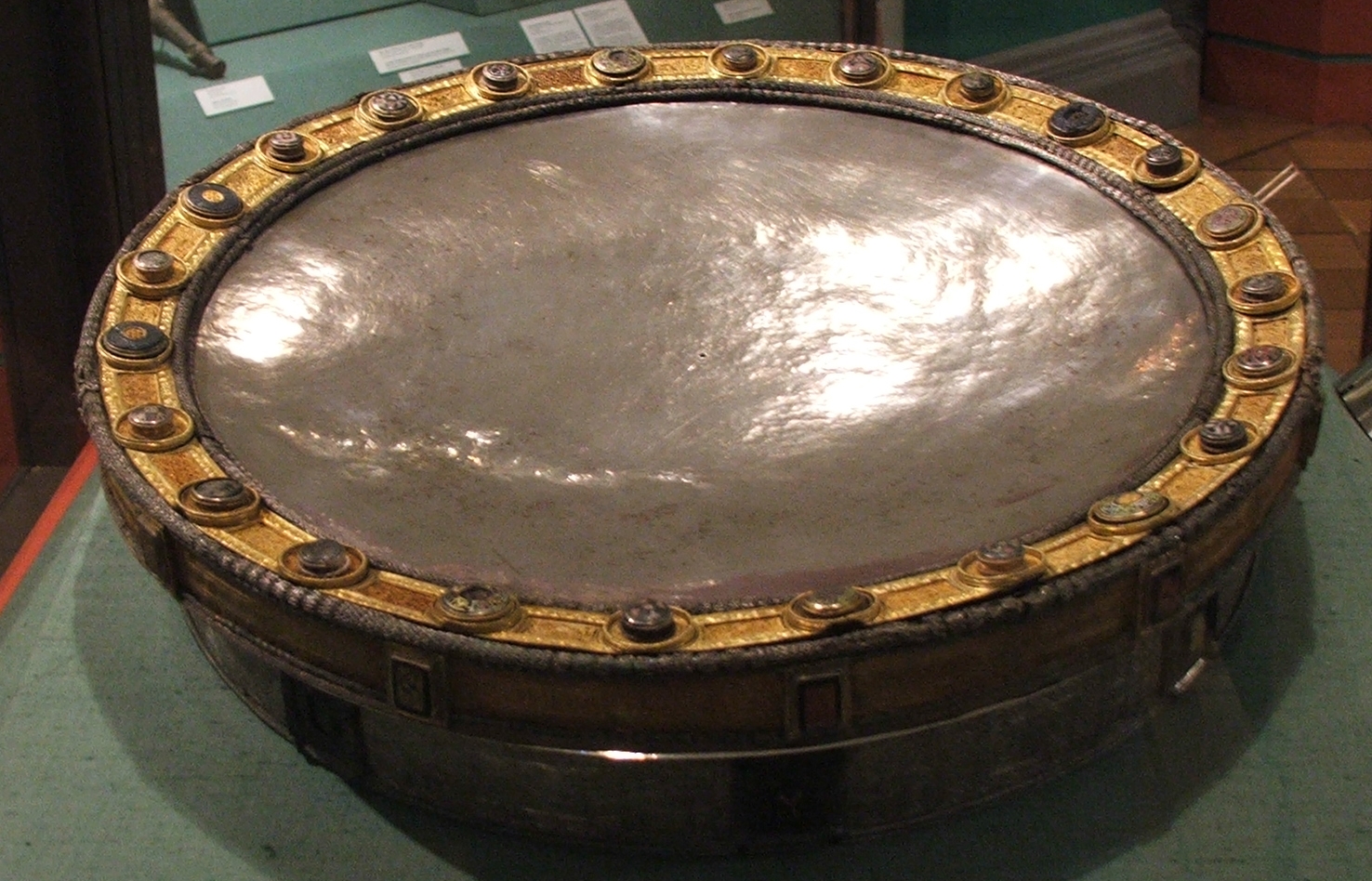
Despite being prohibited from digging, they discovered a significant metal deposit and decided to excavate it anyway. Within a large upside-down bronze bowl, they uncovered a bowl, a silver paten, a hoop (likely used as a stand for the paten), and a liturgical strainer. The most significant find was the bowl, which bore a striking resemblance to the well-known Ardagh Chalice discovered nearby in County Limerick.
Recognizing the immense value of their discovery, Webb and his son concealed it for three weeks. Eventually, they contacted a prominent archaeologist who promptly reported the find to the National Museum. During the subsequent excavation, several missing pieces of each object were found. Webb was celebrated as a national hero and awarded a £10,000 reward. Dissatisfied with this reward, given the obvious value of the treasure, Webb and his son initiated a legal battle that lasted nearly seven years, ultimately reaching the Supreme Court. They demanded £5 million in compensation for the discovery but were unsuccessful.
The outcome of this legal battle led to a comprehensive revision of Ireland's treasure laws. Under the new laws, all archaeological sites automatically became state property, and the concealment or trade of archaeological finds was prohibited. Despite their unsuccessful legal pursuit, the Webbs received an additional £50,000 as compensation for their role in the discovery. The Derrinaflan Bowl, along with the other objects from the hoard, remains an invaluable piece of Ireland's archaeological heritage and a testament to the country's rich history.
The Derrinaflan Bowl is believed to have been buried in the ground during the tumultuous period of the 10th to 12th centuries in Irish history. This era was marked by Viking raids and dynastic battles, which placed considerable stress on the country. Monasteries during this time were among the wealthiest places in Ireland, serving as centers of education, learning, and religious activities. The monks residing in these monasteries were highly educated and skilled in various arts, including metalwork. It was these monks who crafted the beautiful ornaments and liturgical vessels like the Derrinaflan Bowl.
Given that monasteries were natural targets for Viking raids and had limited means of protection, monks frequently buried their most valuable objects when they sensed an impending attack. As a result, treasures like the Derrinaflan Hoard were not uncommon. What makes the Derrinaflan Bowl unique is that it is one of the finest and most exquisite examples of ecclesiastical art from that period.
The Derrynaflan monastic site, where the treasure was discovered, was founded in the 6th century by Ruadho Of Lorrh. The name "Derrynaflan" translates to "forest of two flanns" in Irish, with these two Flanns being co-patrons of the area who later became saints. Despite being surrounded by marshes, the site was easily accessible via several paths and had strong connections with churches in Lismore, Emley, and Cork. The monastery was also in alliance with the Eile and Eoganacht tribes that dominated the surrounding lands. This interaction with various sources of inspiration likely contributed to the skills and artistic inspiration of the monks who created such exceptional pieces of metalwork.
The Derrinaflan Bowl bears a striking resemblance to another national treasure of Ireland, the Ard Bowl, which predates it. The Chalice of Ard, despite being larger, more ornate, and crafted with superior craftsmanship, served as a significant influence on monasteries throughout Ireland when it was first created. While the Derrinaflan Bowl may be smaller and less ornate, it still reflects advancements in metalworking techniques and showcases its own unique beauty.
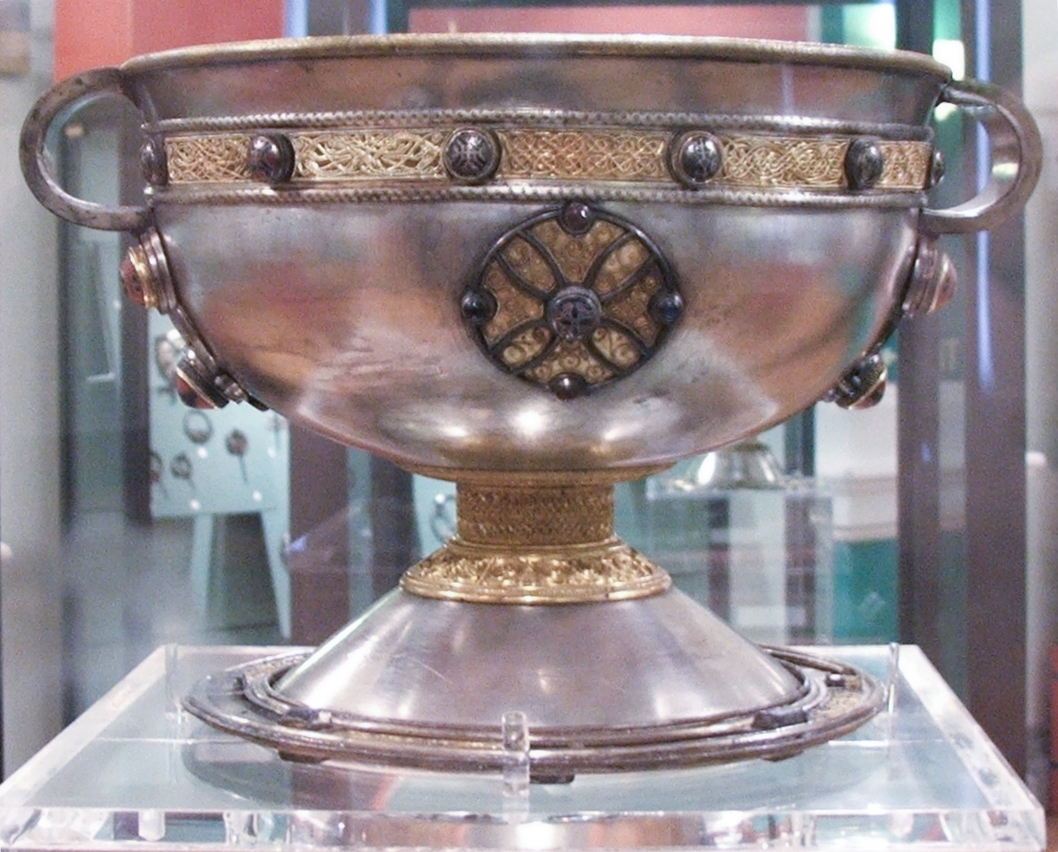
The Derrynaflan Bowl consists of several parts, the two main ones being the bowl and the base, which are secured by a hollow cast copper alloy pin that locks in place with a retaining plate on the underside of the base. It is much safer than the Ard Bowl and is constructed of higher quality materials, a testament to the progress made in the skills and methods of the artisans. The bowl and base are made of forged silver, polished on a lathe, and the entire piece is 19.2 cm in height and 21 cm in diameter. There are two handles attached to each side of the bowl, and both the bowl and base have several panels of gold filigree as well as 54 amber carnations. The bowl and base had to be decorated separately before installation and then finished.
A band of gold filigree lines the outside of the Bowl Bowl and the upper flat section of the base plate, each interspersed with amber studs at equal distances. The stem where the bowl meets the base is also covered with gold decorative panels, and the handles also contain recesses into which filigree panels are inserted and held in place by stitching. The handles and foot are the most ornate elements of the bowl with round and diamond-shaped panels contrasting with the simple ribbon decoration and square studs along the base and bowl. The handles consist of one large central circular panel with three smaller circles forming a triangle, with filigree panels between them. The barrel section consists of alternating diamond-shaped and circular panels.
Within the filigree panels, the most common are interlaced panels and images of animals and their heads, including wingless griffins and dogs. The style of the animals is similar to that of a rich brooch from the same period, indicating that the chalice was built in the 9th century in time for the Viking raids on Ireland. The animals are encircled with beaded wire, and tapered spirals are also regularly included in the design. Although the overall design and decor is very similar to the Ard bowl (except for the medallions on the front and back of the bowl), the differences in skills, materials and methods clearly show that they were not made in the same place or by the same people.