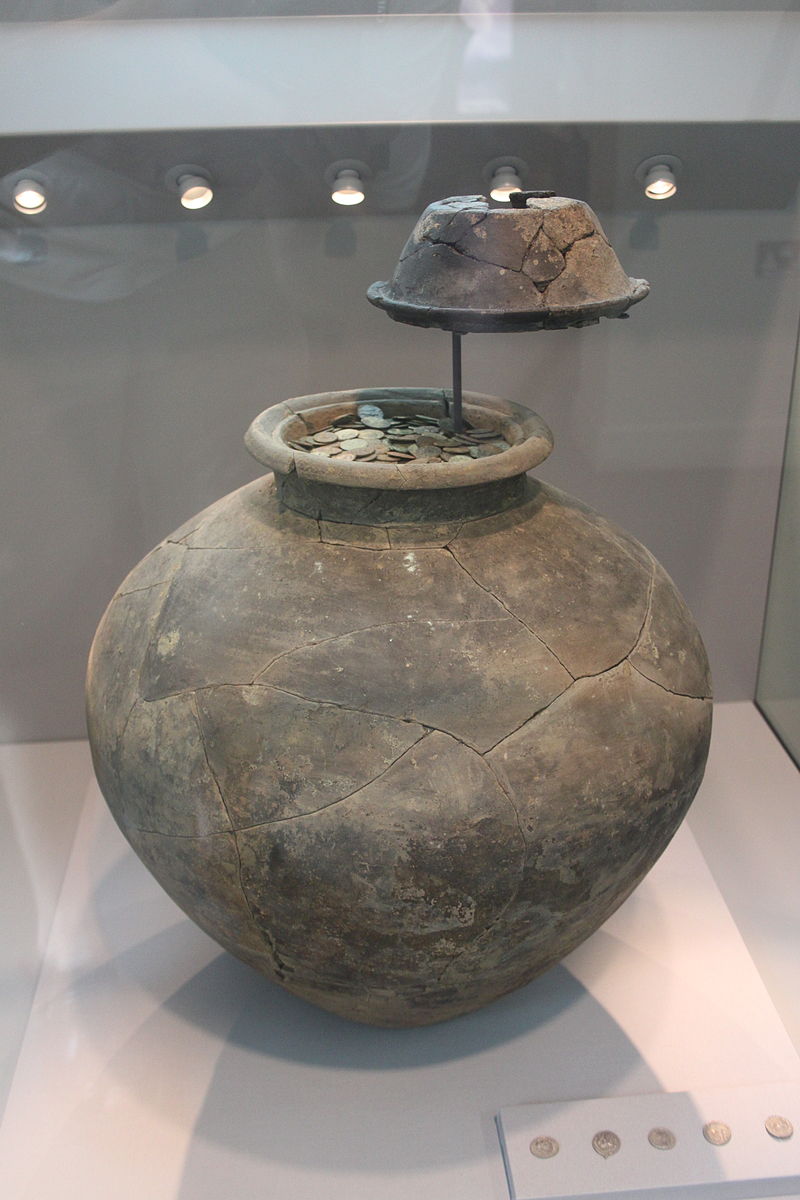


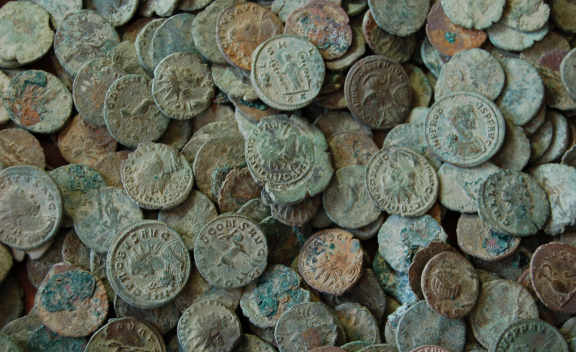
The Frome Treasure is a significant hoard of Roman coins discovered in April 2010 near Frome in Somerset, England. This remarkable find consists of 52,503 Roman coins, which were stored in a ceramic pot measuring 45 cm (18 inches) in diameter. The coins date from the years 253 to 305 AD and are primarily made of depreciated silver or bronze. Notably, the hoard contains the largest group of coins ever found from the reign of Carausius, who ruled Britain independently from 286 to 293 AD and was the first Roman emperor to do so.
The discovery of the Frome Treasure occurred during a metal-detecting expedition by Dave Crisp, who had previously found Late Roman silver coins in the same area. While searching for additional coins related to a scattered hoard, Crisp encountered a "funny signal" and, after digging about 35 cm (14 inches) deep, unearthed a small shining coin and the top of the ceramic pot. Recognizing that he had found an intact hoard, he carefully stopped digging and reburied the hole. Despite being an experienced metal detectorist for over two decades, Crisp had never made such a significant discovery.
The identified coins from the hoard include 67 distinct types, ranging in date from 253 to 305 AD. Most of the coins are made of bronze, but five are crafted from pure silver. Of the 52,503 coins, 44,245 have been identified, while the rest are classified as "unintelligible" pending further cleaning and preservation. Among the identified coins, 14,788 were minted under the central Roman Empire, 28,377 under the Gallic Empire, and 766 under the Britannic Empire of Carausius. Approximately 5% of the identified coins are from the period of Carausius, including five silver denarii issued by him. Notably, during this period, silver denarii were the only type of silver coin minted in the Roman Empire.
Traditionally, many hoards of Roman coins were buried by their owners for preservation, with the intention of eventually recovering them. However, some experts, including Sam Moorhead of the Portable Antiquities Scheme, suggest that in the case of the Frome Treasure, the large and fragile ceramic pot made recovery without breaking it extremely challenging. As a result, the hoard may have been buried as offerings to the gods through vows rather than for later retrieval.