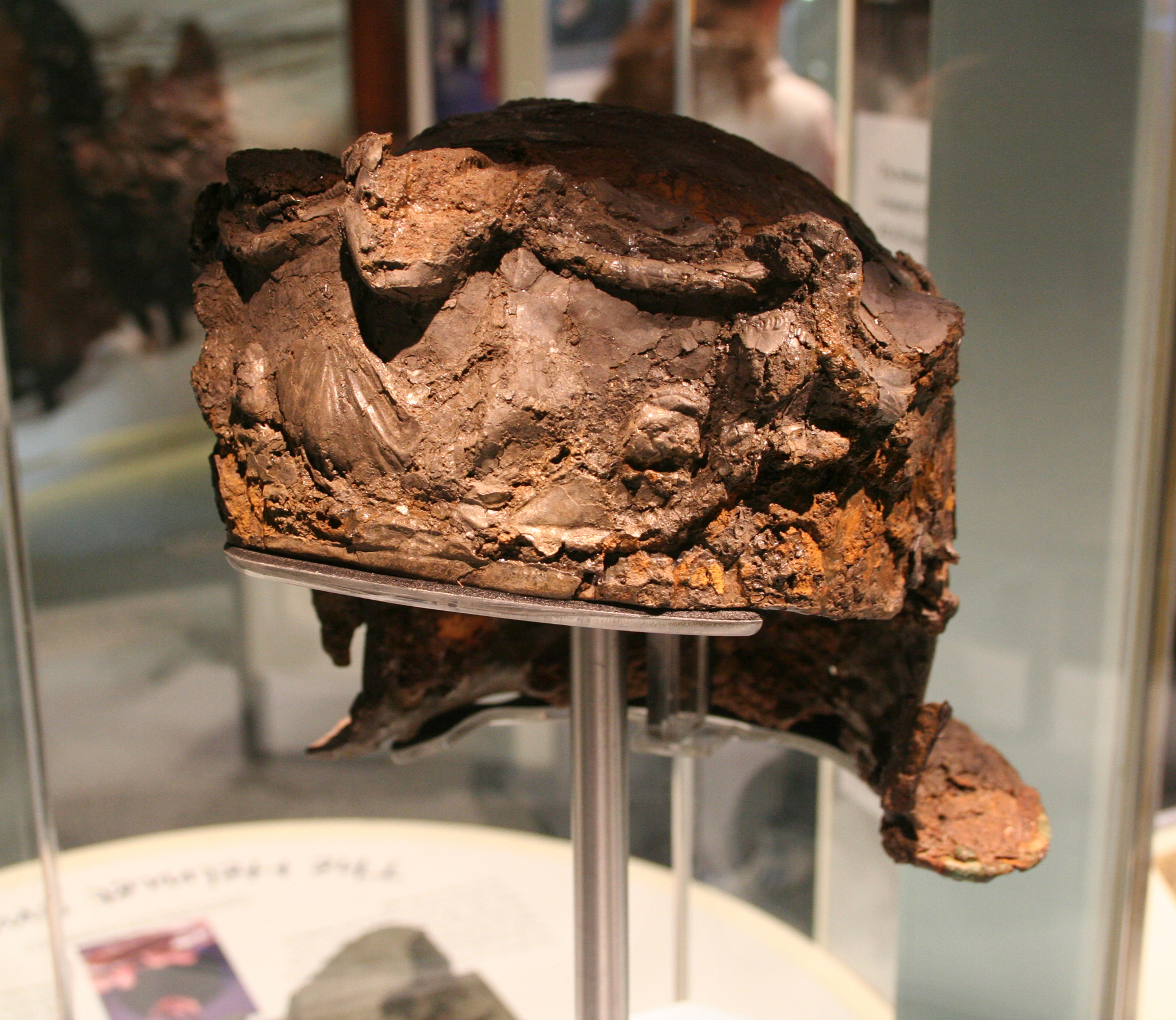


The Hallaton Helmet is a significant archaeological discovery consisting of a decorated iron Roman cavalry parade helmet, originally covered in silver leaf and gilt decoration. It was found in 2000 near Hallaton, Leicestershire, England, by Ken Wallace, a member of the Hallaton Field Group, while searching the area with a metal detector. This discovery led to further investigations by professional archaeologists from the University of Leicester's Archaeological Service, which revealed that the site was used as a large-scale Iron Age shrine.
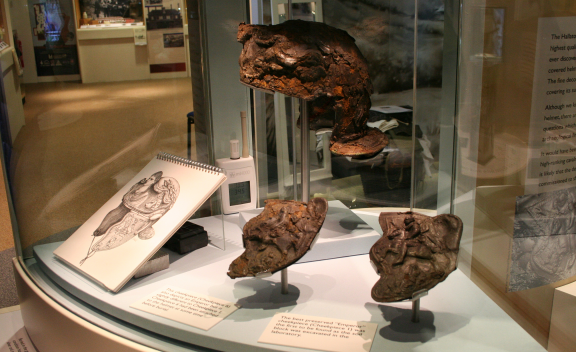
The helmet, despite being found in pieces and suffering from corrosion, retains evidence of its finely decorated design. It features gilded silver and images of goddesses and equestrian scenes. This type of helmet would have been used by a Roman auxiliary cavalryman for display, and possibly in battle.
The specific identity of the helmet's owner remains unknown, but it was found in a ceremonial context, buried alongside thousands of British and Roman Iron Age coins. This suggests that the helmet might have belonged to a Briton who fought alongside the Romans during the Roman conquest of Britain.
The Hallaton Helmet is a rare example of a three-piece Roman ceremonial cavalry helmet. It was made of sheet iron covered with silver leaf and partially decorated with gold leaf. Such helmets were worn by Roman auxiliary cavalrymen during exhibitions known as the hippic gymnasium and may have also been used in battles.
Notably, this helmet is the only Roman helmet ever found in Britain that retains a significant amount of its gilded silver. Its design includes a prominent browplate, similar to the 3rd-century Guisborough helmet found near Guisborough in Redcar and Cleveland. The back of the helmet's bowl was lowered to form a neck shield.
The Hallaton Helmet is highly ornate, with decorative elements including laurel wreaths on the bowl, a toothed browplate bordered with elaborate cables, and a central figure on the brow surrounded by a repousse of lions. The identity of this central figure is uncertain, but she may represent an empress or goddess, possibly resembling Cybele, the Great Mother. The helmet's earpieces are shaped like silver ears, and the neckerchief is adorned with leaf ornaments.
Inside the helmet bowl, fragments of rock pieces were discovered, as well as hinges, a bent pin on the cheek, and multiple cheekplates. The presence of these cheekplates suggests that they might have been used to adjust the helmet's appearance for different occasions or as spare parts for potential damage.
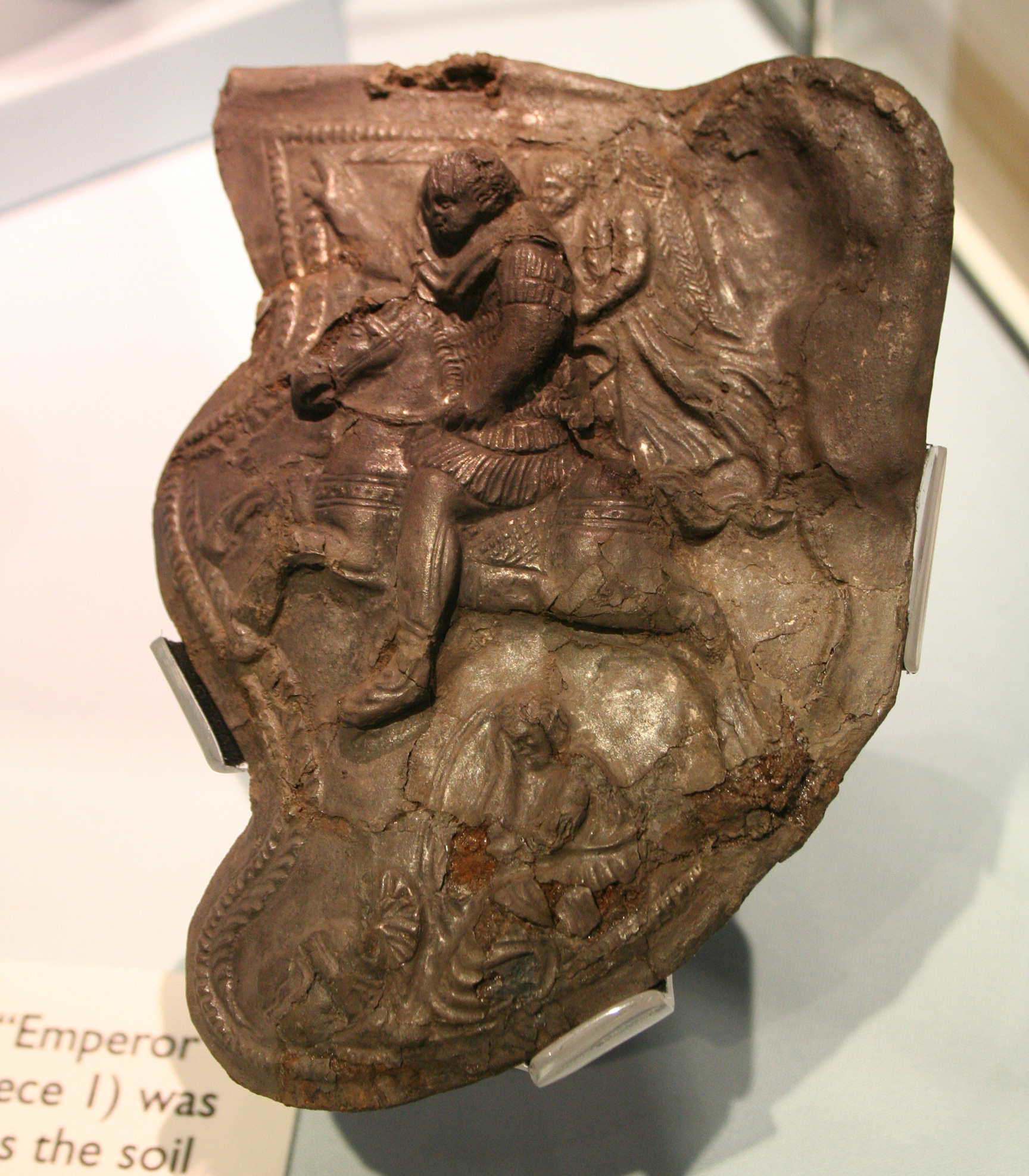
The preserved cheekplates feature equestrian scenes, including a triumphal Roman emperor on horseback, the goddess Victoria crowning the emperor with a laurel wreath, and a depiction of a barbarian figure being trampled by the hooves of the imperial horse. Another cheekplate depicts a figure holding a horn of plenty, possibly from the Near East, along with a Roman helmet and shield.
After nine years of conservation and restoration efforts at the British Museum, supported by a Heritage Lottery Fund grant of £650,000, the Hallaton Helmet is now permanently displayed at the Harborough Museum in Market Harborough, alongside other artifacts from the Hallaton Treasury.