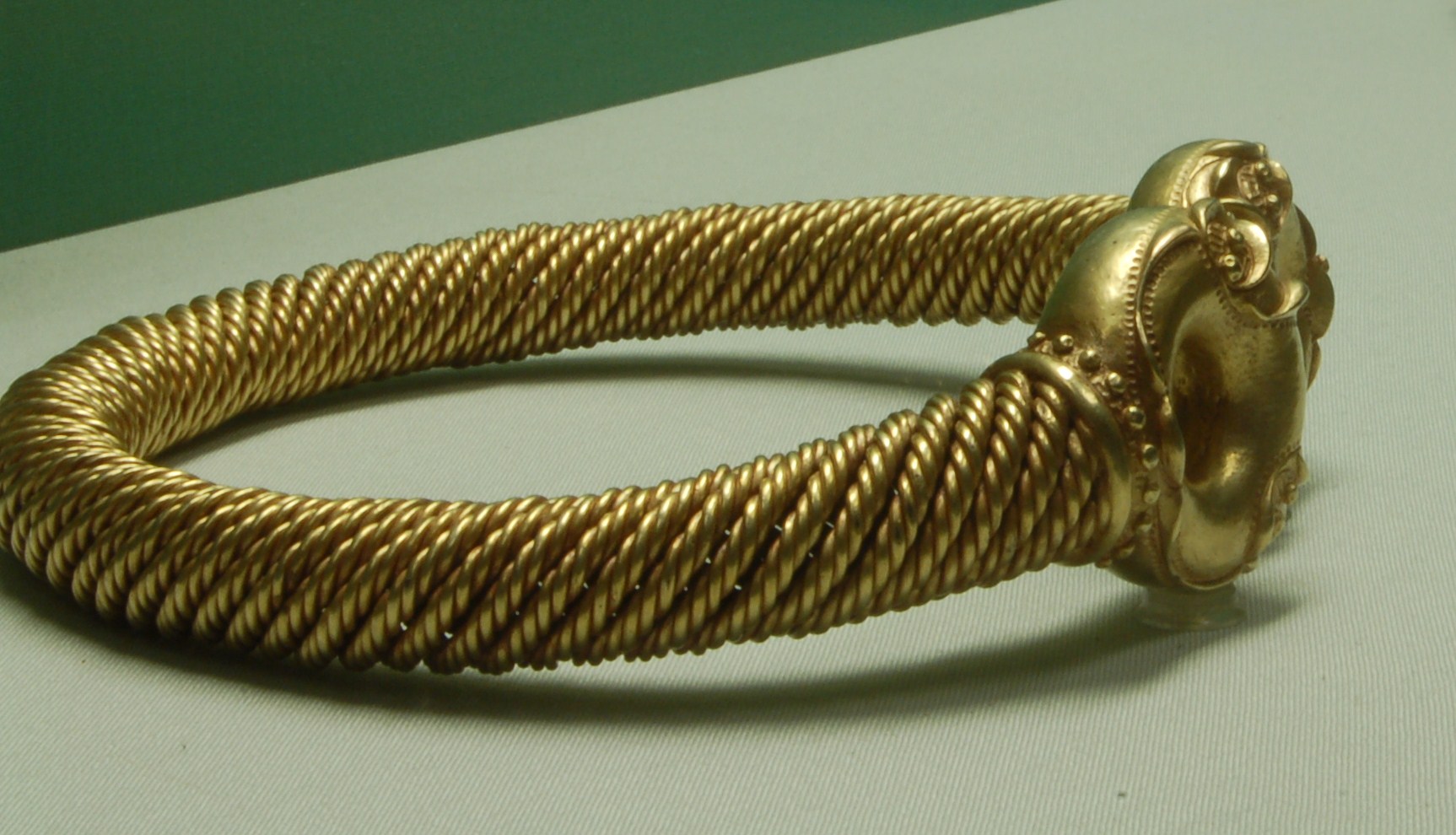


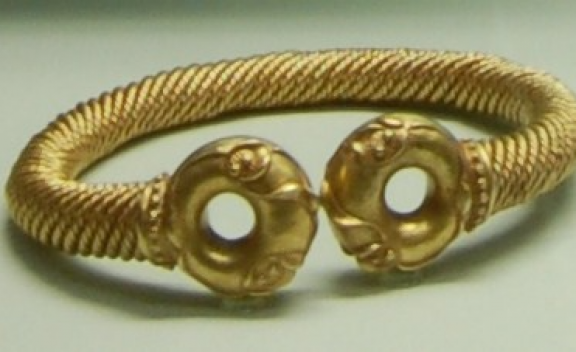
The Newark Torc is a remarkable discovery from the Iron Age, specifically an electrum alloy Torc, which combines gold, silver, and copper. It was found by a metal prospector in the vicinity of Newark-on-Trent, Nottinghamshire, England, in February 2005.
This Torc has a distinctive design, featuring a torso made of electrum weighing approximately 700 grams (equivalent to 1.5 pounds) and possessing a 20 cm diameter. Its body is crafted from rolled gold alloy wire, meticulously woven into eight thin ropes, which are then artfully twisted together. The terminals of the Torc are ring-shaped and adorned with intricate floral and point decorations. Experts believe that this Torc was likely crafted in Norfolk, and its design bears striking similarities to another Torc discovered in Sedgeford, North Norfolk. In fact, some experts speculate that they may have been created by the same skilled artisan. Interestingly, this Torc was intentionally buried in a pit, indicating that it was not lost by accident. The precise reason for its deposition remains unclear, though Jeremy Hill, the head of research at the British Museum, has suggested that it might have been buried as an offering to the gods.
Radiocarbon dating places the Torc's creation between 250 and 50 B.C., with its burial estimated to have occurred around 75 B.C. This remarkable find was made by Maurice Richardson, a tree surgeon, during his metal prospecting activities in a field.
Recognized as a treasure trove in 2005, the Torc was subsequently acquired in 2006 by the Newark Millgate Museum, thanks in part to substantial financial support from the National Heritage Memorial Fund.