

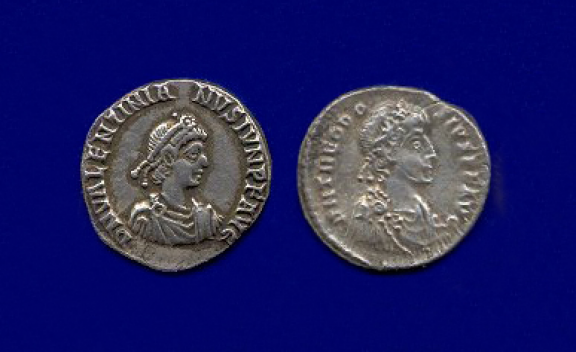
The Stanchester Treasure is a notable hoard consisting of 1,166 Roman coins that date from the fourth to early fifth century. It was discovered in 2000 at Wilcot, located in the Vale of Pewsey, Wiltshire, England. This discovery gained significance due to the substantial number of uncut silver coins found within it, and it marked the most recent dated sample of Roman coins found in Wiltshire.
The treasure was uncovered in a field on July 25, 2000, by John and David Philpotts using metal detectors. The coins were buried within a jug made of Alice Holt-type earthenware. The hoard was named after the former Stanchester Villa, a nearby Roman villa that was likely associated with the treasure. The Wansdyke earthworks in the area also contributed to the name. Earlier excavations of the villa in 1931 and 1969 revealed a wall and evidence of a Roman central heating system. Tiles for the roof and chimney, as well as pottery shards, matched the coins' date range, spanning from the second to fourth centuries.
Following a coroner's investigation that declared it a treasure trove, the Wiltshire Museum in Devizes acquired the treasure for £50,000.
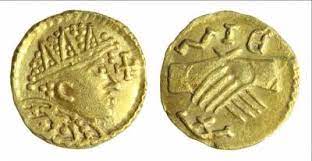
The Stanchester Treasure comprises three gold solids, 33 silver miliarenses (many of which were described as being in "excellent condition"), 1,129 silver siliquae, one copper-alloy Nummus, and a fragment of a bronze ring. The coins in the hoard were never trimmed, indicating that they had never been in circulation.
The earliest coin in the collection was minted under Constantine I, starting in 307, and the most recent coin was struck in 406 during the joint reign of Arcadius and Honorius. Interestingly, the silver coins, in their uncut state, suggest that they were never put into circulation. The period following the last coin's minting saw the declaration of Constantine III as emperor by his troops. He then crossed into Gaul with his army but was defeated by Honorius. It remains unclear how many Roman troops remained in Britain or ever returned, and whether a commander-in-chief was ever appointed for the region.