

The presence of a Neolithic axe quarry at the base of Tievebulliagh has been substantiated. This quarry yielded flint axe heads crafted from porcellanite, and these axe heads have been discovered in various locations across the British Isles, spanning from the Outer Hebrides to the southern coast of England and throughout Ireland. This find aligns Tievebulliagh with other notable axe production sites such as the Langdale axe industry in the English Lake District and the Penmanmoor quarries in North Wales, which were known for producing significant quantities of stone axes.
In the vicinity of Tievebulliagh, remnants, fragments, and unfinished axe pieces have been found. This area appears to have served as a location for sharpening the axes before their completion was done closer to the sea. The finished axes were then exported to various regions, including southwest Ireland, southeast England, and northeast Scotland. Interestingly, no completed axes have been discovered directly at the quarry site itself.
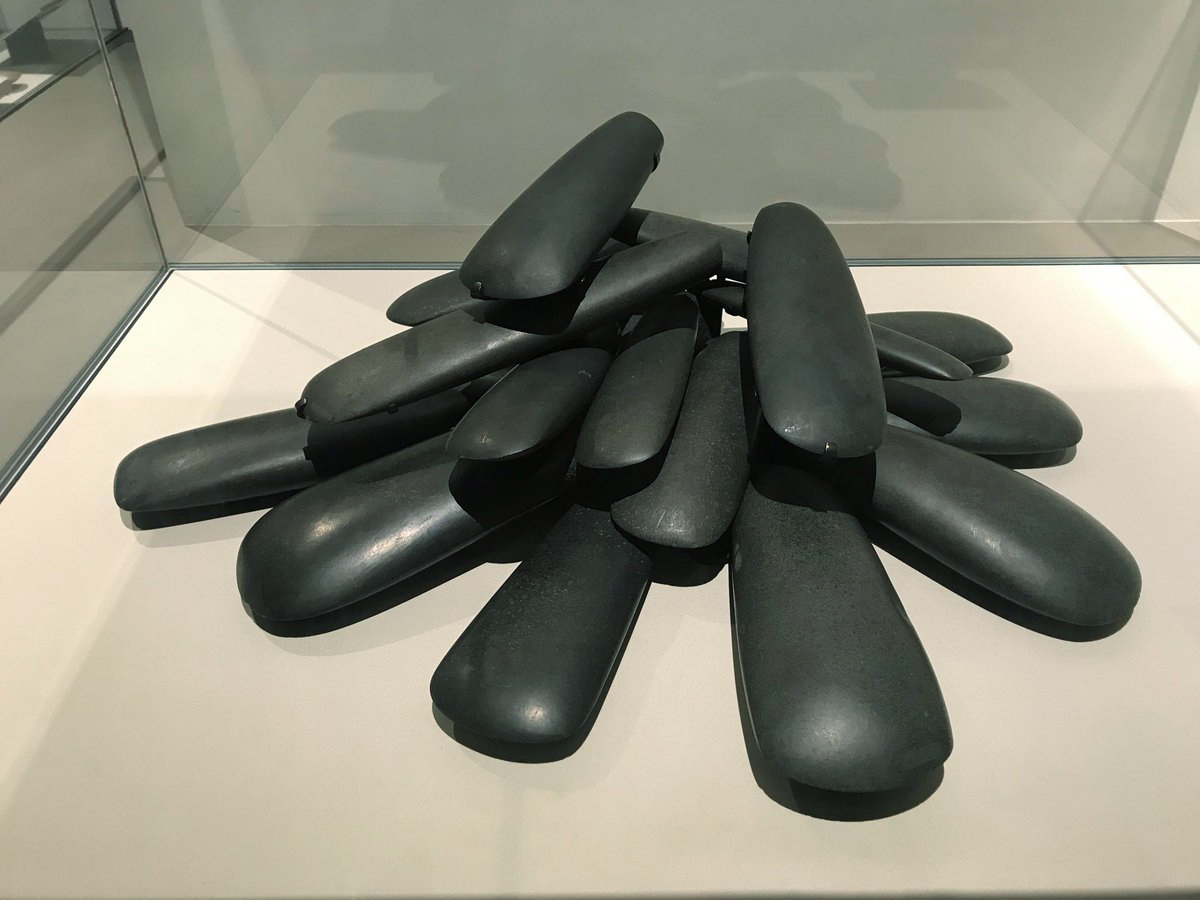
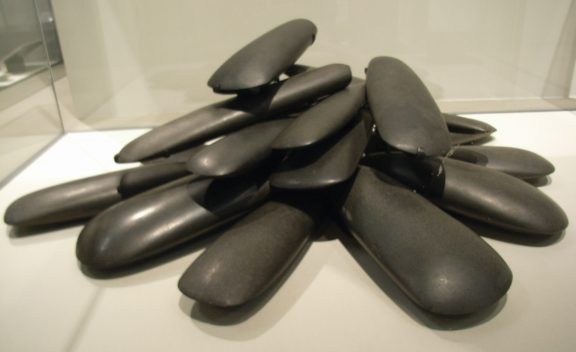
Another significant discovery known as "The Malone Treasure" consisted of 19 polished stone axes made from porcellanite sourced from Tievebulliagh or similar material from Brockley on Rathlin Island. These axes were found at Danesfort House, located on Malone Road in Belfast. Some of the axes were inserted vertically into the ground. These axes may have been too large and heavy for practical use, leading to the hypothesis that they were intended for ceremonial or ritual purposes. These artifacts are currently housed in the Ulster Museum in Belfast.