

The Broighter Gold, also known as the Broighter Treasure, is a remarkable collection of gold artifacts from the Iron Age, dating back to the 1st century BC. It was discovered in 1896 by Tom Nicholl and James Morrow on farmland near Limavady in what is now Northern Ireland. The treasure includes several exquisite items, including a gold boat, a gold torc, a gold bowl, and other pieces of jewelry. The discovery of the Broighter Gold is of immense historical and cultural significance.
Here are some key details about the Broighter Gold:
1. **Discovery**: The Broighter Gold was unearthed on farmland near Limavady, close to Loch Foyle, in the north of Ireland. It was found by plowmen Thomas Nicholl and James Morrow while they were working the fields in February 1896.
2. **Contents**:
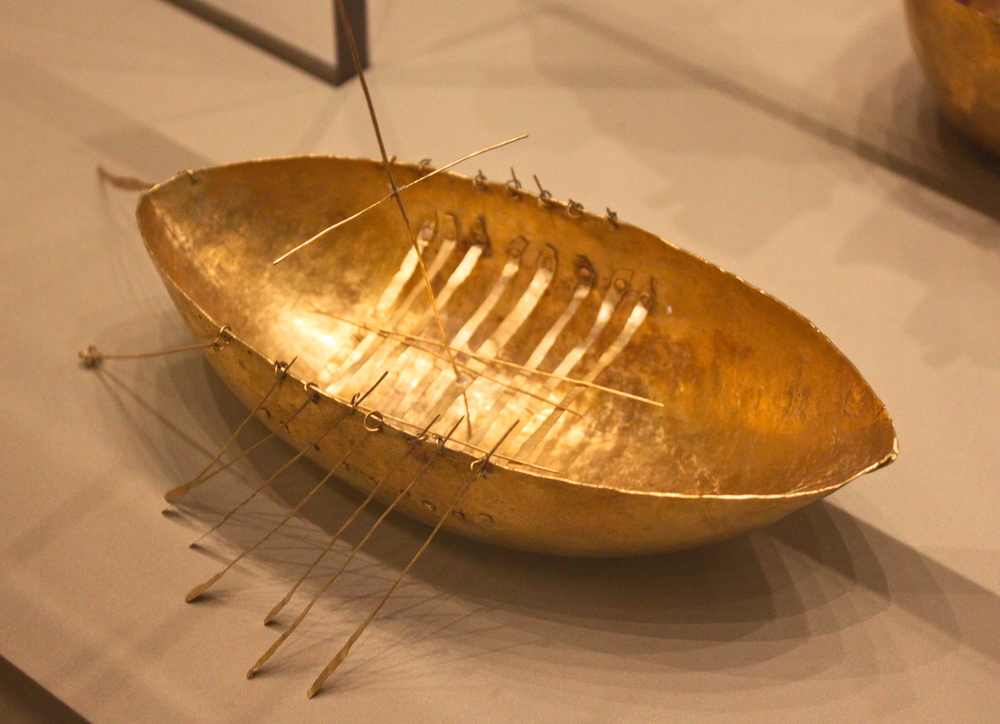
- **Gold Boat**: One of the most iconic pieces in the collection is a miniature gold boat, measuring 7 inches (18 cm) in length and weighing 3 ounces (85 g). The boat is intricately detailed, featuring benches, oars, a paddle rudder for steering, and other fixtures.
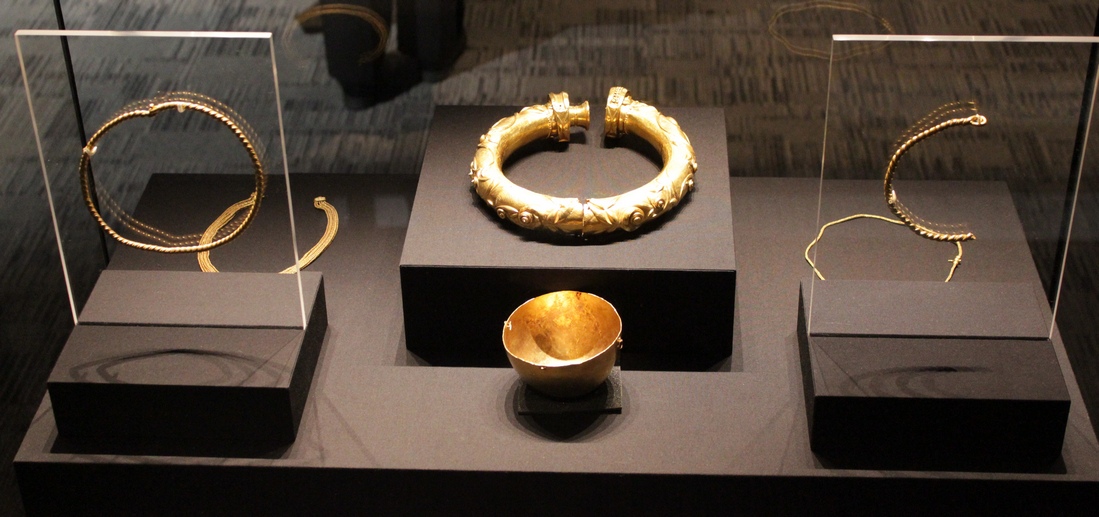
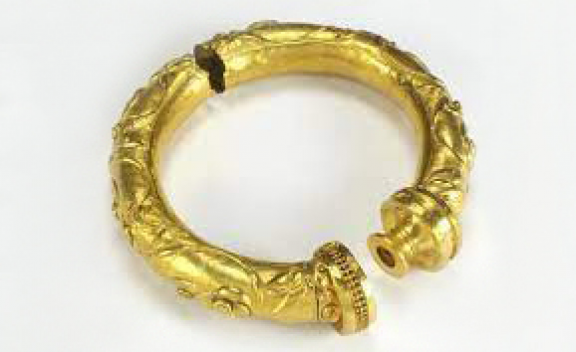
- **Gold Torc**: The treasure includes a gold torc or hollow collar, measuring 7.5 inches (19 cm) in diameter. It is adorned with intricate designs, including a classic La Tène-style plant motif. The torc has a unique fastener, with a T-shaped piece that fits into a slot.
- **Gold Bowl**: An unusual gold bowl or model cauldron was found, made from a solid sheet of gold. It is around 3.5 inches (8.9 cm) in diameter and approximately 2 inches (5.1 cm) deep. The purpose of this bowl is unclear, but it may have been a model of a large cauldron used in feasting rituals.
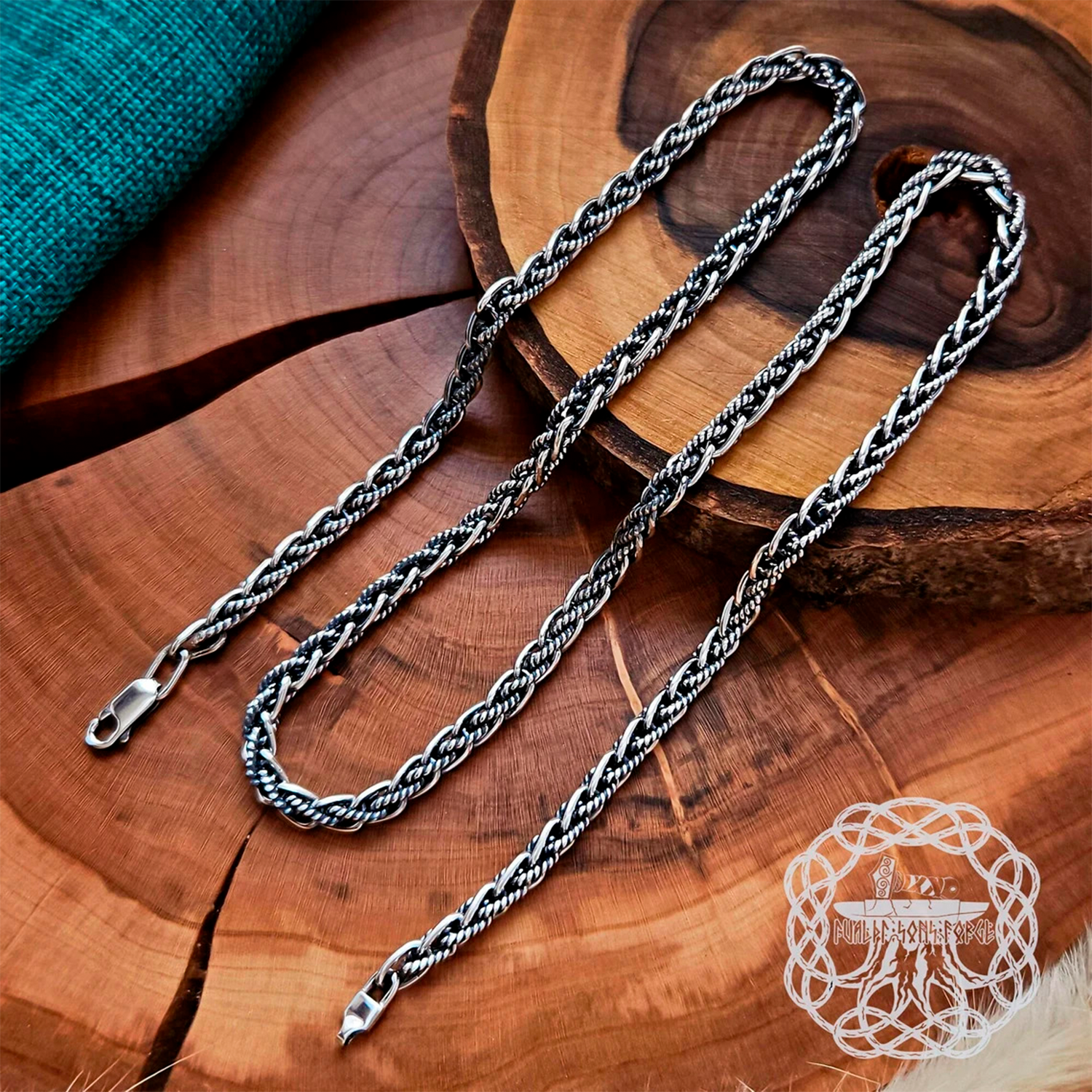
- **Chain Necklaces**: The hoard contains two chain necklaces made using the loop-in-loop technique, complete with clasps. One necklace has triple chains and is 39.6 cm long, while the other has a single chain but features a more intricate design.
3. **Cultural Significance**: The Broighter Gold provides valuable insights into the craftsmanship and artistic skills of the people living in the region during the Iron Age. The boat, in particular, is believed to have been a votive offering to the Celtic god of the sea, Manannán, and suggests a connection to maritime and religious practices of the time.
4. **Replicas and Display**: Replicas of the Broighter Gold collection are displayed at the Ulster Museum in Belfast. The National Museum of Ireland in Dublin now holds the original hoard.
5. **Depictions on Currency and Stamps**: Images of the Broighter Collar and Broighter Boat have been featured on various forms of currency and stamps, including British one-pound coins of Northern Ireland and Irish one-pound commemorative coins. They also appeared on Irish postage stamps from 1990 to 1995.
The Broighter Gold is not only a testament to the skill of ancient goldsmiths but also a significant archaeological find that sheds light on the cultural and religious practices of the Iron Age in Ireland.