




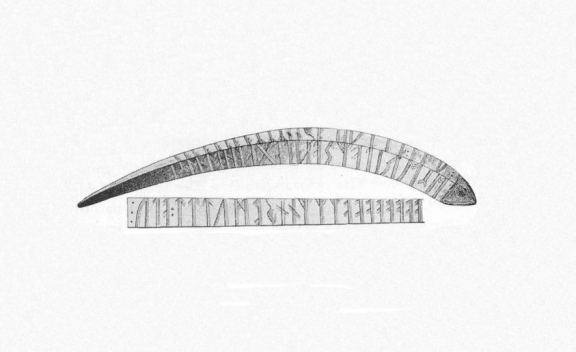
The Amulet of Lindholm, designated as DR 261 in the Rundata catalog, is a unique piece of bone art dating from the late Roman Iron Age, specifically from the 2nd to the 4th century. This bone artifact is carved in the shape of a rib and bears runic inscriptions. It measures approximately 17 centimeters in length at its longest points and is currently housed in the Historical Museum of Lund University in Sweden.
The amulet was discovered in 1840 in Skåne, Sweden, during peat cutting in a bog. Unfortunately, this process resulted in the amulet being cut in half and led to the destruction of one rune in the second line of text. Nonetheless, a significant portion of the artifact remained intact.
It's fascinating to note that these runic objects, like the Amulet of Lindholm, were ritually offered to water in swamps. This practice likely extended to other regions, including lakes and streams, although artifacts from such environments are more challenging to acquire. The stagnant, muddy waters of swamps provide nearly ideal conditions for the preservation of these types of objects. They effectively protect and preserve these artifacts by keeping them submerged and inaccessible for thousands of years. This natural preservation has allowed researchers to gain valuable insights into the history and culture of the people who created and used these runic items during ancient times.