



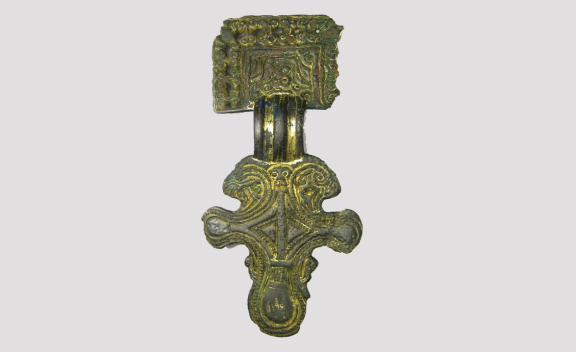
The described artifact is an impressive Anglo-Saxon brooch dating back to approximately the 6th century. It is crafted from copper alloy and measures 126.81 mm in length. This large brooch features a square head and showcases various elements of early Anglo-Saxon art, particularly falling into the Hines Type XIII classification.
Here is a detailed description of the brooch's design and features:
1. Rectangular Headplate: The brooch's headplate is rectangular and adorned on three sides with an intricate border of openwork double spiral bands surrounding a central square panel.
2. Central Design: In the center of the square panel, there is an elaborate pattern depicting two stylized beasts facing each other. This central design is a notable feature of the brooch.
3. Bow: Below the headplate, the brooch extends into a curved bow, featuring pronounced longitudinal ribs at both the extreme ends and the central portion.
4. Face Mask and Bird-Like Creatures: At the junction where the bow meets the footplate, there is a small stylized human face mask situated between two outward-facing bird-like creatures with their heads turned downward. These details add to the intricacy of the brooch's design.
5. Footplate Frame: The footplate is framed by three blades, with one projecting outward on each side. At the bottom of each projecting blade, there is a smaller bird-like creature, and a larger lower terminal blade extends further.
6. Fringed Bands: Along the entire perimeter of the footplate, there are a series of fringed bands, enhancing the visual appeal of the brooch.
7. Interior Detailing: Inside the body of the brooch, there is a broad central stripe that connects the human face to the terminal lobe, creating a separation between two triangular panels. These panels enclose triangles bordered by pellets.
Reference is made to a similar brooch found in Little Wilbraham (#158), indicating that this Type XIII Hines brooch was common in Cambridgeshire and Northamptonshire.
The brooch has a remarkable history, having passed through various collectors and now belonging to a private collector in Great Britain. It stands as a testament to the artistry and craftsmanship of the early Anglo-Saxon period.