

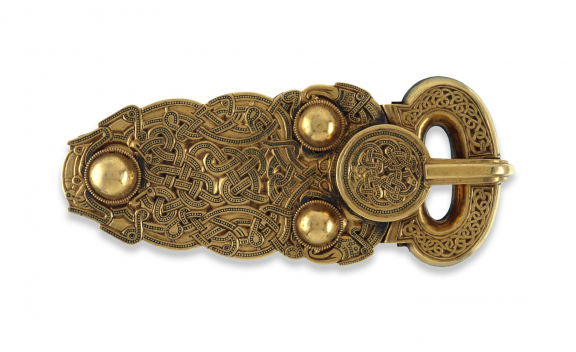
The gold buckle from the ship burial at Sutton Hoo is a remarkable and elaborate piece of early Anglo-Saxon craftsmanship, signifying wealth and high status in early Anglo-Saxon England. Buckles during this period were not only practical accessories but also served as symbols of prestige and affluence, with the choice of metal and the quality of finish being important indicators.
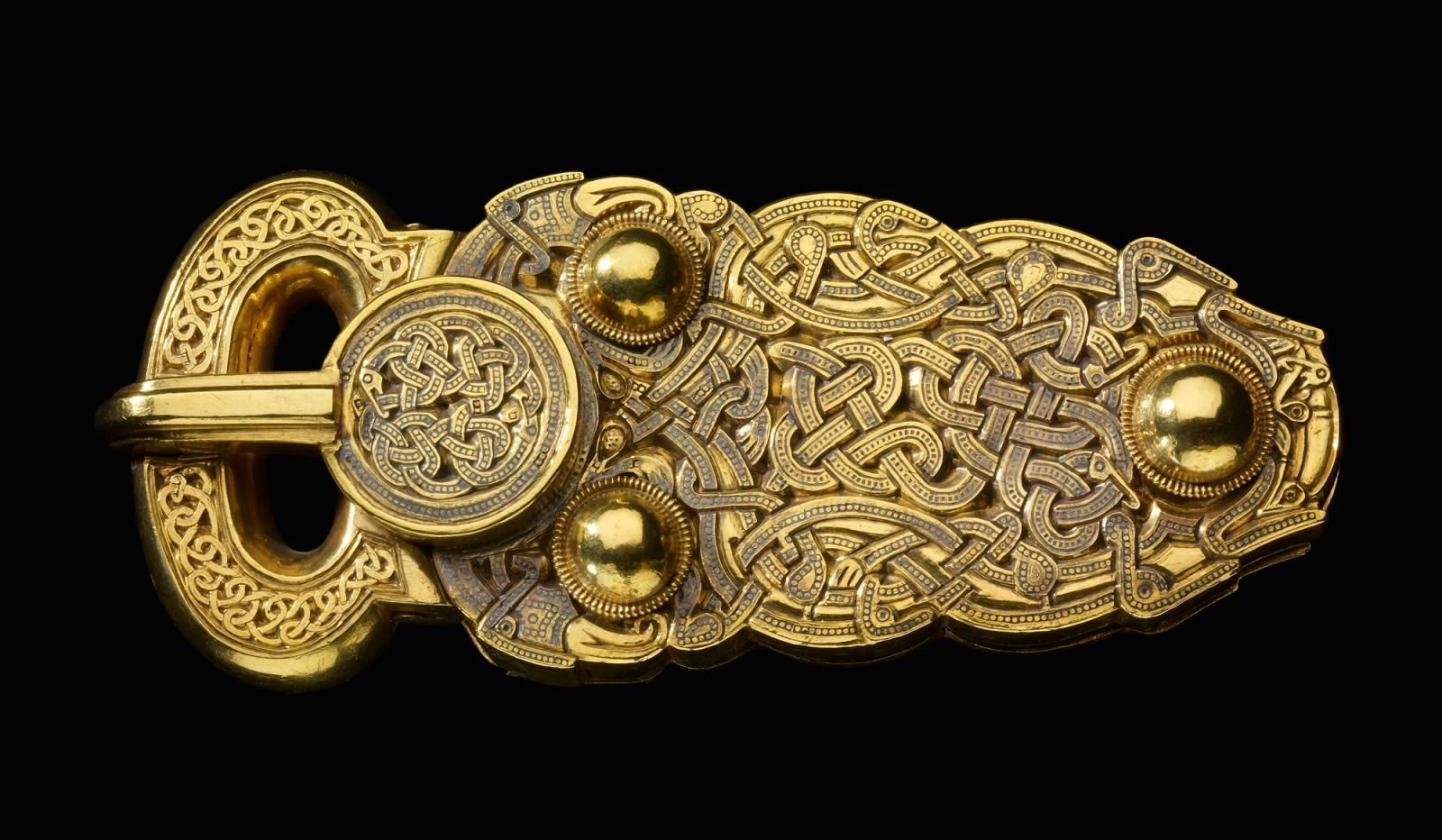
This particular gold buckle is a true testament to the individual's importance and wealth. It is a substantial piece, weighing over 400 grams. The design of the buckle is intricate and functional, with a hollow box structure that opens from behind on a hinge under another hinge. The locking system includes a complex arrangement of sliders and internal rods that fit into grooves, allowing it to securely close. While similar buckles from the Frankish and Burgundian regions of the continent have been found to contain Christian symbols, it is not definitively known if the Sutton Hoo buckle served such a purpose.
One of the most striking features of this buckle is the elaborate decoration that adorns its surface. Thirteen creatures can be observed in the design. The plate and round tongue plate of the buckle showcase wriggling snakes and interlocking four-legged beasts. These creatures are highlighted with intricate piercing ornamentation filled with black ink, adding to the visual appeal.
The loop of the buckle features stylized snakes biting their own bodies, and at the end of the buckle, two formidable beasts are depicted clutching a small, dog-like creature in their jaws. Additionally, two ferocious bird heads are positioned on the shoulders of the buckle, adding to the overall intricacy and symbolism of the piece.
In summary, this gold buckle from Sutton Hoo is not only a practical accessory but also a work of art that showcases the craftsmanship and wealth of the person buried in the ship. Its intricate design and detailed decoration make it one of the most remarkable examples of early Anglo-Saxon art and craftsmanship, providing valuable insights into the culture and status symbols of the time.