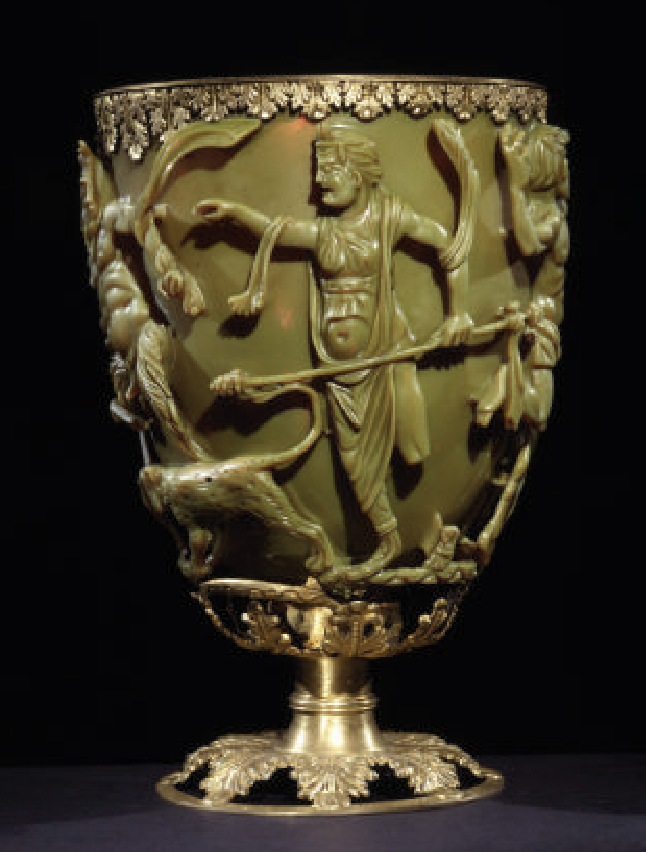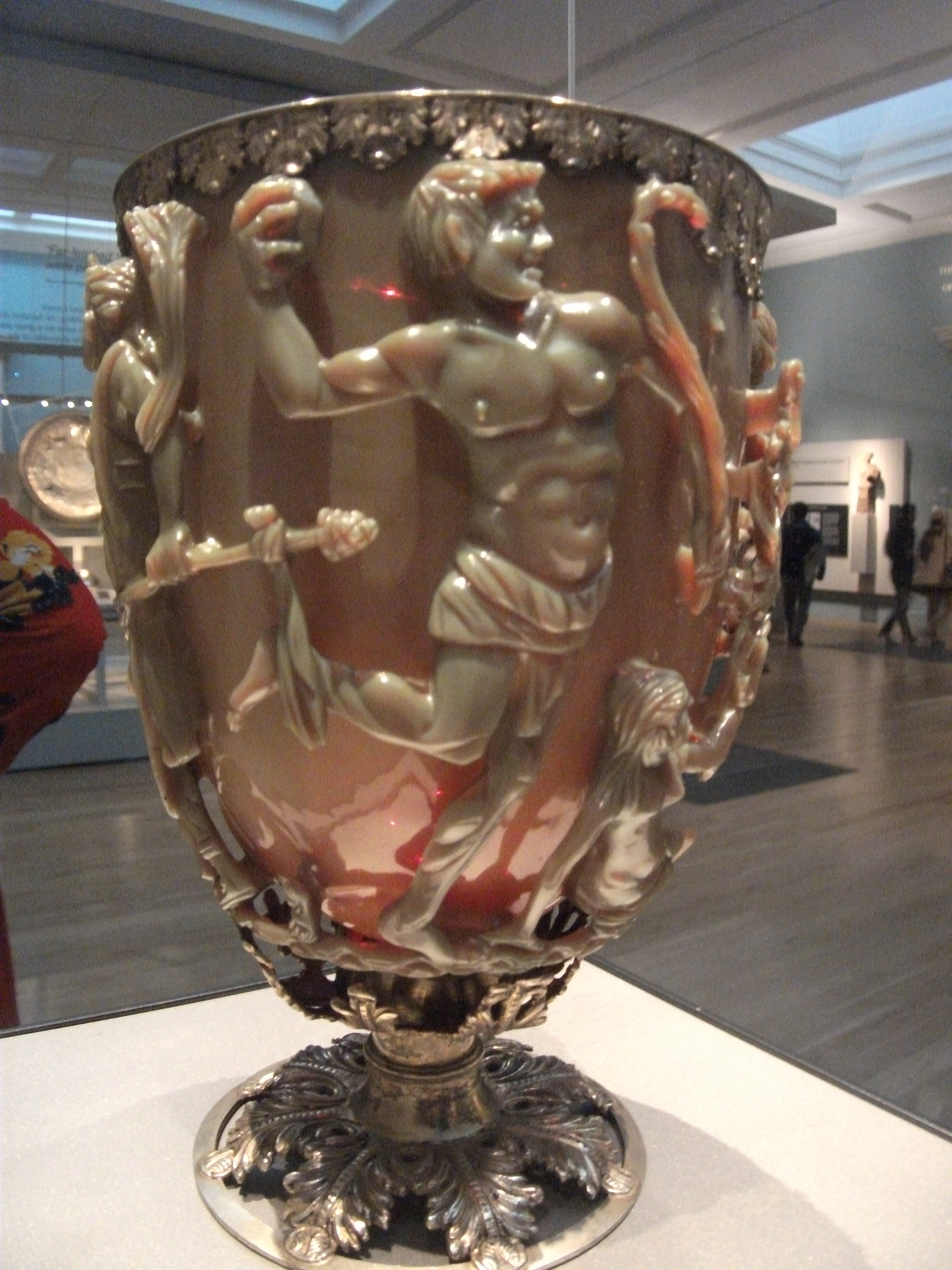



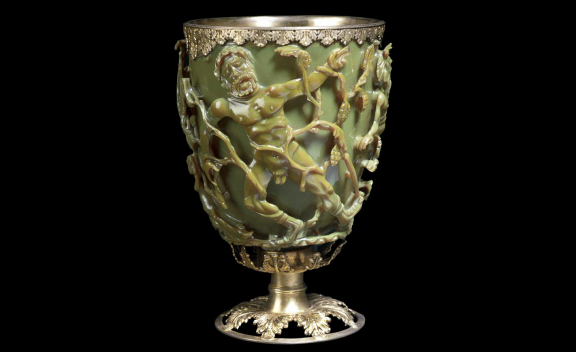
The Lycurgus Cup is a remarkable 4th-century Roman glass goblet known for its unique optical properties. It is made of dichroic glass, which means it can change color depending on how it is illuminated. When lit from behind, the glass appears red, while when lit from the front, it appears green. This striking color change is a testament to the exceptional craftsmanship and innovation of its time and has earned it the reputation of being "the most spectacular glass of the period."
The goblet is a rare example of a complete Roman cage bowl or diatretum. In this type of glassware, the glass was carefully cut and sanded to create an intricate decorative "cage" while leaving the original surface level intact. While many cage cups feature geometric abstract designs, the Lycurgus Cup stands out with its depiction of the mythical King Lycurgus.
The scene on the Lycurgus Cup portrays the myth of King Lycurgus, who attempted to kill Ambrosia, a follower of the god Dionysus (known as Bacchus to the Romans). Ambrosia transformed herself into a vine, entwining and restraining King Lycurgus, ultimately leading to his demise. The depiction also includes Dionysus and two of his followers taunting the king. This unique composition makes the Lycurgus Cup one of the most exceptional examples of a caged bowl.
The goblet's remarkable color-changing effect is achieved by incorporating tiny gold and silver nanoparticles into the glass, dispersed in colloidal form throughout the material. The process for creating this effect remains unclear, and it is likely that it was discovered accidentally, perhaps through the presence of trace amounts of gold and silver in the glass or workshop residue. The nanoparticles, only about 70 nanometers across, interact with light, scattering the blue end of the spectrum more effectively than the red end, resulting in the observed color change.
The inner surface of the bowl is smooth, but recesses have been created behind the main figures, allowing for even color distribution when light passes through. This is a unique feature among surviving cage bowls.
The Lycurgus Cup's exact purpose and significance remain a subject of debate among scholars. Some suggest it may have been used in Bacchic cult celebrations due to its association with the god of wine, Dionysus. Others propose that it had symbolic importance, potentially referencing historical events or ripening grapes. A letter attributed to Emperor Hadrian mentions a gift of multicolored goblets that change color, similar to the Lycurgus Cup, which were intended for use during banquets on feast days. Regardless of its specific purpose, the Lycurgus Cup remains an extraordinary artifact that showcases the artistry and scientific knowledge of its time.