



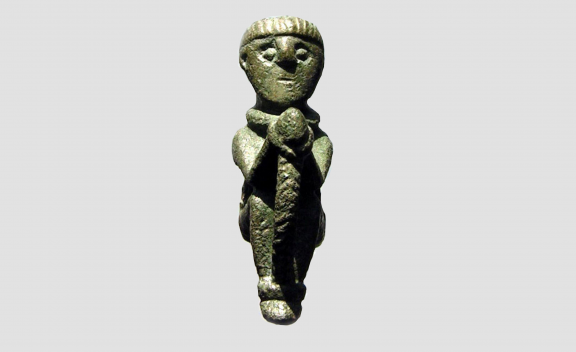
The small Roman copper alloy figurine you described is a fascinating archaeological discovery. It appears to depict a bound and tethered captive with Celtic facial features and hairstyle. The figurine was discovered using a metal detector near Fullerton in Wervell, Hampshire.
Given its characteristics and the context of its discovery, it is indeed plausible that this figurine may be related to the slave trade during the Roman period. The depiction of a bound captive suggests a theme of captivity or servitude. The presence of Celtic facial features and hairstyle on the figurine may indicate that it represents a captive from a Celtic background who was possibly enslaved or taken as a prisoner by the Romans.
The fact that the object is perforated for hanging suggests that it may have served a functional or decorative purpose, such as being worn as a pendant or ornament. It's important to note that the Romans did engage in the slave trade, and captives from various regions and backgrounds were often enslaved and transported to different parts of the Roman Empire.
In terms of dating, you mentioned that it likely dates to the second or third century AD, which aligns with the Roman period. Such artifacts can provide valuable insights into the social and cultural dynamics of the time, shedding light on the lives of both captives and captors during the Roman era.