





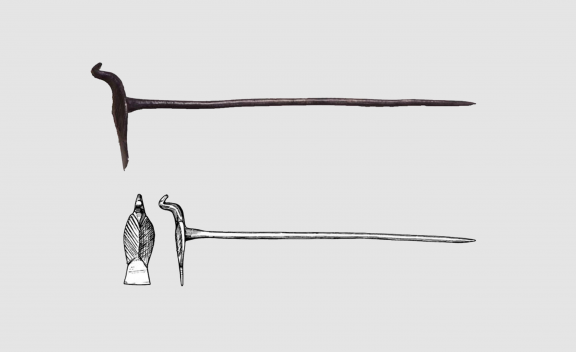
This exquisite hairpin, featuring a head in the form of a floating duck, hails from the Roman era, specifically from the 4th or early 5th century. It was discovered during excavations carried out by the Archaeological Section of the Winchester Museum Service at St. Martin's Close in Winnall, Winchester, between 1984 and 1985.
The hairpin was found in the grave of a child estimated to be around seven years old. Its placement to the right of the child's head suggests that it was likely worn in the hair at the time of burial. Typically, distinguishing between the sexes of children based solely on their skeletal remains is challenging, but the presence of this hairpin strongly suggests that the child was a girl.
Inhabitants of this particular section of Winchester's eastern Roman cemetery infrequently received grave goods. However, the items that were discovered tended to be of exceptional quality, indicating the high social status of this population group. The burial practices observed in this area share some similarities with those found in Christian cemeteries of the late Roman period in the Mediterranean and Near East, providing insights into the cultural and social context of this community during that time.