





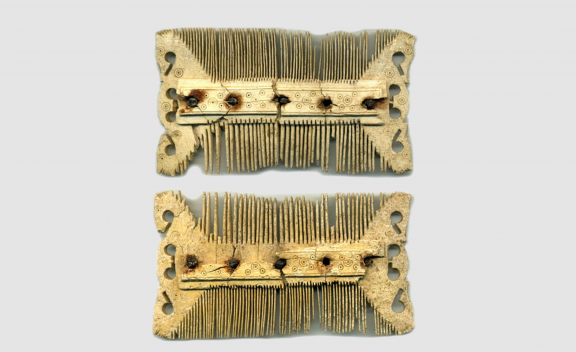
This intricately adorned comb originates from the late 4th or early 5th century AD and was discovered during excavations conducted by the Archaeological Section of the Winchester Museum Service at Hyde Street, specifically in the old SCATS building, in 1979.
The comb was found in the burial site of a young woman interred within Winchester's northern Roman cemetery. The central section of the comb is adorned with rings and dots, while the end plates feature intricately carved figures adorned with numerous rings and dots. Archaeologists suggest that combs like this were initially crafted without decoration and then adorned based on individual preferences. Popular motifs for such decorations included owls, dolphins, and horses. Upon closer inspection, it becomes apparent that this particular comb features horse motifs, as the decorations on the end plates resemble pairs of horse heads facing each other. The decorative elements on this comb are considered more aesthetically pleasing than those on a similar comb found in Winchester East Cemetery.
Late Roman graves in the northern cemetery frequently exhibit signs of hurried or unceremonious burials, often in shallow graves and unconventional body positions, without the use of coffins. Some individuals were even buried face down, and a few were found beheaded, though it's important to note that beheading may have occurred before or after death. These burial practices might indicate a lower-status population, but this isn't consistently reflected in the simplicity of their grave goods, such as this comb. It's possible that these individuals were victims of an epidemic or casualties of war or conflict, necessitating swift, mass burials.