





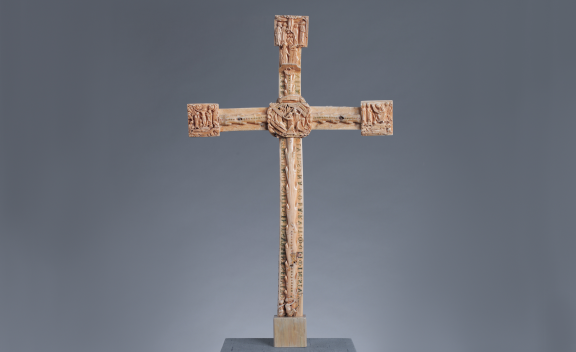
Dating from approximately 1150 to 1160, this cross is a remarkable artifact crafted from walrus bone. Its elaborately carved design features a total of ninety-two figures and ninety-eight inscriptions, which together represent a complex theological program reminiscent of the decorative elements found on the facade of a cathedral. The quality of the carvings is exceptional, and the inclusion of numerous references to scripture reflects a high degree of sophistication and erudition.
However, it is important to note a dark and sobering aspect of this artifact's history. Among the Latin inscriptions on the cross, there are insidious swear words directed against Jews. This serves as a poignant reminder of the pervasive anti-Jewish sentiment that existed in medieval Europe. While these specific words were known only within the community of English churchmen, such hateful sentiments were widespread and contributed to waves of ruthless persecution of Jews in various parts of England, including London and York.
One notable connection is made with Bury St. Edmunds, the Suffolk town often associated with this cross. In 1189, around the time when this cross was carved, a significant tragedy occurred in Bury St. Edmunds. Scores of Jewish residents were brutally murdered, and the survivors were forcibly expelled from the town. This episode stands as a tragic testament to the violence and discrimination faced by Jewish communities in medieval England. A century later, in 1290, King Edward I would issue an edict expelling all Jews from England, further underscoring the historical injustices they endured.
