



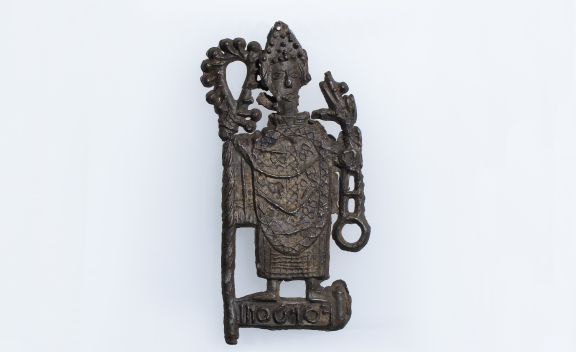
During the Middle Ages, badges and souvenirs of this kind held significant cultural and religious importance and were widely sold throughout Europe. They were particularly associated with places where saints had been martyred, their relics were preserved, or miracles were believed to have occurred. Pilgrimage sites, in particular, were major centers for the production and sale of these items.
One of the most prominent pilgrimage sites in Europe was Santiago de Compostela in northwestern Spain, where the relics of St. James the Great were housed. Another renowned site was Canterbury Cathedral in England, where the Archbishop Thomas Becket had been martyred. Pilgrims visiting these holy places would often purchase badges associated with the site as proof of their pilgrimage and as mementos of their journey.
The sale of these souvenirs served as a significant source of income for religious foundations and institutions. Pilgrims believed that wearing these badges could bring them spiritual benefits, protection, and blessings associated with the saint or holy place.
These badges were not limited to religious purposes; lead alloy was also used to create secular items like buttons, rings, badges, and even toys. This reflects how the production and use of lead alloy items extended beyond the realm of religious pilgrimage into various aspects of medieval life.