



Cultural Background/Time Period: Late Anglo-Saxon (9th Century)
Excavation Location/Discovery Site: Europe, British Isles, England, Cornwall, St. Austell (parish), Trewhiddle (Trewhiddle hoard)
Materials Used: Silver, gold
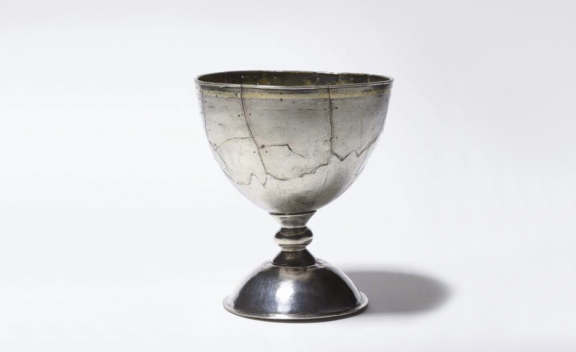
Description: This is a reconstructed silver chalice from the Late Anglo-Saxon period, specifically dating to the 9th century. The chalice is composed of three distinct parts: a separate stem, a foot, and the chalice itself, which is gilded on the inside.
Just below the gilded rim of the chalice, there is a series of rivet holes, possibly indicating the presence of an applied rim or decorative band that was once attached to the chalice. Immediately below this band, there is another gilt band with more rivet holes on the inside. Above this second band, traces of solder are visible, and below it, there are remnants of incised lace patterns in areas where the original surface of the metal, heavily corroded over time, is still preserved.
The mount that was originally part of the Trewhiddle hoard, but is now lost, may have served as a collar for the stem of the chalice. This mount featured an oval knob and a flanged domed foot.
This reconstructed silver chalice is a significant artifact that reflects the craftsmanship and artistry of the Late Anglo-Saxon period. The gilding and decorative elements suggest its ceremonial or religious use during that time.