



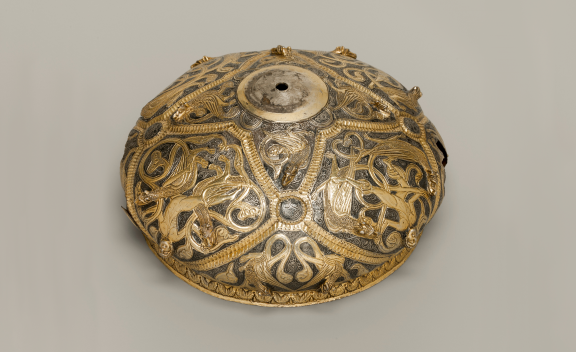
Dating from the late 12th century and with possible origins in either Britain or Scandinavia, this bowl is a fascinating historical artifact. Its intricate design features animated nude male figures and dragons intricately woven into the foliage, creating a captivating and ornate visual composition.
Initially, it was believed that this bowl might have served as a ciborium (a vessel for holding the Sanctuary) or a chalice used during Mass. However, recent analysis suggests that it was more likely part of a secular drinking bowl. The main compartments of the bowl are adorned with nude figures and dragons, while smaller areas feature basilisks. The heads of both humans and beasts are executed in high relief, and the bands dividing the compartments and the palmette frieze beneath the rim exhibit precise and clear detailing.
The decorative elements of this bowl find parallels in the art of 12th-century England, but similar pieces have also been discovered in Sweden. What's particularly intriguing is the bowl's discovery near the Ob River in Siberia. This serves as a vivid illustration of how objects during the Middle Ages often traveled far from their places of origin, reflecting the extensive networks of trade and cultural exchange that characterized this era.