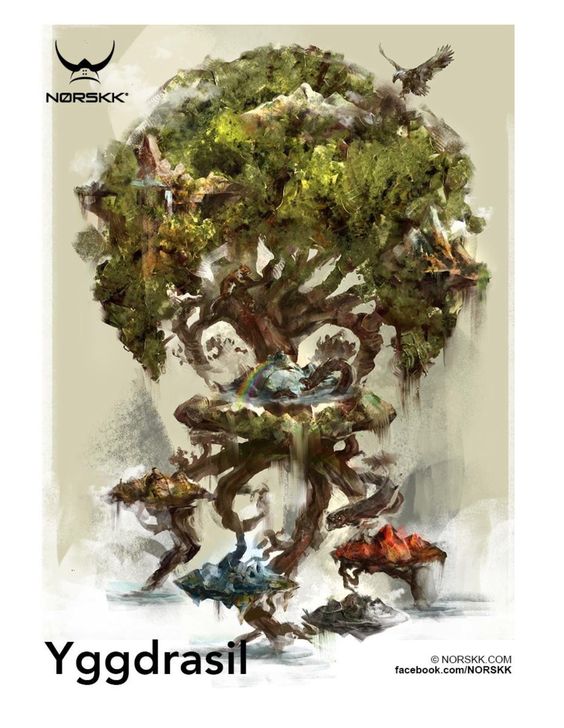


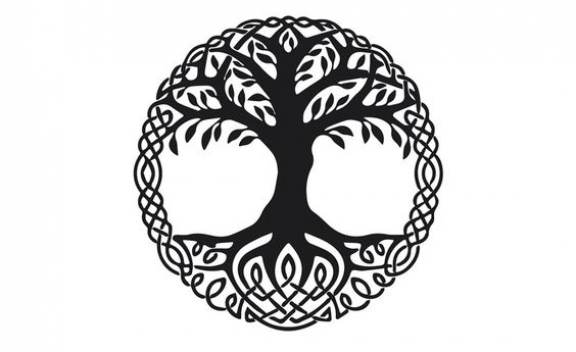
Yggdrasil, the Tree of Life, holds a central and symbolic role in Norse mythology and the belief system of the Norse people. This ancient ash tree is eternal and possesses three massive roots that connect it to various realms in the cosmos.
The first root of Yggdrasil is situated in Asgard, the realm of the Gods, near the well of Urd, where the Gods and Goddesses hold their daily meetings and gatherings.
The second root extends all the way to Jotunheim, the land of the giants, and is located near Mimir's well. Mimir's well is known for its wisdom and is associated with the severed head of Mimir, who imparts his knowledge to Odin.
The third root descends to Niflheim, close to the well called Hvergelmir. It is here that the dragon Nidhug resides, chewing on one of Yggdrasil's roots. Nidhug is also known for consuming the blood of the deceased who arrive in Hel.
At the top of Yggdrasil, an eagle resides, and it harbors a deep-seated animosity toward the dragon Nidhug. A squirrel named Ratatosk spends its time running up and down the ash tree, engaging in gossip and fueling the hatred between the eagle and the dragon. Ratatosk relays insults and curses between the two, ensuring that their enmity remains alive and well.
Yggdrasil, as the Great Tree of Life, serves as the cosmic axis, connecting and holding together the nine realms of the Norse universe. These realms include Asgard (home of the Gods), Midgard (the world of humans), Muspelheim (the realm of fire), Jotunheim (land of the giants), Vanaheim (home of the Vanir Gods), Niflheim (the realm of ice and mist), Alfheim (land of the light elves), Svartalfheim (home of the dark elves), and Helheim (the realm of the dead). Yggdrasil's symbolism goes beyond its physical presence, representing the interconnectedness of all these realms and the order of the cosmos in Norse mythology.
That is why Yggdrasil is considered the symbol of the interconnectedness of all things in the universe.
Yggdrasil stands in a spring according to the Norse faith which suggests all life comes from water. That is one of the reasons why it is called the Tree of Life.
The second reason is that it is believed for Yggdrasil’s fruits to provide youth for the gods, ‘giving them life’.
According to Norse mythology, the world will end with Ragnarok, a battle between gods with only a man and a woman surviving it by hiding inside the hollow of a tree. The couple will leave the tree to bring life back again to the world.
Although the tree in question is not mentioned specifically or Yggdrasil is not clearly associated with the myth, it is believed by some to be the tree that will protect life from Ragnarok.