



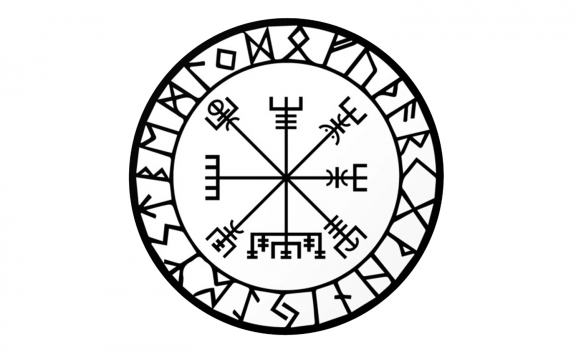
The Vegvisir, often referred to as the runic compass, Icelandic runes, or Nordic compass, is a symbol consisting of eight rune staves. It is associated with protection and guidance and is believed by some to have been used as a compass by Vikings during their voyages. The word "vegvisir" translates to "wayfinder" or "signpost" in Icelandic.
While the Vegvisir is commonly known as the Viking compass and is linked by some to the seafaring journeys of the Vikings during the Viking Age, there is debate about its origin and historical authenticity.
There are two primary sources that mention the Vegvisir:
1. **The Huld Manuscript**: Compiled by Geir Vigfusson in 1880, this manuscript describes the Vegvisir as a symbol of guidance and protection. It is mentioned briefly in a sentence that suggests that wearing this symbol will help a person not lose their way during storms and bad weather, even if they are unfamiliar with their destination.
2. **The Galdrabok**: This is another manuscript, essentially a grimoire or textbook for magic, which contains references to the Vegvisir. While it includes magical and esoteric content, it also adds to the historical debate surrounding the Vegvisir's origin and significance.
It's important to note that the Huld Manuscript and the Galdrabok were compiled centuries after the Viking Age, and their content may not necessarily reflect authentic Viking beliefs or practices. As such, caution is advised when interpreting these sources, and it's recommended to conduct further research and consider multiple perspectives when discussing the Vegvisir and its historical significance.
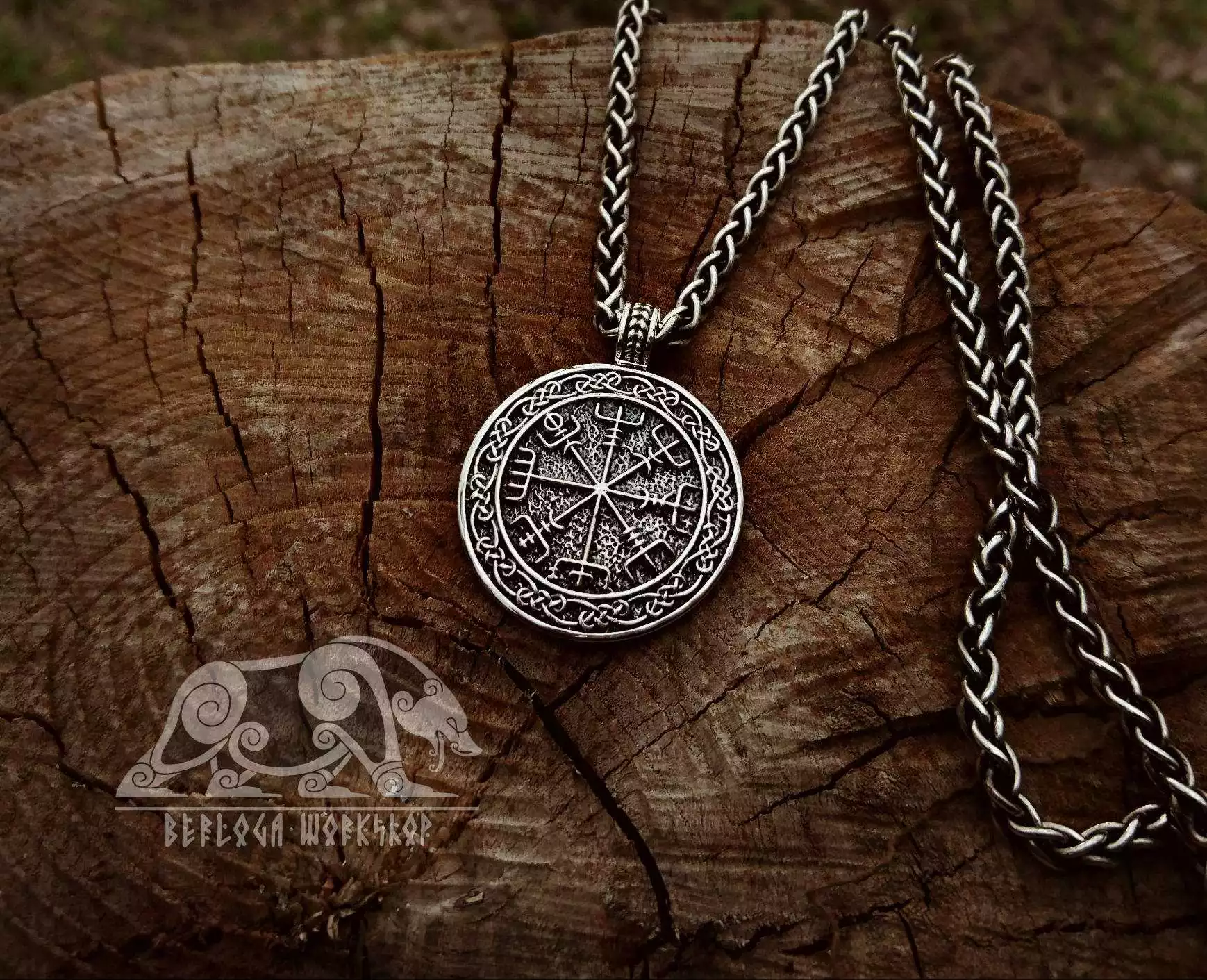
Some parts of the knowledge in the manuscript in question is inspired by folk traditions and the one regarding the Vegvisir might be one of those parts according to the experts.
The second source mentioning Vegvisir, the Galdrabok, is a grimoire, a book of spells which details randomly-compiled spells and provides knowledge about magic, the Germanic gods of the time and cosmology.
In the Galdrabok, it is written that this symbol would help its wearer to not get lost and find their way back. According to the Galdrabok, to provide guidance and protection, the Vegvisir should be drawn in blood on a person’s forehead – just like the Viking symbol of protection, the Aegishjalmur, the Helm of Awe would sometimes be.
Many people confuse the Vegvisir with Aegishjalmr, the helm of awe and terror although the two symbols are quite different from each other.
Although there is no certain knowledge of the Vegvisir’s origins and when it was used the first time, some people believe the symbol was used for navigational purposes by the Vikings.
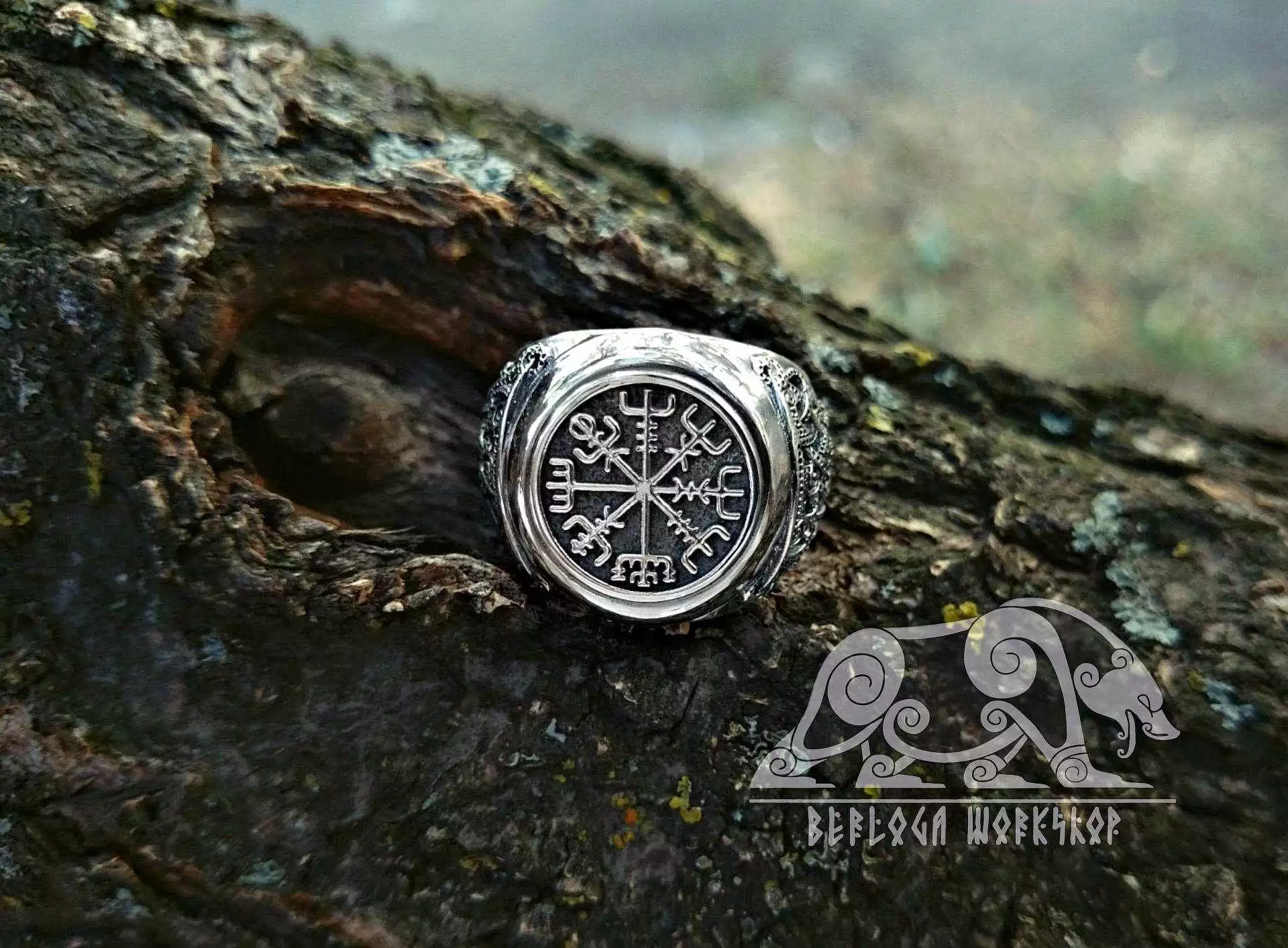
Archeological findings revealed that the Vikings used a ‘sunstone’, a sun compass of sorts while they sailed around the world from North America to Far East.
While the said sun compass does not look anything like the Vegvisir and/or have such markings on it, it might be the inspiration behind the symbol according to some experts.
It is believed that the eight Icelandic rune staves comprising the Vegvisir could be representing the cardinal (North, South, West, East) and intercardinal directions (Northwest, Northeast, Southwest, Southeast).
Some people believe that a nail placed right in the middle of the Vegvisir would tell of directions (through its shadow’s position at certain times of day) and help the Vikings navigate the seas.
On a side note, in some legends, it is mentioned that the Vegvisir/the Nordic compass would be drawn on Icelandic ships to help them find their way back and come back home safely.
Today, the Vegvisir is used as symbol of Icelandic culture while people of Asatru faith also use it to identify themselves and as a symbol of spiritual guidance.