



Baldur was adored by all the gods, known for his cheerful and generous nature. He was the son of Odin, the chief of the gods, and the kind-hearted sorceress goddess Frigg. Baldur's joyful and courageous character brought happiness to those around him. However, when he began having ominous dreams of impending misfortune, the concerned gods appointed Odin to decipher their meaning.
Odin, Baldur's father, wasted no time and rode his steed, Sleipnir, to the underworld to consult a wise deceased seeress who possessed knowledge in such matters. In one of his numerous disguises, Odin arrived in the cold and misty underworld, where he found the halls beautifully prepared, as if a grand feast were imminent. Odin inquired about this celebration, and the seeress cheerfully revealed that the guest of honor would be none other than Baldur. She went on to describe how Baldur would meet his fate, ceasing only when she recognized the true identity of the disguised wanderer, owing to Odin's desperate entreaties.
Tragically, everything she prophesied eventually came to pass.
Odin returned to Asgard, the celestial stronghold of the gods, and conveyed what he had learned. Frigg, desperately seeking any chance to save her beloved son, sought oaths from every entity in the cosmos, living or not, to ensure Baldur's safety.
With these oaths secured, the gods turned the situation into a game, playfully hurling sticks, rocks, and various objects at Baldur. Laughter filled the air as these items bounced off the radiant god, leaving him unharmed.
Loki, the cunning and untrustworthy deity, sensed an opportunity for mischief. Disguised, he approached Frigg and asked, "Did absolutely everything swear oaths to spare Baldur from harm?" Frigg responded, "Yes, everything except for the mistletoe. But the mistletoe is so small and harmless that I deemed it unnecessary to request an oath from it. What harm could it possibly do to my son?" Upon hearing this, Loki promptly departed, found the mistletoe, fashioned a spear from it, and brought it to where the gods were enjoying their newfound pastime.
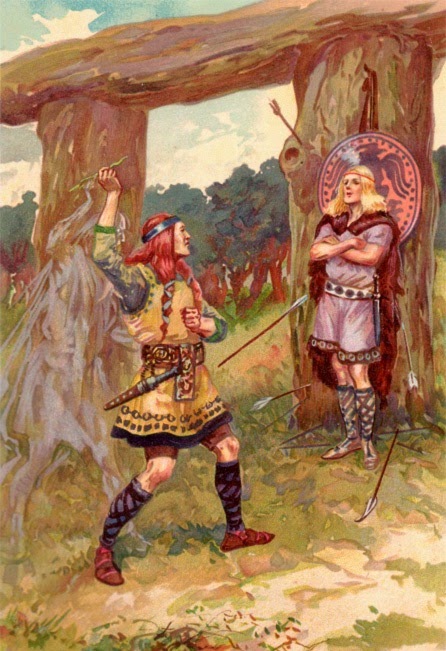
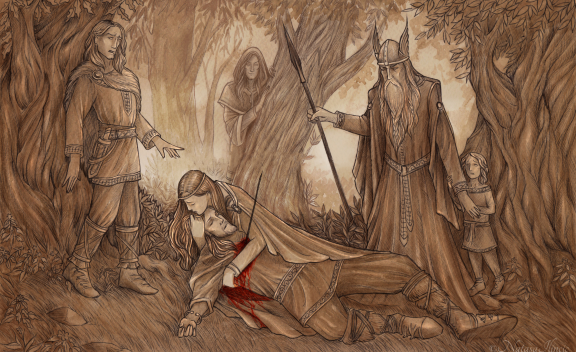
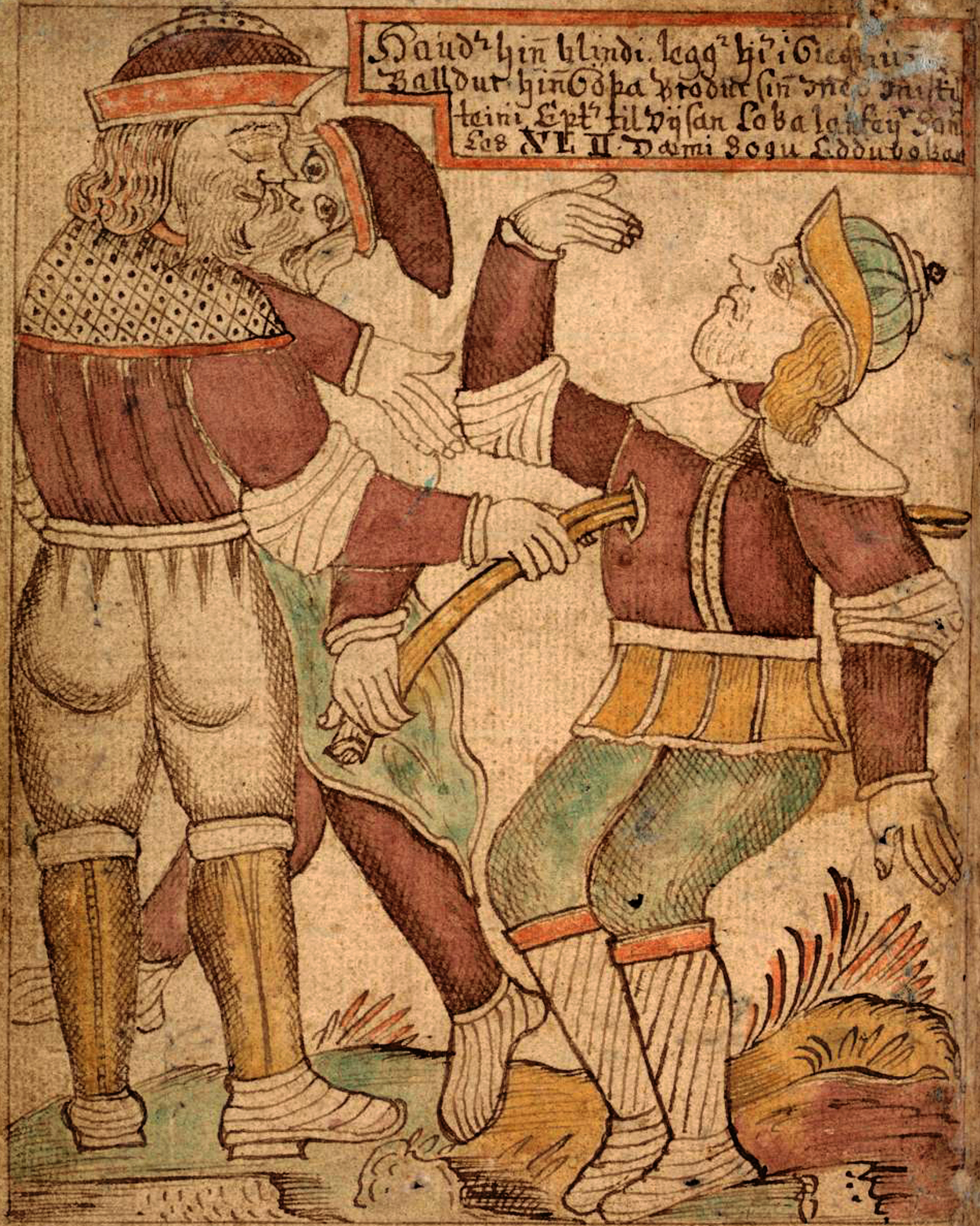
He approached the blind god Hodr (Old Norse Höðr, “Slayer”) and said, “You must feel quite left out, having to sit back here away from the merriment, not being given a chance to show Baldur the honor of proving his invincibility.” The blind god concurred. “Here,” said Loki, handing him the shaft of mistletoe. “I will point your hand in the direction where Baldur stands, and you throw this branch at him.” So Hod threw the mistletoe. It pierced the god straight through, and he fell down dead on the spot.
The gods found themselves unable to speak as they trembled with anguish and fear. They knew that this event was the first presage of Ragnarok, the downfall and death, not just of themselves, but of the very cosmos they maintained.
At last, Frigg composed herself enough to ask if there were any among them who were brave, loyal, and compassionate enough to journey to the land of the dead and offer Hel, the death-goddess, a ransom for Baldur’s release. Hermod, an obscure son of Odin, offered to undertake this mission. Odin instructed Sleipnir to bear Hermod to the underworld, and off he went.
The gods arranged a lavish funeral for their fallen friend. They turned Baldur’s ship, Hringhorni (“Ship with a Circle at the Stem”), into a pyre fitting for a great king. When the time came to launch the ship out to sea, however, the gods found the ship stuck in the sand and themselves unable to force it to budge. After many failed attempts they summoned the brawniest being in the cosmos, a certain giantess named Hyrrokkin (“Withered by Fire”). Hyrrokkin arrived in Asgard riding a wolf and using poisonous snakes for reins. She dismounted, walked to the prow of the ship, and gave it such a mighty push that the land quaked as Hringhorni was freed from the strand. As Baldur’s body was carried onto the ship, his wife, Nanna, was overcome with such great grief that she died there on the spot, and was placed on the pyre alongside her husband. The fire was kindled, and Thor hallowed the flames by holding his hammer over them. Odin laid upon the pyre his ring Draupnir, and Baldur’s horse was led into the flames.
All kinds of beings from throughout the Nine Worlds attended this ceremony: gods, giants, elves, dwarves, valkyries, and others. Together they stood and mourned as they watched the burning ship disappear over the ocean.
Meanwhile, Hermod rode nine nights through ever darker and deeper valleys on his quest to rescue the part of Baldur that had been sent to Hel. When he came to the river Gjoll (Gjöll, “Roaring”), Modgud (Old Norse Móðguðr, “Furious Battle”), the giantess who guards the bridge, asked him his name and his purpose, adding that it was strange that his footfalls were as thundering as those of an entire army, especially since his face still had the color of the living. He answered to her satisfaction, and she allowed him to cross over into Hel’s realm. Sleipnir leapt over the wall around that doleful land.
Upon entering and dismounting, Hermod spotted Hel’s throne and Baldur, pale and downcast, sitting in the seat of honor next to her. Hermod spent the night there, and when morning came, he pleaded with Hel to release his brother, telling her of the great sorrow that all living things, and especially the gods, felt for his absence. Hel responded, “If this is so, then let every thing in the cosmos weep for him, and I will send him back to you. But if any refuse, he will remain in my presence.”
Hermod rode back to Asgard and told these tidings to the gods, who straightaway sent messengers throughout the worlds to bear this news to all of their inhabitants. And, indeed, everything did weep for Baldur – everything, that is, save for one giantess: Tokk (Þökk, “Thanks”), who was none other than Loki in another disguise. Tokk coldly told the messengers, “Let Hel hold what she has!”
And so Baldur was condemned to remain in Hel’s darkness, dampness, and cold. Never again would he grace the lands of the living with his gladdening light and exuberance.