

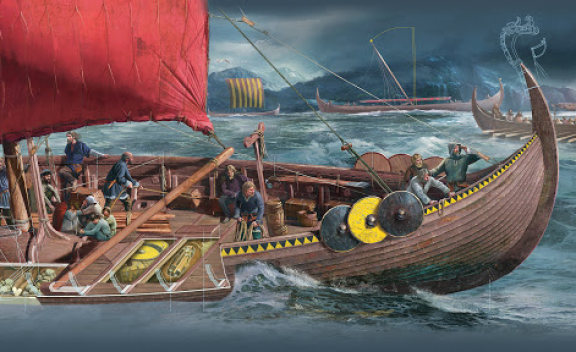
When the Vikings embarked on river journeys for trade and raiding expeditions, they utilized a variety of boats tailored to different stages of the river's characteristics. Their longships were lightweight and versatile enough to be rowed upstream for considerable distances. However, when the river narrowed and became shallower, the Vikings had to transition to smaller, shallower boats. In cases where they ventured deep inland, even these smaller boats became impractical, leading them to employ dugout canoes crafted from single tree trunks. Any of these lighter boats could be transported overland by the Vikings when transitioning between rivers or to bypass treacherous sections of a river.
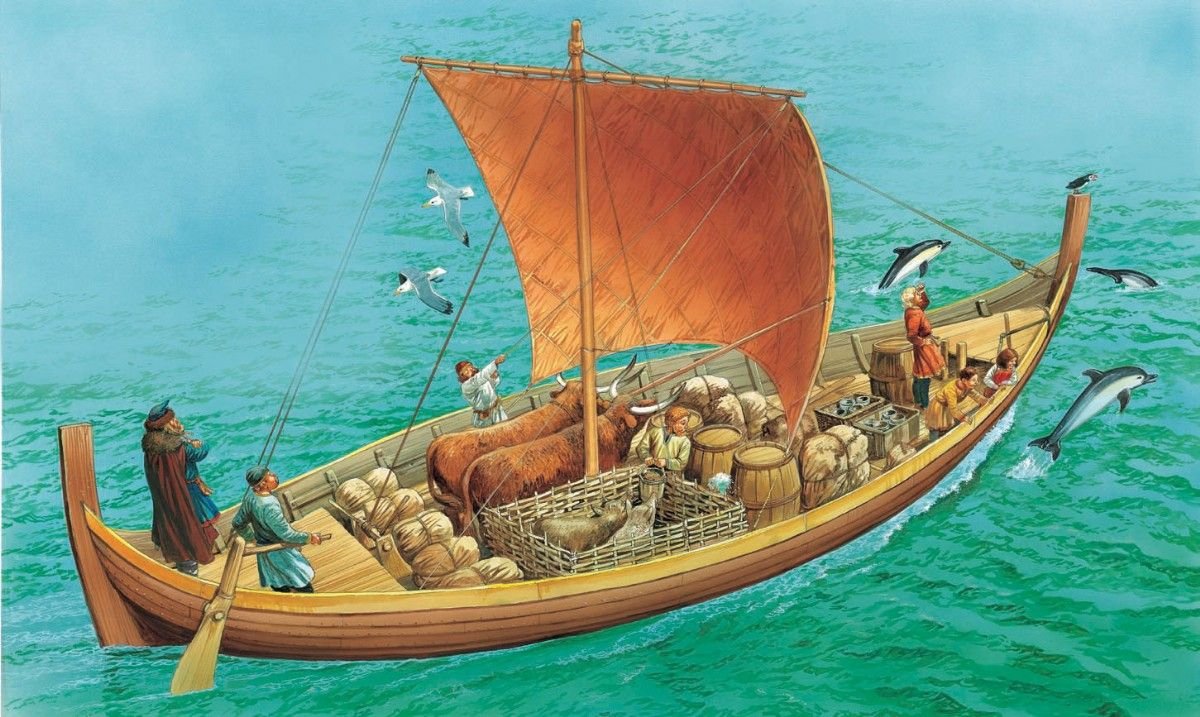
Starting in the tenth century, the Vikings also began constructing specialized cargo ships significantly larger than their longships. Unlike the sleek and slender longships optimized for speed, these new cargo ships had a broader design, which resulted in reduced speed due to increased wind resistance. This design allowed them to carry much heavier loads.
Viking cargo ships were capable of transporting anywhere from five to sixty tons of goods. Their enhanced capacity made them cost-effective for trade and transportation purposes, especially for ferrying people, livestock, and supplies to and from Viking settlements in the North Atlantic islands.
These Norse cargo ships relied primarily on sails, and while they may have had a few oars for maneuvering, they were not equipped with sufficient oars to propel the ship effectively. Their design prioritized accommodating a small crew, thereby maximizing cargo space. To underscore their cargo-focused purpose, the goods were often covered with water-resistant skins, while the crew remained exposed to the elements—a practice consistent with the conditions experienced by people and cargo aboard Viking longships as well.