

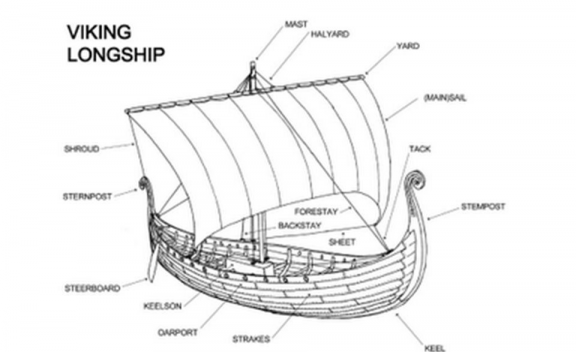
The construction of a longship was a monumental undertaking that demanded tens of thousands of hours of labor when considering all the various aspects of the process. This extensive project encompassed activities such as cutting and transporting wood to the construction site, building the primary structure of the ship, forging the necessary iron components, affixing these iron elements, preparing tar, creating ropes, and weaving and sewing the sail. A substantial workforce, comprising both men and women, had to collaborate to achieve this common objective.
Shipbuilding necessitated a substantial quantity of high-quality timber. Wood wasn't solely used for the main body of the ship's planks; it also served various other purposes, including crafting treenails and wedges, fashioning oars, rudders, rigging blocks, gangplanks, and bailers, as well as constructing clamps, battens, stakes, shores, and the stocks used to build the vessels, along with skids and launching ways.
Among the types of wood available, oak, found primarily in the southern regions of Scandinavia, was highly prized for shipbuilding due to its exceptional strength and flexibility. So valuable was oak in this context that in Viking poetry, the word "oak" was frequently used metaphorically to refer to a "ship." In instances where oak was unavailable, pine, maple, or birch could be used as substitutes.
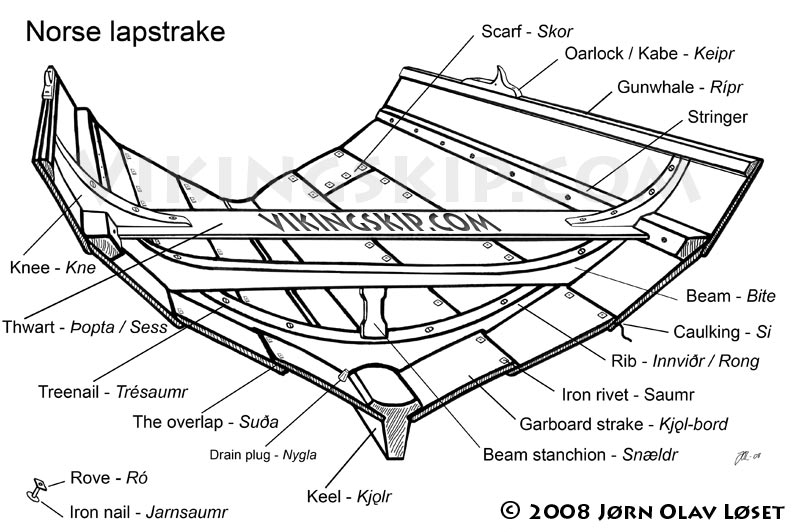
In the Viking Age, ship planks were not sawn but were instead shaped along the natural grain of the wood using axes and wedges. This technique made the planks more flexible and easier to bend. The planks were then assembled to form the ship's hull using the "clinker" or "lap-strake" method. This method involved placing the planks in a slight overlapping fashion, creating a visual effect similar to steps. The planks were fastened together using nails, and frames and ribs were added to ensure the ship maintained its shape.
Wool served as the primary material for caulking the gaps between the planks to make the hull watertight. The entire hull was then coated with pine tar to waterproof it.
Viking ships that saw significant use in combat and travel, rather than being solely displayed as trophies, required continuous maintenance and had a relatively short lifespan of a few decades at most before they became unseaworthy and needed replacement. In this aspect, they shared similarities with modern cars, which require ongoing upkeep to remain functional.