



Even before the Viking Age, ships played an essential role in the lifestyle of the Scandinavians. Their homeland's abundant waterways, extensive coastline, and geographical separation from the rest of the Eurasian continent meant that sea travel was a necessity for long-distance journeys. Fortunately, Scandinavia was rich in shipbuilding materials like wood, iron, and wool, which positioned the Norse people to develop maritime capabilities more rapidly and effectively than many other Eurasian cultures.
Prior to the eighth century AD, the Scandinavians exclusively constructed rowing ships and had not yet adopted sailing technology. This omission is somewhat puzzling since the technology for sailing already existed and was being utilized by neighboring groups such as the Germans and the English.
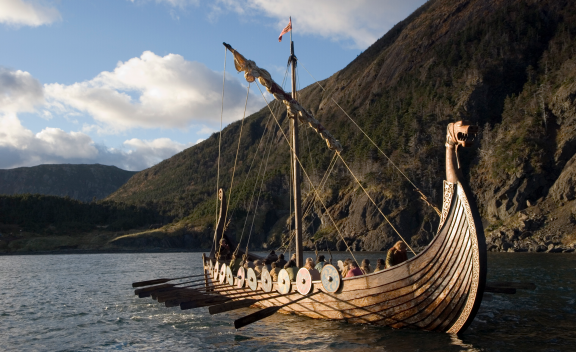
However, once Norse shipbuilders began crafting sail-equipped vessels, the Viking Age quickly emerged. These fast and versatile sailing ships, capable of transporting large numbers of warriors, formed the core of the Vikings' dominant military strategy. This strategy involved surprise raids or the extraction of ransoms before any substantial opposing army could be assembled. Without these ships, there would have been no Vikings, and the Viking Age as we know it would not have occurred.
These ships relied on the wind for propulsion. When winds were unfavorable, they could still navigate in the intended direction but at a significantly reduced speed.
In favorable wind conditions, Viking warships demonstrated remarkable speed. Modern reconstructions of Viking ships have achieved speeds of over fifteen knots (equivalent to over seventeen miles per hour or twenty-seven kilometers per hour) when sailing. Even when rowed rather than sailed, they maintained a cruising speed of just under six knots, which, though slower, was still exceptionally fast for vessels of such size. These reconstructed ships have also demonstrated their exceptional seaworthiness by withstanding North Atlantic gales.
These Viking warships were commonly referred to as "longships" due to their significant length, which allowed them to accommodate a large number of warriors and cargo. When the Old Norse sagas describe enormous ships capable of carrying sixty or more rowers, they are not exaggerating, and archaeological discoveries support these claims. However, it's likely that smaller ships, capable of accommodating around twenty-six rowers, were more typical. These smaller vessels were more maneuverable and therefore better suited for the lightning-fast Viking raids that characterized their maritime exploits.
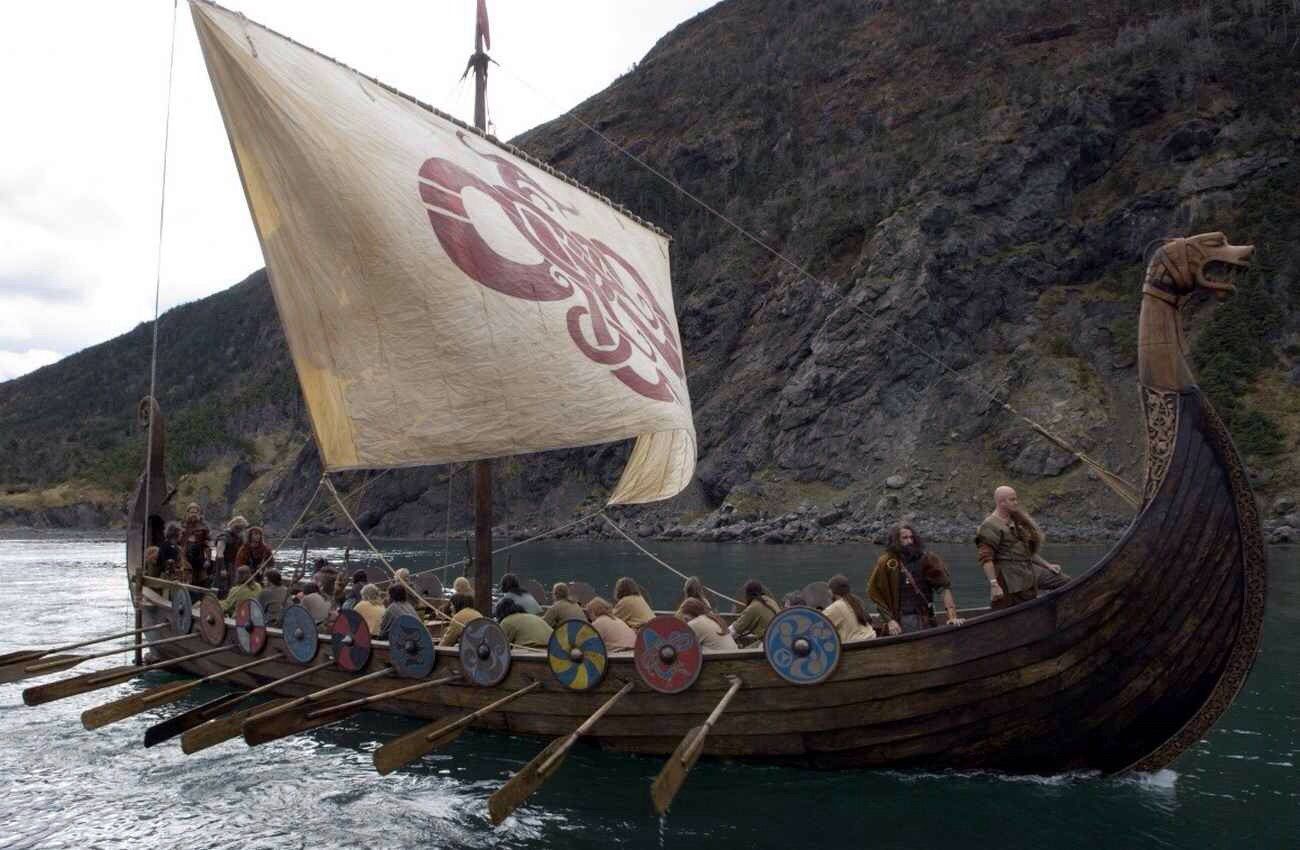
While the ship’s sails were hoisted and propelling it along, the men on board entertained themselves by telling stories and playing games. When the ships had to be rowed, the rowers sat on chests filled with their belongings – including, of course, the spoils of raids.
For the Viking chieftains who owned these ships, they were a major source of pride. Chieftains competed with one another to have the biggest and most lavish ships. When two or more chieftains fought one another, their ships were among the most valuable plunder that the other side could acquire. After a sea battle, if the losing side’s ships were still in usable condition, they were taken by the happy victor.