



The political landscape of the Viking Age encompassed not only the personal power embodied by chieftains and kings but also the role of legal assemblies known as "þing" in Old Norse, pronounced similarly to the modern English word "thing." These assemblies held authority based on legal principles rather than sheer force.
Despite the Vikings' reputation for brutality, their societies highly valued the concept of law. In fact, the English word "law" itself derives from the Old Norse word "lög." Viking influence in England was so significant that this term found its way into the English language.
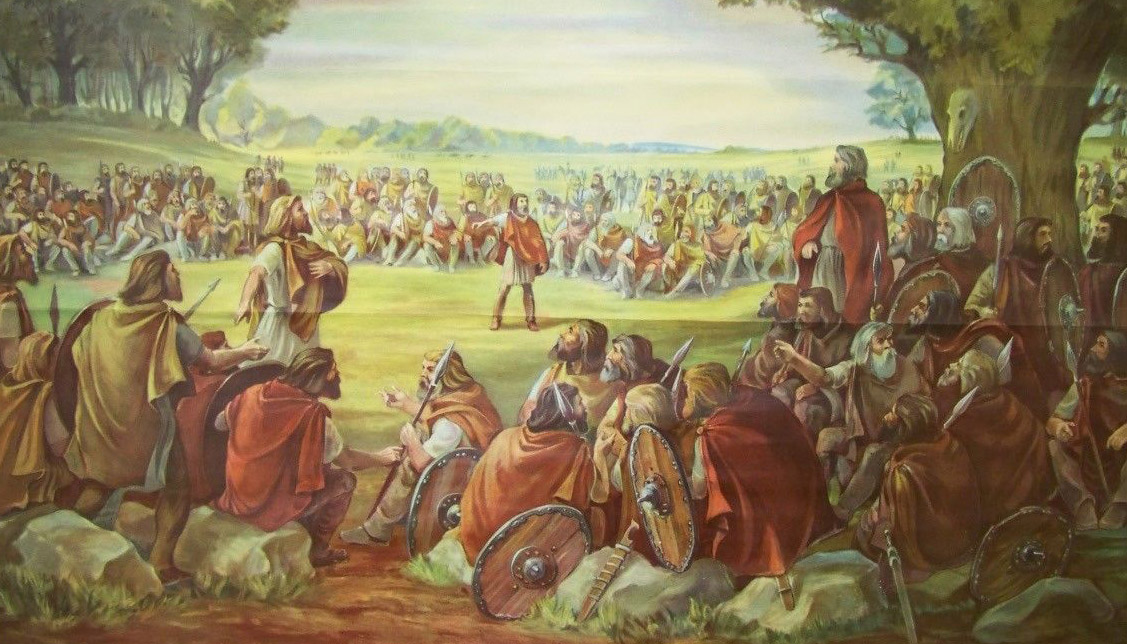
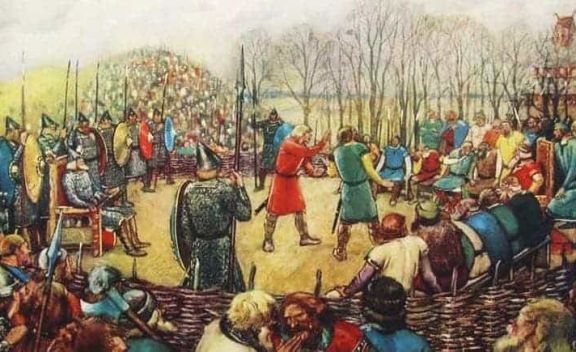
Norse legal assemblies typically convened outdoors within an enclosed area, marked by a fence or rope. All free men generally had the right to participate in these assemblies. However, slaves, who occupied the lowest rung of the Viking social hierarchy, were excluded. Women appear to have had a voice primarily when they acted as representatives of male relatives unable to attend.
These assemblies primarily operated at the local level, although regional assemblies are known to have been convened, albeit less frequently. Iceland stands out as the exception, having a national assembly during the Viking Age.
During these assemblies, laws were recited and could be amended or supplemented by the participants. Disputes were also resolved, endowing these assemblies with both legislative and judicial functions. The specific content of the laws varied among different polities; there was no uniform set of "Viking laws." Unfortunately, specific details about the assembly's procedures remain scant in historical records.
While the þing served as a combination of what we would now consider legislative and judicial branches of government, it lacked an executive branch to enforce its laws and decisions. Upon resolving a dispute, the assembly's decision was enforced by the victorious party and their family. Typically, the punishment for a guilty party involved paying a fine to the injured party. However, in cases of severe crimes or failure to pay the required fine, the offender could be declared an outlaw. This meant that the protection of the law was removed, and anyone could legally kill the outlaw. This mechanism effectively shifted the responsibility for enforcement to the individuals and the community, relieving the þing of executive functions.
The precise relationship between the legal assemblies and rulers, whether chieftains or kings, remains unclear, as historical sources provide little information on this matter.